










Ask most shoppers where their Shein package comes from and they’ll say China. That answer is often wrong. An order placed in Los Angeles may leave a warehouse in Indiana. A dress bought in Berlin might ship from Poland. Shein shipped 1.078 billion orders in 2025, about 2.95 million every single day, and a growing share of those parcels never cross a border at all (SHEIN HKEX post-hearing filing, 2026).
Key Takeaways
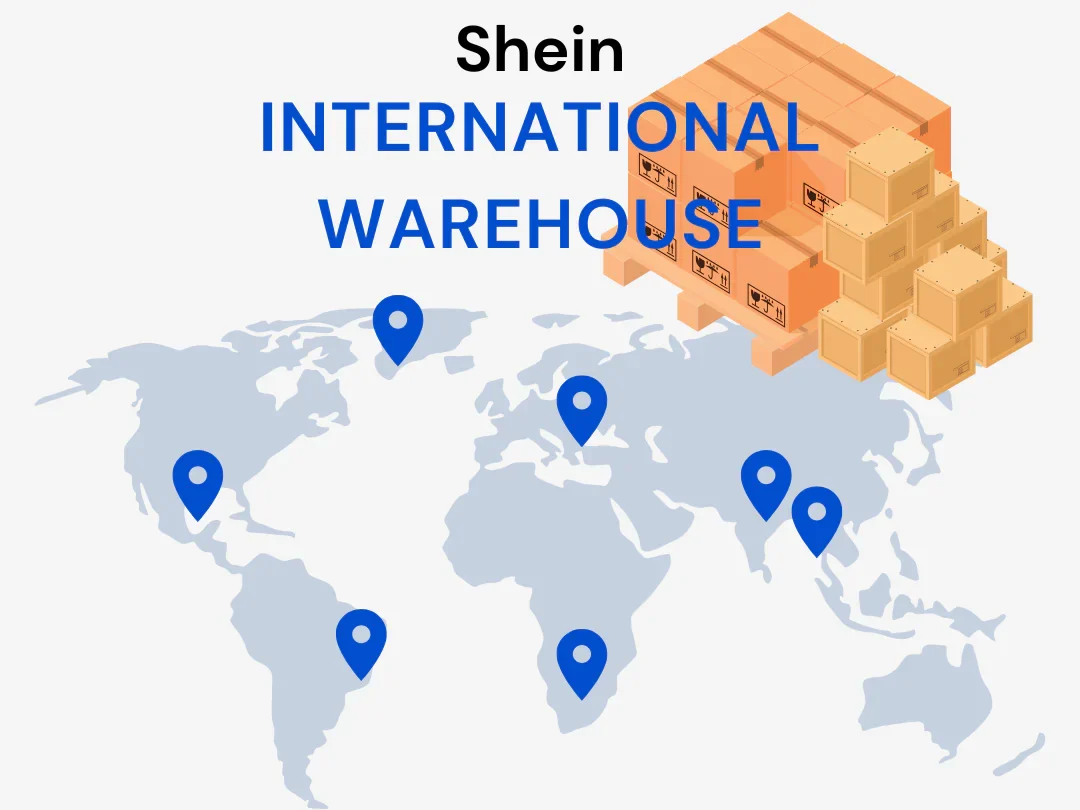
- Core inventory sits in Guangzhou and Foshan, China; more than 60 regional distribution centers worldwide shorten the last mile (SHEIN sustainability report data, 2023).
- Shein turns inventory in 36 days, versus roughly 92 days at Zara and 138 at H&M (HKEX filing and industry analysis, 2026).
- US QuickShip items arrive in 2 to 5 days from domestic warehouses; standard cross-border runs 7 to 15 days.
- The 740,000 m² Wrocław hub in Poland, opened December 2025, is Shein’s largest European facility and serves about 100 million EU consumers (Invest in Wrocław).
Last updated: August 26th, 2026
Shein’s Logistics Operation by the Numbers
Shein generated $41.8 billion in revenue in 2025, up from $38.7 billion in 2024 and $32.1 billion in 2023, a 14.2% compound annual growth rate. It served about 273 million active customers across roughly 160 markets, each ordering 3.8 to 4 times a year. By March 2026 the customer count stood at roughly 281 million (HKEX post-hearing information pack, July 2026, as reported by Sohu Finance and ifeng Finance). By GlobalData’s count, that made it the world’s third largest fashion retailer in 2024 with 1.53% market share, behind only Nike and Adidas.
Volume is what makes the warehouse story interesting. Shoppers browse more than 2 million apparel styles on the platform, and roughly 4,700 new styles appear every day. Europe is now the largest region at 35.4% of revenue, followed by the US at 24.1%. Southeast Asia, the Middle East and Latin America together account for 40.5% (HKEX filing, 2026).
Where Are Shein’s Warehouses Located?
Shein’s 2023 sustainability reporting put the company at more than 60 self-operated regional distribution centers worldwide. The table below lists the Shein warehouse locations that are publicly documented, with sizes and opening dates where known. Exact street addresses are not disclosed, and several figures come from industry research rather than the company itself, so treat them as best available estimates.

| Region | Location | Known Details |
|---|---|---|
| China | Guangzhou & Foshan, Guangdong | Core manufacturing and fulfillment cluster; most new and long-tail styles ship from here |
| United States | Whitestown, Indiana | First US DC, opened 2022; started at ~61,000 m² (659,000 sq ft), expanded to ~140,000 m² (1.5M sq ft); cuts US shipping times by 3-4 days |
| United States | Southern California (Inland Empire) | West Coast hub serving CA, OR, WA, NV, AZ; Cherry Valley site announced at ~1.8M sq ft (~167,000 m²) |
| Canada | Toronto area | Opened November 2022; 170,000 sq ft (~16,000 m²) warehouse plus office space |
| Europe | Wrocław, Poland | Opened December 2025; ~740,000 m², Shein’s largest EU site, serving ~100 million European consumers |
| Europe | Belgium (Liège) | European distribution gateway; air and rail freight access |
| United Kingdom | Cannock | Third warehouse (35,000 m²) opened May 2026; campus totals 60,000+ m² with 1,000 UK logistics jobs |
| Brazil | São Paulo state (5 sites) | Five logistics warehouses, ~256,000 m² combined as of November 2023 |
| Mexico | North of Mexico City | Two smaller distribution centers; Reuters reported Shein seeking a new site of at least 35,000 m² |
| Middle East | Dubai (Jebel Ali), Abu Dhabi, Sharjah | Jebel Ali main hub processes over 1 million packages weekly; local delivery in 1-3 days |
| Middle East | Riyadh, Saudi Arabia | Local warehouse; nationwide delivery in 3-5 days |
| Oceania | Sydney, Australia | Distribution center serving Australia and New Zealand |
Sources: SHEIN 2023 sustainability report data (60+ distribution centers); facility coverage by Inside INdiana Business (Whitestown), WWD (California), Indianapolis Business Journal (Toronto), Invest in Wrocław (Poland), Sina Finance (Cannock), and the AMZ Prep directory; Reuters reporting on the Mexico site. Some sizes remain industry estimates.
Why Does Shein Keep Its Core Warehouses in China?
Because that is where the factories are. Shein’s supply chain and product design are managed from Guangzhou, with thousands of small-batch manufacturers in China concentrated across Guangdong. The prospectus notes subsidiaries in Singapore, the US, Ireland, the UK and the UAE handling overseas sales, warehousing and platform operations. Keeping the main fulfillment cluster beside the supplier base lets a style move from sewing machine to international parcel within days, not weeks.
One correction to common lore: Shein does not run a “Hong Kong international distribution center” as a parcel transit hub. Hong Kong matters to Shein as the venue of its 2026 stock listing. The company’s corporate home is Singapore. Parcels leaving South China flow mainly from the Guangzhou-Foshan cluster onto air and sea freight lanes directly. If you see tracking that says “international warehouse,” it almost always means Foshan or Guangzhou, which matches what independent shipping guides document (AMZ Prep directory, 2026).
So why build dozens of regional warehouses at all? Two reasons. First, speed sells. A shopper who receives an order in three days buys again sooner. Second, tariffs and customs. Regional pre-stocking turns international parcels into domestic ones, which sidesteps per-package border processing and lowers duty exposure when de minimis rules (the threshold below which imports enter duty-free) change. In my reading of the filing data, the regional build-out reads mostly as insurance: every warehouse outside China is a hedge against the next trade policy shock. That interpretation is mine.
How Site Selection Actually Works
Three filters show up again and again in where Shein builds:
- Transport nodes. Whitestown sits on Indianapolis freight corridors; Liège connects to air and rail; Jebel Ali is the Middle East’s largest port.
- Market density. São Paulo state, the Toronto metro, the US Midwest: warehouses land near concentrated demand.
- Tax and customs position. Poland sits inside the EU customs union; UAE free zones simplify re-export.
How Fast Is Shein Delivery by Region?
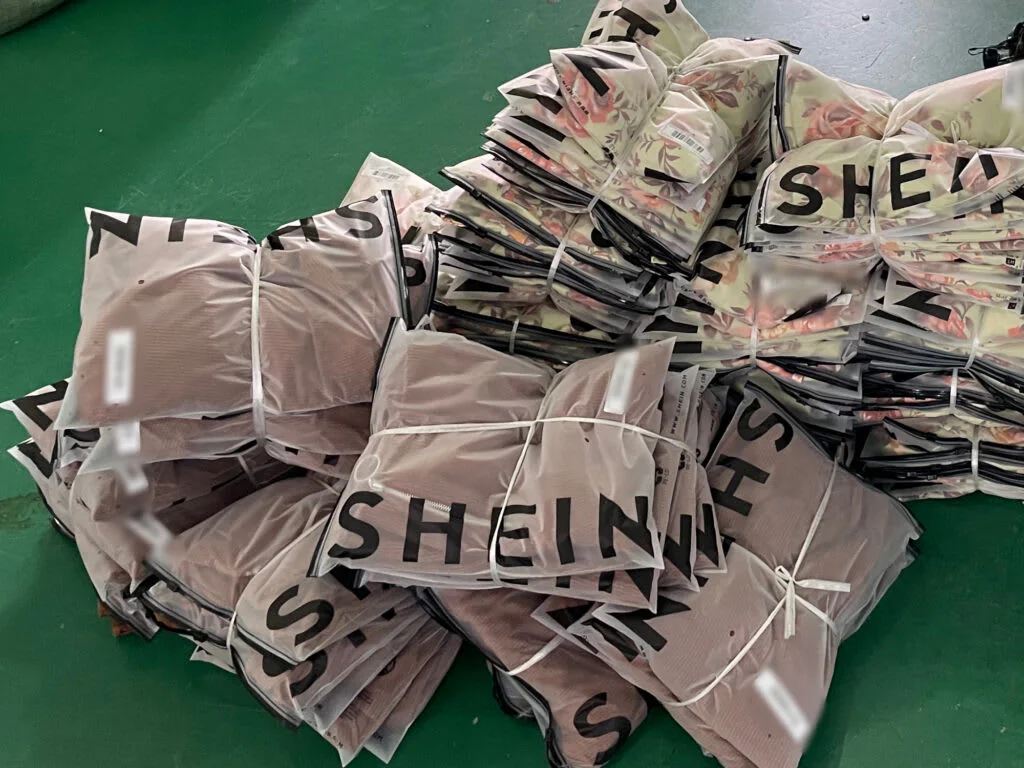
It depends on where your item is stocked. Roughly 70% of orders still leave the Guangzhou-Foshan cluster as cross-border parcels, per the 2026 AMZ Prep directory. Styles pre-positioned in a regional warehouse move as domestic parcels and arrive fastest; Shein labels these QuickShip items. New or niche styles still ship from China and take longer. The ranges below combine platform shipping data with that directory.
| Destination | Standard (cross-border) | QuickShip / Express |
|---|---|---|
| United States | 7-15 days | 2-5 days (from US warehouses) |
| Europe | 7-12 days | 4-7 days |
| United Kingdom | 7-12 days | 4-8 days |
| Asia-Pacific | 8-15 days | 5-9 days |
| Middle East | 7-12 days | 1-3 days (from Dubai/Riyadh hubs) |
| Latin America | 10-18 days | 5-10 days |
Source: AMZ Prep Shein warehouse directory, 2026; platform shipping pages. Working-day estimates; customs delays can add days on cross-border routes.
We run consolidated shipments out of Ningbo and Yiwu for buyer clients, and the pattern is familiar: a parcel that leaves a regional overseas warehouse clears nothing and gets handed to a domestic courier the same day. The same item shipped cross-border waits for line-haul capacity, export clearance, import clearance, and last-mile handoff. That is a difference of five to ten days on identical merchandise, and it is the entire logic of Shein’s regional build-out.
On-Demand Manufacturing: Small Batches, Five-Day Restocks
Every new design starts small. Shein’s first production runs are 100 to 200 pieces, sized to test real demand instead of guessing it. Clicks, add-to-carts and conversions flow back to suppliers in near real time. Best sellers get restocked in as few as five days. Styles that don’t sell get cut before they pile up (HKEX filing, 2026). The result: unsold inventory stays in the low single digits, against an industry average of 15 to 20%.
The speed gap compounds downstream. Shein moves a design from sketch to shopper in about 2 to 3 weeks, while the traditional apparel cycle runs 6 to 12 months. Inventory turnover, the average number of days stock sits before it sells, tells the same story from a different angle: 36 days for Shein, roughly 92 for Zara, and about 138 for H&M.
What does this mean for the warehouses? Popular items get pushed outward into regional fulfillment centers, where they can ship domestically in 2 to 5 days. Slow movers stay central in China and only travel after demand is proven. For context on where Shein sources its products wholesale, the supplier layer sits mostly within a few hours’ truck of the Guangzhou-Foshan hub, which is what makes five-day restocking physically possible.
What Technology Runs a Shein Warehouse?
Reporting on Shein’s fulfillment centers keeps describing the same systems. Automated sorting lines with conveyor belts and scanners route parcels by destination. AGV robots (automated guided vehicles) move goods between storage and packing stations, which keeps throughput high without seasonal hiring surges. And every SKU carries RFID or barcode identification that feeds real-time inventory dashboards.
Machine learning sits above the hardware. Demand models trained on app behavior, social trends and sales history decide which styles to produce, how many units to make, and which regional warehouse each batch should land in. Route optimization then assigns each parcel to a shipping lane based on carrier performance and customs conditions. Industry analyses of Shein’s operation report picking accuracy around 99.98%, with error rates several times lower than warehouse norms.
The honest caveat: much of this comes from supplier-partner case material and third-party research rather than Shein’s own engineering documentation. The company confirms the automation and AI allocation exists but publishes few internal metrics. Treat precise operational numbers as directional.
How Does Shein Handle Customs, VAT and Compliance?
By moving clearance upstream. When goods enter the EU in bulk through the Wrocław and Belgian hubs, customs and VAT are handled once per consignment. Every subsequent consumer parcel ships inside the single market with no repeated border checks. The same pattern applies to US warehouses, which receive bulk imports and then fulfill orders domestically.
Post-Brexit UK rules, which require detailed VAT declarations on imported parcels, get absorbed by the Cannock facilities instead of landing on each shopper’s order. The timing matters, too: the EU has decided to scrap customs duty relief on low-value parcels arriving from outside the bloc, a change phasing in through 2026 that makes bulk pre-import through hubs like Wrocław more valuable still (1StopVAT analysis).
Anyone who has filed customs paperwork for a living knows the pain of fixing one wrong HS code on a held shipment. From our own export desk, the single biggest cause of cross-border delays is documentation, not distance. Shein’s compliance platform automates those checks before a parcel leaves the building, and its multi-carrier strategy means a strike or port congestion reroutes shipments instead of stranding them. Those two disciplines are unglamorous, and they are also most of the game.
Geopolitics remains the wildcard. Tariff shifts, de minimis rule changes and forced-labor scrutiny in Western markets all land on cross-border apparel logistics. Shein’s answer, visible in its filing, is structural: a flexible supply chain that can shift production, and a growing physical footprint inside its biggest consumer markets. Regional warehouses are as much a compliance instrument as a speed feature.
Shein vs Temu vs Zara: Who Ships Faster?
Where items are pre-stocked, all three deliver within days: Shein QuickShip runs 2 to 5 days, Temu’s local-seller stock arrives in 2 to 5, and Zara reaches 1 to 5 days near its stores. The gap is in how much of the catalog gets that treatment.
Temu ships a much broader catalog from mostly centralized Chinese warehouses, and its standard cross-border delivery runs 7 to 15 working days to major markets, stretching toward 22 when customs backs up, with paid express around 3 to 8 days and pre-imported local-seller stock arriving in 2 to 5 (OrderTracker, 2026).
In Australia, local fulfillment partners in Sydney and Melbourne have compressed many Temu orders from ten-plus days down to 4 to 6, and its Local Seller Program lets local merchants sell with faster delivery. Zara runs physical retail plus fast regional e-commerce, with famous design-to-shelf speed on core items but far slower inventory turnover.
| Shein | Temu | Zara / H&M | |
|---|---|---|---|
| Inventory model | On-demand: 100-200 piece test batches, five-day restock | Centralized bulk buying from China | Seasonal collections, bulk production |
| Inventory turnover | 36 days | Not comparable (marketplace) | Zara ~92 days, H&M ~138 |
| Typical delivery | 2-5 days QuickShip; 7-15 days cross-border | 7-15 days standard (to 22); 3-8 express; 2-5 from local stock | 1-5 days where local stores/DCs exist |
| Regional warehouses | 60+ distribution centers | Few; expanding via local seller programs | Dense retail-adjacent networks |
| 2025 scale | $41.8B revenue, 273M active customers | GMV estimated $53-70B (2024) | Inditex €39.9B (FY2025) |
Sources: SHEIN HKEX filing 2026; Temu delivery and GMV data from OrderTracker and Sina Finance; Inditex FY2025 results.
The strategic difference matters more than any single number. Shein owns its supply chain end to end, from fabric order to doorstep, which is why its cost and speed advantages hold together. Temu optimizes a marketplace of sellers. Zara optimizes stores. Only one of those three built its warehouse network specifically to serve border-crossing parcels, and it shows in the delivery table.

What Comes Next for Shein’s Warehouse Network?
Every new site is bigger and closer to the customer than the last. Wrocław’s 740,000 m² opened in December 2025. Cannock’s third building arrived in May 2026. Reuters reports Shein hunting a 35,000 m² plus site in Mexico. The UK, US and EU expansions all point the same way: put bulk inventory inside the customs border, then fulfill like a domestic retailer.
Watch three things.
- The Hong Kong listing. Shein opened its global offering on August 24, 2026 under ticker 00625.HK, priced at HK$47.60 to 49.50 per share for a $26 to 27 billion valuation, with trading set to begin September 1 and cornerstone backers including Tencent, Boyu, Tiger Global and UBS Asset Management. Roughly 40% of the estimated HK$13 billion in net proceeds is earmarked for technology and another 40% for brand building and global expansion.
- US tariff and de minimis policy. How those rules evolve directly changes the economics of shipping small parcels from China versus bulk-importing to domestic warehouses.
- Sustainability pressure. It is already pushing the company toward recycled packaging and route-efficiency programs.
FAQ: Shein Warehouses and Shipping
Where are Shein’s warehouses located?
The core fulfillment cluster is Guangzhou and Foshan in Guangdong, China. Beyond that, more than 60 regional distribution centers operate worldwide, including Whitestown (Indiana) and Southern California in the US, Wrocław in Poland, Cannock in the UK, five sites in São Paulo state, Dubai and Riyadh hubs, and a Sydney center for Oceania.
How does Shein’s on-demand manufacturing affect delivery?
New styles launch in 100 to 200 piece batches. Strong sellers get restocked in as few as five days and then pre-positioned into regional warehouses, where they ship as domestic parcels in 2 to 5 days. Inventory turns over every 36 days, roughly 2.5 times faster than Zara.
Does Shein use Hong Kong as a logistics hub?
No, that is a common myth. Fulfillment runs from the Guangzhou-Foshan cluster near the supplier base, corporate headquarters are in Singapore, and Hong Kong’s role is as the venue for Shein’s stock listing, with trading due to start September 1, 2026.
How does Shein manage international shipping compliance?
Customs and VAT are cleared once per bulk consignment at regional hubs like Wrocław, after which consumer parcels travel inside the single market with no repeated checks. US and UK warehouses work the same way for their regions.
What technologies does Shein use in its warehouses?
AGV robots for moving stock, automated sorting and packing lines, RFID and barcode tracking with real-time dashboards, and machine learning models that allocate production and inventory across the network. Third-party analyses report picking accuracy near 99.98%.
How fast does Shein deliver worldwide?
US QuickShip items: 2 to 5 days from domestic warehouses. Standard cross-border: about 7 to 12 days to Europe and North America, 7 to 14 days to Asia-Pacific and the Middle East, and 10 to 18 days to Latin America.
How does Shein handle peak seasons like 11.11?
Best-selling SKUs are pre-stocked into regional warehouses ahead of major sales, and automated sorting plus AI inventory allocation absorbs the surge. The baseline is already about 2.95 million orders per day, from 1.078 billion orders in 2025.
How does Shein control logistics costs?
Small production batches prevent overstock, air and sea freight are mixed to balance speed against cost, and regional warehousing converts international parcels into cheap domestic last-mile drops. Gross margin climbed from 60.2% in 2023 to 67.9% in 2025, then above 70% in the first quarter of 2026.
Conclusion: Shein’s Warehouse Network Is the Real Story
Strip away the speed headlines and what remains is a supply chain built around one principle: put inventory where the customer is, inside the customs border, before the order exists. The core stays in Guangzhou and Foshan beside the factories, while proven best sellers fan out to more than 60 regional warehouses and ship as domestic parcels in 2 to 5 days. That split, flexible small-batch production at origin plus pre-positioned stock near demand, is how Shein holds a 36-day inventory cycle and a gross margin above 70% at the same time.
The same trade-offs apply to any brand importing from China: air versus sea freight, cross-border parcels versus bulk pre-import. Those two choices decide your delivery promise, your duty exposure and how much cash sits in inventory.
That is the playbook we run for clients at Sellers Union Agent, a China procurement and logistics agency operating since 1997 from Ningbo and Yiwu. We consolidate shipments and clear customs, then pre-position inventory close to your buyers. If you want a route built around your product and your volumes, contact our team for a free consultation; we reply within one business day.

Ivy is a Sourcing Specialist at Sellers Union. She shares hands-on experience in supplier selection, quality control, and market trends to help global wholesalers make informed decisions. Her goal is to simplify the sourcing process and help brands build efficient supply chains in the industry.







 C*****
 F*****
 S****
S**** Q******
 D*******
 J*****
 T****
T**** M*****
 O****
O**** R******
 L******