










In today’s globalized world, more and more enterprises choose to purchase goods from China. There are two main ways to purchase: directly from the factory and through trading companies. While purchasing directly from a factory may seem more attractive on price, buying from a trading company usually offers more advantages. This article will explore the benefits of sourcing from Chinese trading companies and provide an in-depth analysis of their advantages in terms of procurement flexibility, quality control, communication efficiency, payment methods and legal compliance.
Procurement flexibility
Diversify your options
Trading companies usually represent multiple factories, covering different product lines and brands. This diversity can not only meet the different needs of enterprises, but also help enterprises cope with market changes. For example, suppose an electronics retailer wants to introduce new smart home devices. If you contact multiple factories directly, the business may need to spend a lot of time to compare the quality, price and delivery time of different products, and it is easy to miss information or misunderstanding in the communication process.
Through trading companies, retailers can access product information from multiple suppliers at once, quickly obtaining quotes and samples from different factories. This centralized access to information greatly improves procurement efficiency and enables companies to make decisions quickly. In addition, trading companies often conduct initial screening and evaluation of the products they represent, thereby helping buyers avoid the risk of working with substandard suppliers.
This variety of choices can also enhance the market competitiveness of enterprises. In a changing market environment, the flexibility to select the right suppliers and products allows enterprises to quickly adjust their strategies to meet the different needs of consumers. For example, when the demand for a certain brand of products surges, enterprises can quickly find other brands or similar products through trading companies to supplement, so as to avoid losing sales opportunities due to stock shortages.
Buy in small batches
Many factories set a minimum order size, which often puts small businesses and startups under great pressure when it comes to sourcing. When purchasing directly from the factory, if the order does not meet the minimum requirements, the company may be forced to increase the purchase volume, resulting in inventory overhang and capital tie up. This is undoubtedly a huge burden for small businesses with weak capital liquidity.
Trading companies, on the other hand, usually accept small orders and even allow the buyer to adjust the order quantity flexibly according to the demand. For example, a start-up wants to test market reaction, but is afraid to invest too much money in the initial stage. Through the trading company, the enterprise can choose to purchase in small batches, conduct market testing first, and then decide the subsequent purchase volume according to the feedback. This flexibility allows companies to respond quickly to market demands without taking too much risk.
In addition, the advantage of small batch purchasing is that it reduces the complexity of inventory management. Enterprises can dynamically adjust inventory levels according to sales, reducing losses caused by outdated or unsalable products. This not only improves the capital turnover rate, but also enables enterprises to maintain a high market sensitivity, timely adjustment of product structure and market strategy.
Quality and risk control
Quality audit
In the global supply chain, product quality directly affects the reputation and market competitiveness of enterprises. Trading companies usually conduct rigorous screening and quality audits on the suppliers they work with to ensure that products meet relevant standards. This review process usually includes several steps:
Preliminary screening: The trading company will conduct preliminary screening according to the production capacity, technical level, historical performance, etc., to ensure that it only works with those manufacturers with a good reputation in the industry.
On-site audit: Many trading companies will send professionals to conduct on-site audits of suppliers’ production facilities before purchasing. Through field visits, trading companies can learn about production processes, equipment conditions and quality control systems. This in-depth audit can detect potential problems, such as equipment aging, process irregularities, etc., in a timely manner, thereby avoiding subsequent quality risks.
Testing and certification: Trading companies often work with professional testing organizations to rigorously test samples to ensure that they comply with international standards and industry norms. This not only improves the reliability of the purchased products, but also enhances the buyer’s confidence in the quality of the products.
Continuous supervision: In the course of cooperation, trading companies usually conduct continuous supervision of the production and quality management of suppliers to ensure that they always meet the standards. This regular inspection and evaluation mechanism can detect and solve potential problems in time to ensure the stability of product quality.
Through these quality audit measures, enterprises can be more confident in procurement and reduce losses caused by quality problems. For example, if a product is returned due to quality problems, the company will not only face financial losses, but also may affect the brand image and customer relations. The quality assurance mechanism provided by trading companies can effectively reduce these risks.
Reduce risk
Dealing directly with factories, especially unfamiliar ones, often comes with a higher level of risk. This includes quality risk, delivery risk and contract execution risk. Through trading companies, companies can effectively reduce these risks, as follows:
Intermediary role: Trading companies, as intermediaries, usually assume certain responsibilities. If there are problems in the transaction process, such as products do not meet specifications, delivery delays or insufficient quantities, the enterprise can coordinate and solve through the trading company. This intermediary role effectively reduces the direct conflict between the buyer and the factory, avoiding complex disputes and legal proceedings.
Risk sharing: Trading companies often work with multiple factories, so that companies can quickly turn to other suppliers for restocking if a problem occurs at one plant. This diversified supply chain structure can effectively spread risks and ensure that the production and operation of enterprises are not affected by a single supplier.
Contract protection: Trading companies usually sign detailed contracts with suppliers, covering terms such as product quality, delivery time, payment method, etc. The binding nature of the contract ensures the rights of both parties, and in the event of a breach, the company can seek legal protection through the terms of the contract. In addition, trading companies usually include certain compensation clauses in the contract to protect the interests of the buyer.
Legal compliance support: In international trade, laws and regulations are complex and changeable, and companies may face compliance risks when dealing directly with unfamiliar factories. Trading companies are more familiar with relevant regulations and can provide legal compliance support to enterprises, helping enterprises to reduce compliance risks while complying with local laws.
Communication efficiency
Language and cultural support
In international trade, language and cultural differences are often the main source of communication barriers. When communicating directly with foreign factories, companies may have inaccurate information transmission due to language barriers, and may even lead to misunderstandings and conflicts. Trading companies play a key role in this and often have the following advantages:
Professional language proficiency: Trading companies usually have a team of professionals who are proficient in multiple languages and are fluent in bilingual or multilingual communication. This includes not only written communication, such as contracts, emails, etc., but also phone and face-to-face communication. This language ability ensures accurate communication of information and reduces misunderstandings caused by language barriers.
Cultural understanding: Trading companies usually have an in-depth knowledge of local culture and business practices. They can help buyers understand the business culture of different countries and regions and avoid misunderstandings caused by cultural differences. For example, in some cultures, speaking out may be seen as offensive, while in others, this approach is seen as honest and direct. The cultural knowledge of the trading company can help the buyer to adopt a more appropriate way of communication, thus improving the probability of successful transactions.
Customized communication: According to the needs of different customers and suppliers, trading companies can provide customized communication solutions. They are able to identify the specific needs of their customers and highlight those needs in their communication with suppliers, ensuring that both parties are aligned at every stage of the transaction.
Problem solving mechanism: If there are any problems in the communication process, the trading company can quickly step in and coordinate. This kind of problem solving mechanism can effectively reduce the time delay and economic loss caused by miscommunication, and make the transaction process more smooth.
After-sales service
After completing a purchase, a business may still face a variety of after-sales issues that, if not handled properly, can negatively impact customer relations and brand image. Trading companies usually provide comprehensive after-sales support, which is reflected in the following aspects:
Rapid response mechanism: The trading company has established an efficient customer service system, which can respond to the after-sales needs of customers in a timely manner. For example, if a customer finds a product quality problem after receiving the goods, the trading company can quickly intervene and coordinate communication with the factory to ensure that the problem is resolved in a timely manner. Rapid response not only improves customer satisfaction, but also enhances the reputation of the business.
Technical support: For some products with high technical content, customers may encounter technical problems during use. Trading companies often provide technical support to help customers solve problems in use. For example, if the customer is not familiar with the operation of a certain equipment, the trading company can arrange technicians to provide on-site guidance or remote support.
Return and exchange Service: In some cases, customers may need to return and exchange products received. Trading companies often simplify the return process and provide clear guidelines to help customers complete the relevant procedures smoothly. This convenient service makes customers feel more at ease when shopping, reducing concerns caused by complicated returns and exchanges.
Feedback and improvement: Trading companies also regularly collect customer feedback and constantly improve the quality of services and products based on this feedback. They will understand the real needs and experiences of customers through questionnaires, telephone interviews and other ways to ensure that they can provide better service in subsequent transactions. This continuous improvement mechanism not only improves customer satisfaction, but also builds a good reputation for the company.
Payment and financing options
Flexible payment methods
In international trade, the efficient management of financial flows is essential. Trading companies are often able to offer more flexible payment options, and this flexibility is particularly important for companies with faster cash turnover, in the following ways:
Installment option: Many trading companies allow customers to choose to pay in installments. This approach allows companies to spread the capital pressure at the time of payment, especially in the first purchase or large transaction, the company can be paid for a period of time after delivery, thus improving the efficiency of capital turnover.
Credit Transactions: Some trading companies can also offer the option of credit transactions, allowing customers to pay for goods within a certain period of time after delivery. This provides greater flexibility for businesses, especially those who want to make payments after the sale. This approach helps companies maintain normal operations when they are in trouble with cash flow.
Flexible payment terms: In addition to conventional payment methods, trading companies can usually provide customized payment terms according to the specific needs of customers. For example, for some specific projects or partnerships, trading companies may negotiate with customers to develop more flexible payment plans to better meet the financial needs of the enterprise.
Diversified payment channels: Trading companies often support multiple payment channels, such as credit cards, bank transfers, Alipay, PayPal, etc. This variety of payment methods provides more convenience for customers, making the payment process smoother and reducing the risk of delays caused by unsuitable payment methods.
This flexible payment method will not only help companies better manage the flow of funds, but also enhance partnerships with suppliers and reduce transaction risk, thus driving more efficient business operations.
Credit protection
By transacting through a trading company, the buyer can usually obtain higher credit protection, which is particularly important in international trade. The reputation and reputation established by the trading company in the industry provide certain protection for customers, which is reflected in the following aspects:
Reputation protection: Trading companies often establish long-term cooperative relations with multiple factories, which makes them form a good reputation in the industry. When a business transacts through a trading company, it usually benefits from the credit system it has established. If a problem is encountered, the trading company can use its influence to intervene and resolve it, thereby protecting the rights and interests of the buyer.
Mediation and arbitration: In the course of a transaction, if there is a dispute, the trading company usually acts as a mediator to help the two parties negotiate. This mediation mechanism can effectively reduce disputes caused by misunderstanding between the two sides and promote the smooth progress of the transaction. If the negotiation fails to solve the problem, the trading company can also assist the customer to take arbitration or legal measures to ensure that the interests of the customer are not damaged.
Product quality and payment guarantee: Many trading companies, when working with a factory, will require the factory to provide quality assurance and specify quality standards in the contract. This approach not only protects the rights and interests of the buyer, but also reduces the loss caused by product quality problems to a certain extent. At the same time, the trading company will also assess the customer’s ability to pay, so as to ensure the security of the transaction and reduce the risk of bad debts.
Credit investigation and risk assessment: Before starting business, trading companies usually conduct credit investigation and risk assessment on cooperative factories to ensure that their financial status is stable and their operating capacity is strong. This kind of early research can help buyers make more informed decisions when choosing suppliers and reduce transaction risks.
Legal compliance support
Compliance guidance
In international trade, import and export involve a variety of laws and regulations, including but not limited to customs regulations, trade restrictions, quality standards, environmental protection requirements, etc. Businesses that deal directly with factories often need to spend a lot of time and effort to understand these complex legal requirements, and trading companies often have the following advantages:
Knowledge of laws and regulations: Trading companies usually have a dedicated compliance team that is familiar with the relevant laws and regulations of various countries and regions. They can provide professional compliance guidance to their clients, ensuring that businesses comply with all legal requirements in their trading activities, thereby avoiding fines or sanctions for violating the law.
Document preparation and review: International trade usually requires the preparation of a large number of documents, including commercial invoices, packing lists, certificates of origin, etc. Trading companies can help clients prepare and review these documents, ensure that all documents comply with legal requirements, and avoid delays or customs clearance problems caused by incomplete documentation.
Tax and tariff consulting: Trading companies can also provide tax and tariff consulting services to help clients avoid taxes and comply with relevant tax regulations. This guidance can reduce the tax risks that companies may face in international transactions and improve overall financial compliance.
Policy update and training: Laws and regulations are constantly changing, and trading companies usually update relevant policy information regularly and provide training for customers to ensure that enterprises can timely adapt to changes in regulations and reduce compliance risks. In this way, companies are able to stay relevant and avoid losses due to regulatory changes.
Through these compliance guidelines, companies can be more confident when conducting international trade, ensure the legality and compliance of business activities, and reduce legal risks.
Contract protection
A contract is an important legal document in international trade that defines the rights and obligations of both parties. Contracts signed through trading companies are usually more comprehensive, which is reflected in the following aspects:
Comprehensive contract terms: Trading companies have extensive experience in contract terms and are able to cover all aspects of the transaction, such as price, delivery time, quality standards, after-sales service, etc. This comprehensive contract design can effectively reduce disputes caused by vague terms and protect the legitimate rights and interests of both parties.
Risk allocation clause: The contract usually contains risk allocation clauses, such as liability for breach of contract, force majeure, etc. The trading company will add relevant clauses to the contract according to the industry practice and specific circumstances to ensure that the rights and interests of both parties can be reasonably protected in the event of an accident.
Dispute resolution mechanisms: Many trading companies include dispute resolution mechanisms in their contracts, such as arbitration clauses or mediation procedures. This mechanism can provide solutions to possible disputes in the future, avoid lengthy legal proceedings between the two parties due to disputes, and improve the smooth progress of the transaction.
Legal protection and enforcement: Contracts entered into through trading companies can usually receive higher legal recognition and protection. If there is a breach of contract, the trading company can provide legal support to help customers protect their rights and interests and recover losses. This legal protection makes companies feel more secure in their transactions and able to focus more on their core business.
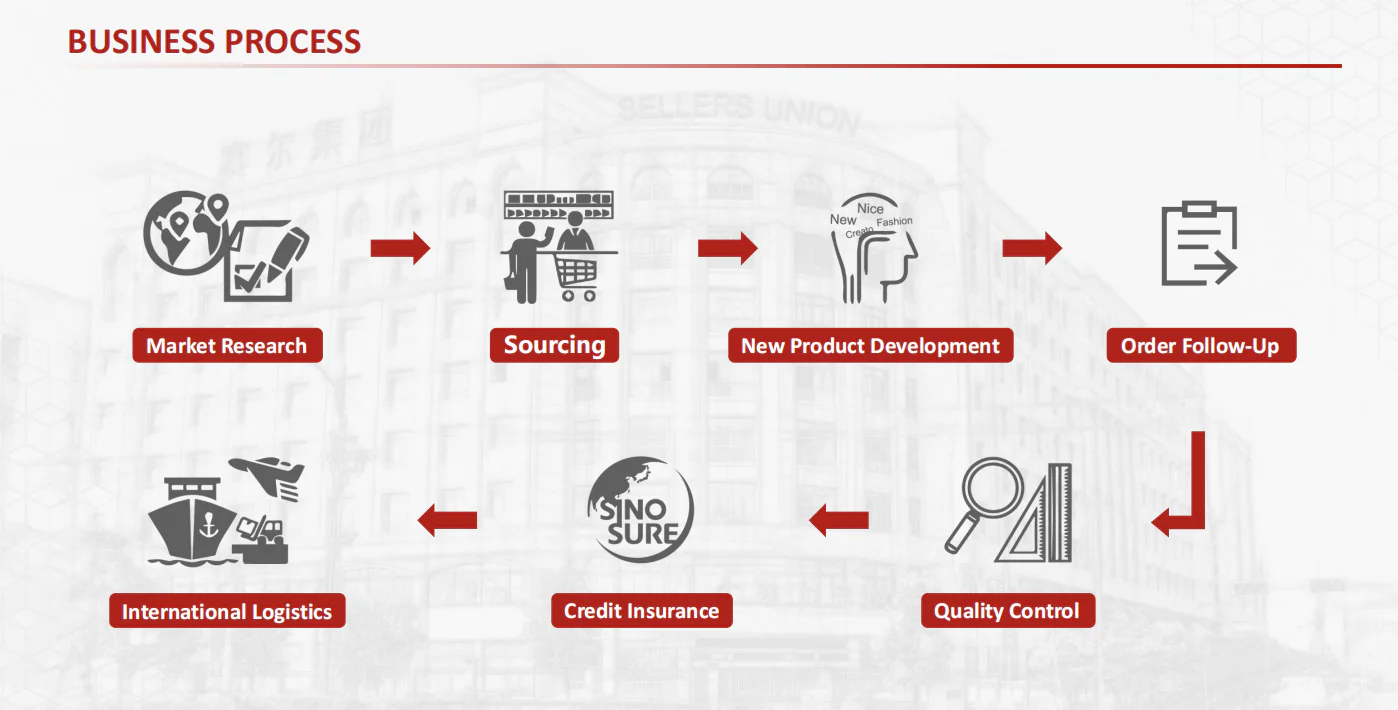
Taken together, buying from Chinese trading companies has multiple advantages over buying directly from factories. Whether it is procurement flexibility, quality control, communication efficiency, payment methods and legal compliance support, trading companies can provide enterprises with more comprehensive and secure procurement solutions. In an increasingly competitive global business environment, choosing to partner with trading companies can help companies better meet challenges, optimize procurement processes and achieve sustainable development. Therefore, for enterprises that want to succeed in the Chinese market, sourcing from trading companies is undoubtedly a more sensible choice.

Ivy is a Sourcing Specialist at Sellers Union. She shares hands-on experience in supplier selection, quality control, and market trends to help global wholesalers make informed decisions. Her goal is to simplify the sourcing process and help brands build efficient supply chains in the industry.










 K*****
 G******
 J***
J*** X***
X*** R***
R*** N******
 M****
M**** B***
B*** P*****
 H*******
 Y***
Y*** E****
E****