











Advantages and challenges of China’s imports
As the world’s largest manufacturing base, China has cost advantages and diversified choices for imported products. First, China’s manufacturing costs are relatively low, which makes importing products from China a clear cost advantage. China has a large labor pool and a well-developed supply chain system, which makes manufacturing costs relatively low, which makes the price of imported products relatively affordable. Many countries and regions have turned to China as their main source of manufacturing and supply in order to obtain more competitive prices and higher profit margins.
Second, China’s manufacturing industry covers multiple industries and sectors, so the choice of imported products is also very diverse. Whether it is electronics, textiles, furniture, toys or mechanical equipment, you can find a wealth of choices in China. China’s manufacturing industry has developed into a comprehensive and multi-level industrial system, from high-tech products to traditional handicrafts, which can meet the needs of different countries and regions. This variety of choices allows imports from China to meet the needs of different markets, providing more choice and flexibility.
However, the advantages of imported products are matched by a series of challenges. First of all, cultural differences are one of the challenges that cannot be ignored in the import business. There are different cultural backgrounds and business habits between China and many countries and regions, which may lead to misunderstandings and conflicts in business negotiations, cooperation and communication. Understanding and respecting each other’s cultural differences and establishing a good cross-cultural communication and cooperation mechanism are the keys to overcoming this challenge.
Secondly, language barrier is also a common problem. Especially in the process of business negotiations, contract signing and negotiation, language barriers may lead to poor information transmission and misunderstanding. Establishing effective translation and communication channels, or seeking professional translation services, can help both parties better understand and communicate.
In addition, quality control is a crucial link in the import business. Quality standards and management levels in China’s manufacturing sector are uneven, making ensuring the quality of imported products a challenge. Finding reliable suppliers and manufacturers, conducting strict quality checks and monitoring, and establishing long-term cooperative relationships are key to ensuring product quality.
Finally, the issue of intellectual property rights is also one of the challenges that requires high attention in the import business. In some cases, the infringement and protection of intellectual property rights may have a negative impact on the import business. Understanding and complying with relevant intellectual property laws and regulations, establishing legitimate partnerships with suppliers, and adopting appropriate intellectual property protection measures are key to addressing this challenge.
To sum up, as the world’s largest manufacturing base, China’s imported products have cost advantages and diversified choices. However, the import business also faces challenges such as cultural differences, language barriers, quality control and intellectual property rights. Understanding and addressing these challenges will help better conduct Chinese import business. By establishing good cooperative relations, strengthening communication and coordination, as well as taking appropriate quality control and intellectual property protection measures, the advantages of Chinese imports can be maximizes and win-win results can be achieved for both sides.
Select the right Chinese supplier
Choosing the right Chinese supplier is one of the key steps in starting an import business. In a manufacturing country like China, finding reliable suppliers and manufacturers is an important factor in ensuring product quality and the success of business cooperation. The following will cover two aspects of how to find reliable suppliers and manufacturers and assess their reputation, production capacity and quality management system.
First of all, finding reliable suppliers and manufacturers requires sufficient market research and background checks. By attending trade shows, business networking events and purchasing conferences, you can network with potential suppliers and learn about their products, production capabilities and services. In addition, the Internet is also an important resource, through search engines and B2B platforms, you can find a lot of supplier information and product information. When selecting a supplier, you can refer to information about their company size, experience, customer base, and market reputation to initially assess their reliability.
Secondly, evaluating the reputation of suppliers is one of the important indicators for selecting suitable suppliers. A supplier’s reputation can be assessed in a variety of ways. First, you can communicate with other customers or partners to understand their evaluation and opinion of the supplier. Secondly, you can consult the supplier’s company qualification and certification documents, such as ISO9001 quality management system certification, ISO14001 environmental management system certification. These certificates can serve as an important proof of the supplier’s reputation. In addition, suppliers can be evaluated and audited by third-party certification bodies to obtain more objective evaluation results.
In addition to reputation, the production capacity of the supplier is also one of the important factors in selecting the right supplier. Production capacity includes production equipment, production lines, production capacity scale and so on. By visiting the supplier’s production base and understanding the current situation and scale of their production equipment and production lines, you can initially assess their production capacity. In addition, it is possible to understand the supplier’s order delivery capacity and production cycle to ensure that they can deliver the required products on time.
Finally, quality management system is also one of the important indicators to evaluate suppliers. Quality management system includes quality control process, quality testing equipment and quality management personnel. By understanding the quality management system of suppliers, it is possible to assess their attention to product quality and management level. Suppliers can be asked to provide quality management system documentation and quality inspection reports to understand their quality management processes and capabilities. In addition, suppliers can be asked to provide samples for quality testing to ensure that the product meets the expected quality standards.
To sum up, selecting the right Chinese supplier requires sufficient market research and background checks. Potential suppliers and manufacturers can be found by attending trade shows, business networking events and purchasing conferences, as well as using Internet resources. When selecting a supplier, you can refer to information about their company size, experience, customer base, and market reputation to initially assess their reliability. In addition, it is also very important to evaluate the supplier’s reputation, production capacity and quality management system. By communicating with other customers, reviewing certification documents, visiting production sites, and requesting quality tests, suppliers’ reliability and capabilities can be fully assessed. Choosing the right suppliers and manufacturers will help ensure the quality of the products and the success of the business cooperation.
Understand China’s import regulations and procedures
Understanding China’s import regulations and processes is one of the key steps in conducting an import business. As one of the world’s largest importers of goods, China’s import tariffs, tax policies and trade terms have a significant impact on the import business. At the same time, the standards and certification requirements of imported products are also important provisions that must be understood and complied with in the import business. The following will be carried out from two aspects, introducing China’s import tariffs, tax policies and trade terms, as well as the standards and certification requirements for imported products.
First, understanding China’s import tariffs, tax policies, and trade terms is critical to the import business. China’s import duties are calculated according to the classification and tariff of goods. Imported goods are classified according to China’s tariff rules, and different commodity categories correspond to different tariff rates. In addition, China has implemented some special tariff policies, such as zero or preferential tariff policies for some key raw materials and equipment, to encourage the development of related industries. Understanding and familiarity with these tariff policies can help importers reasonably plan import costs and prices.
In addition to tariffs, understanding China’s tax policies is also an important part of conducting import business. China’s taxes on imported goods include import duties, value added tax and consumption tax. VAT and excise taxes on imported goods are calculated according to the category and tax rate of the goods. Importers need to understand and comply with relevant tax policies, such as paying taxes on time, handling tax registration, etc. In addition, China has implemented some special tax policies, such as duty-free policies for some technologically advanced imported equipment, to promote technological progress and industrial upgrading.
In terms of trade terms, understanding China’s trade terms is also very important for the smooth running of import business. China’s trade terms include provisions on import contracts, payment methods, cargo inspection and customs clearance. Importers need to sign appropriate import contracts with suppliers that clarify the rights and responsibilities of both parties. In terms of payment methods, you can choose wire transfer, letter of credit and other ways to pay. In addition, imported goods need to undergo cargo inspection and customs clearance procedures to ensure that the goods meet China’s quality and safety standards and are imported in accordance with relevant regulations.
Secondly, understanding the standards and certification requirements of imported products is also crucial for the import business. China has implemented a series of standards and certification requirements for imported products to protect the rights and interests of consumers and the quality and safety of products. Importers need to understand and comply with relevant standards and certification requirements, such as CCC certification, CE certification, food safety certification, etc. Importers can communicate with suppliers to find out whether the product meets Chinese standards and certification requirements. In addition, third-party organizations can be commissioned to conduct product testing and certification to ensure that products meet Chinese standards and requirements.
To sum up, understanding China’s import regulations and processes is crucial to conducting an import business. Importers need to understand China’s import tariffs, tax policies and trade terms in order to reasonably plan import costs and prices. At the same time, understanding the standards and certification requirements of imported products can ensure that products meet Chinese quality and safety standards. By understanding and complying with relevant regulations and requirements, importers can smoothly conduct their import business and ensure the quality and compliance of their products.
Negotiate and sign contracts
Negotiation and contract signing is a vital link in business activities, it involves the interests and responsibilities of both parties, need to be treated with caution. In the process of conducting negotiations and signing contracts, negotiation skills and handling cultural differences are crucial. At the same time, the importance of contract terms and risk management can not be ignored. The following will start from these two aspects to introduce the importance and relevant content of negotiation and contract signing.
First of all, negotiation skills and the handling of cultural differences play a crucial role in the process of negotiating and signing contracts. During the negotiation process, both sides need to use negotiation skills flexibly to reach an agreement acceptable to both sides. Negotiation skills include listening to the other side’s needs and demands, proposing solutions, and remaining patient and calm. In addition, attention needs to be paid to dealing with cultural differences. In international business negotiations, different countries and regions may have differences in business culture and habits, so it is necessary to respect and understand each other’s cultural background to avoid misunderstandings and conflicts caused by cultural differences.
When dealing with cultural differences, it is necessary to avoid misunderstandings in language and behavior, and respect each other’s cultural traditions and values to establish a good business relationship. At the same time, it is also necessary to flexibly adjust the negotiation strategy to adapt to the negotiation methods and styles under different cultural backgrounds. Through the proper use of negotiation skills and dealing with cultural differences, both parties can promote cooperation and lay a good foundation for signing a contract.
Secondly, the importance of contract terms and risk management are also the contents that need to be paid attention to in the process of negotiation and contract signing. A contract is the legal basis of a business transaction between two parties. It defines the rights and obligations of both parties and is of great significance to both parties. Before signing a contract, both parties need to carefully review the terms of the contract to ensure that the content of the contract is clear and can accurately reflect the wishes and agreements of both parties. The contract terms should include the description of the goods or services, price, delivery method, payment terms, liability for breach of contract, dispute resolution method and other contents to ensure that the rights and interests of both parties are protected.
At the same time, attention needs to be paid to risk management. In the contract, it is necessary to clearly stipulate the liability of both parties for breach of contract and the dispute resolution method to deal with possible risks and disputes. Both parties may agree on liquidated damages, arbitration agreement and other clauses in the contract to reduce cooperation risks and protect the interests of both parties. In addition, it is also necessary to pay attention to the execution and performance of the contract, ensure that the two parties cooperate in accordance with the content and terms of the contract, and avoid disputes and losses caused by poor execution of the contract.
To sum up, negotiating and signing contracts is a crucial part of business activities. In the process of negotiating and signing contracts, it is necessary to flexibly use negotiation skills and deal with cultural differences in order to facilitate cooperation between the two parties. At the same time, the importance of contract terms and risk management can not be ignored. Through the proper use of negotiation skills, dealing with cultural differences, and paying attention to contractual terms and risk management, it is possible to ensure that the cooperation between the parties runs smoothly and the interests of both parties are protected to the greatest extent possible.

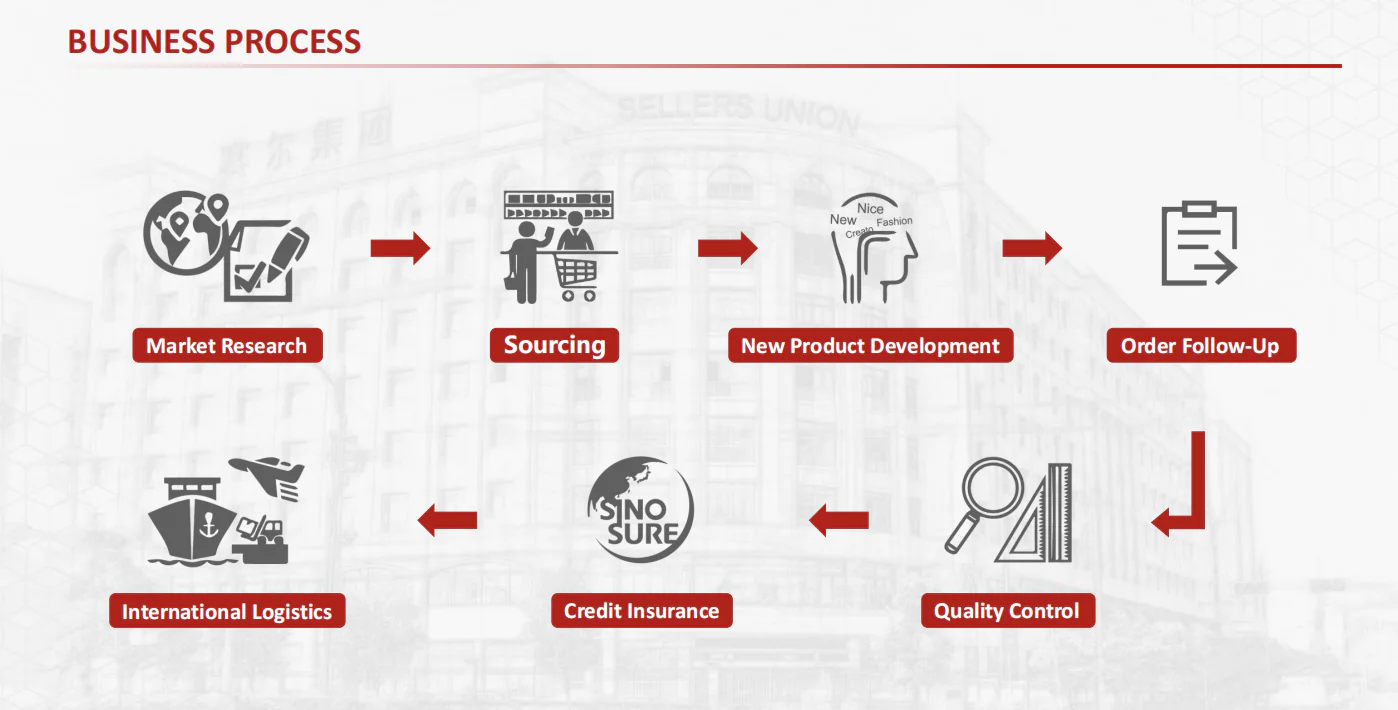
Manage logistics and quality control
Managing logistics and quality control is an indispensable part of modern business operations. In this highly competitive business environment, effective logistics management and quality control can not only improve the operational efficiency of enterprises, but also enhance the competitiveness of enterprises and customer satisfaction. The following will be from the logistics management and transportation of goods and the importance of quality control and after-sales service two aspects, to introduce its importance in enterprise operation and related content.
First of all, logistics management and cargo transportation are crucial links in the operation of enterprises. Logistics management involves the procurement, storage, transportation and distribution of goods, which requires efficient coordination and management. In the modern business environment, logistics management is not only a simple transport of goods, but also includes information flow, capital flow and other aspects of management. Effective logistics management can help enterprises reduce costs, improve efficiency, enhance customer satisfaction, and thus enhance the competitiveness of enterprises.
Cargo transportation is an important link in logistics management, which is directly related to the safety and timeliness of goods. In the process of cargo transportation, enterprises need to choose the right mode of transportation, such as land transportation, sea transportation, air transportation, etc., and need to reasonably plan the transportation route to ensure that the goods can reach the destination safely and quickly. At the same time, enterprises also need to pay attention to the packaging and identification of the goods to ensure that the goods are not damaged during transportation and can be clearly identified. Through effective logistics management and cargo transportation, enterprises can improve the efficiency of cargo transportation, reduce transportation costs, enhance customer satisfaction, and thus enhance the competitiveness of enterprises.
Secondly, the importance of quality control and after-sales service is also the content that needs attention in the operation of enterprises. Quality control is an important part of ensuring that products or services meet standards and customer needs. In the modern business environment, customers are increasingly demanding the quality of products and services, so enterprises need to pay attention to quality control to ensure that the quality of products or services is stable and reliable. Quality control includes the whole process management from product design, production process to product delivery. It is necessary to establish a sound quality management system and quality control standards to ensure that the quality of products or services meets the needs and expectations of customers.
In addition, after-sales service is also an indispensable part of business operations. After-sales service includes product installation and commissioning, maintenance, troubleshooting and other content, it is directly related to customer satisfaction and loyalty. By providing quality after-sales service, enterprises can enhance customers’ trust and satisfaction with products or services, thereby enhancing customer loyalty, promoting re-purchase and word of mouth. At the same time, high-quality after-sales service can also help enterprises find the problems and shortcomings of products or services, timely improvement and optimization, and enhance the competitiveness of products or services.
To sum up, managing logistics and quality control are crucial links in business operations. Through effective logistics management and cargo transportation, enterprises can improve operational efficiency, reduce costs and enhance competitiveness. At the same time, paying attention to quality control and providing high-quality after-sales service can improve the quality of products or services and customer satisfaction, and enhance customer loyalty. Therefore, enterprises need to pay attention to logistics management and quality control, and constantly optimize and improve the relevant links to enhance the competitiveness of enterprises and sustainable development ability.

Ivy is a Sourcing Specialist at Sellers Union. She shares hands-on experience in supplier selection, quality control, and market trends to help global wholesalers make informed decisions. Her goal is to simplify the sourcing process and help brands build efficient supply chains in the industry.









 I****
I**** B*****
 Q******
 L****
L**** K*****
 V*****
 G****
G**** N*****
 V***
V*** D****
D**** J***
J***