











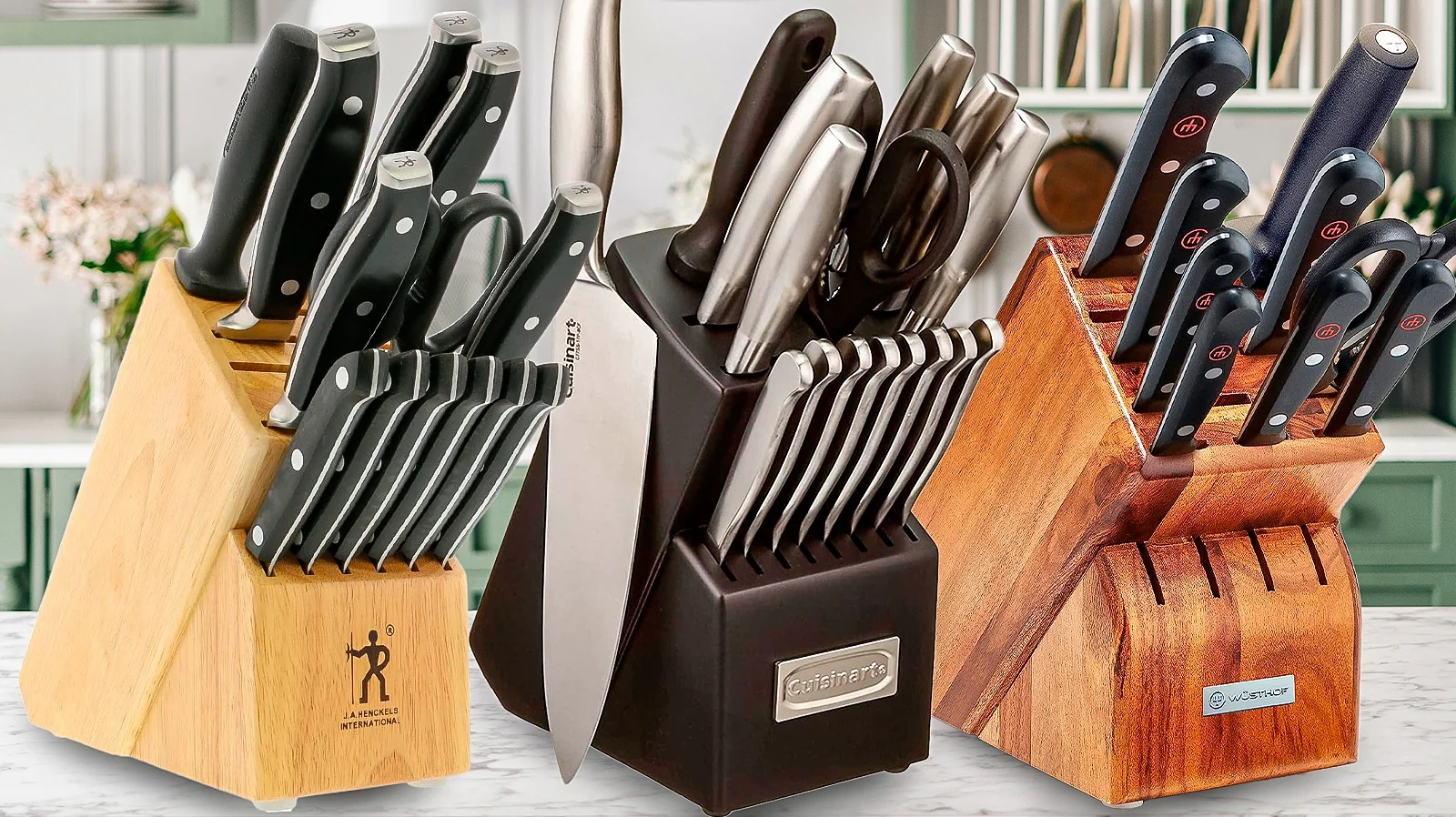
Hey there! So I’ve been working in kitchen knife sourcing for quite a few years now, and honestly, the best education came from just cooking at home and realizing which knives I actually reach for. You know that drawer full of knives you never use? Yeah, we’ve all been there.
Today let’s break down the different types of kitchen knives, what they’re actually for, and more importantly—which ones you really need. No fluff, just practical info to help you make better choices.
Looking for quality knives for your restaurant or store? We help with wholesale sourcing too. Get in touch
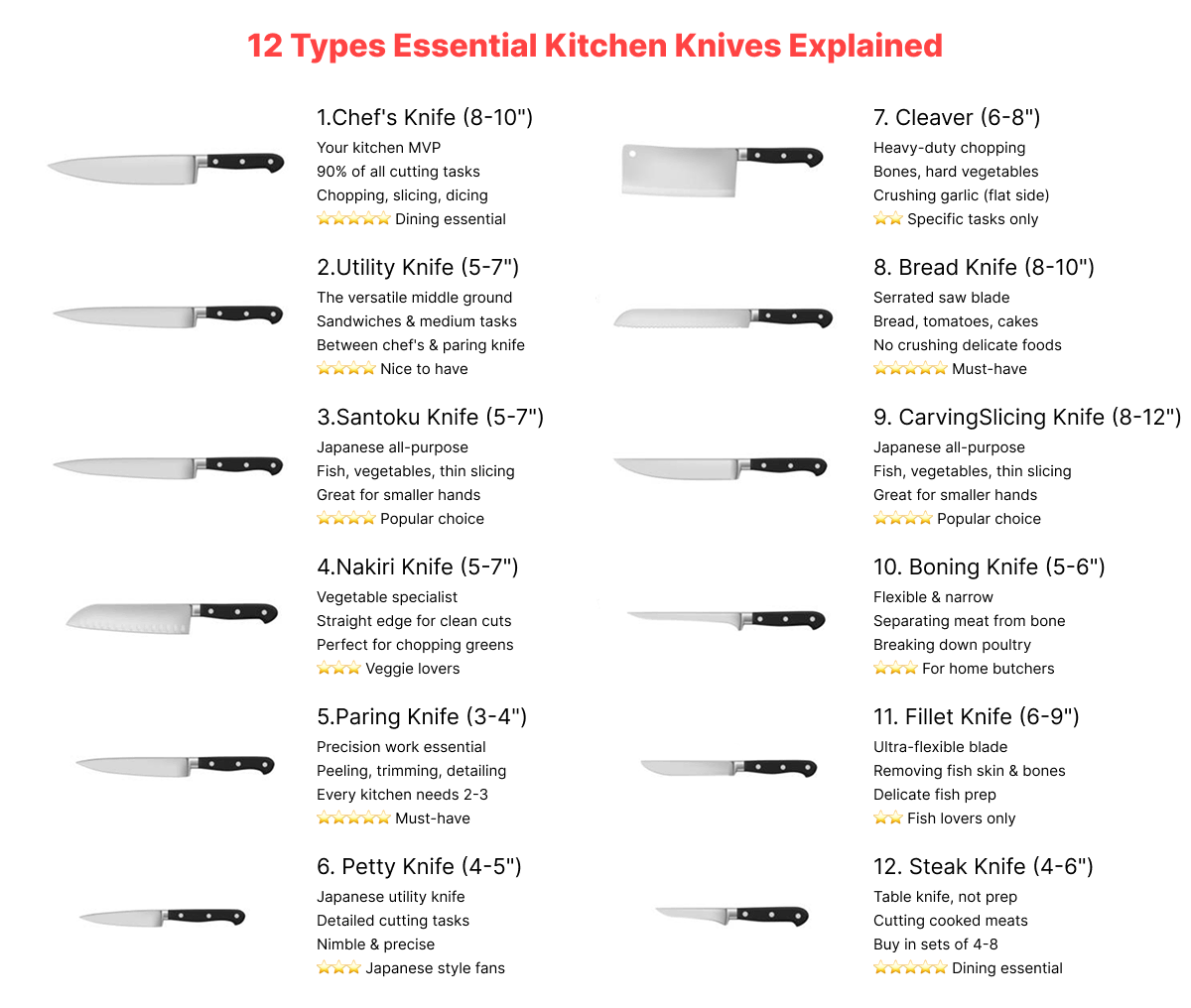
The Essential Three: Start Here
Before diving into specialty knives, every home cook needs these three workhorses:
1. Chef’s Knife (8-10 inches)
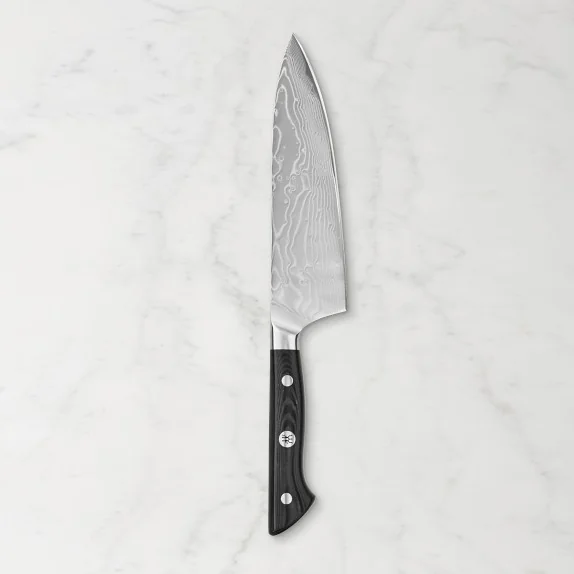
The Kitchen Workhorse
Your chef’s knife will handle 90% of your cutting tasks. This versatile blade features a curved edge that allows for a rocking motion, making it perfect for chopping, slicing, and dicing.
Best for:
- Chopping vegetables and herbs
- Slicing meat and fish
- Mincing garlic and onions
- General food prep
Beginner-friendly: ⭐⭐⭐⭐⭐
Common mistake: Using it to cut through bones or frozen foods (this will damage the blade)
Buying tip: Invest in quality here – a good chef’s knife can last decades with proper care. Look for a weight and handle that feels balanced in your hand.
2. Paring Knife (3-4 inches)
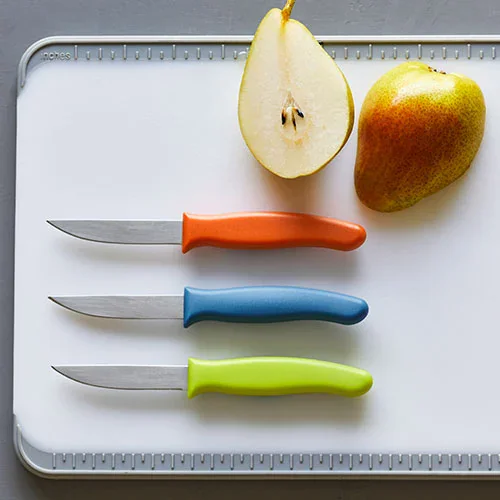
The Precision Tool
This small knife is your go-to for detailed work that requires control and precision. The short blade allows for intricate cuts and maneuvering.
Best for:
- Peeling fruits and vegetables
- Deveining shrimp
- Trimming fat from meat
- Detailed garnish work
- Hulling strawberries
Beginner-friendly: ⭐⭐⭐⭐⭐
Common mistake: Trying to use it for large vegetables – that’s what the chef’s knife is for
Buying tip: You can find excellent paring knives at budget-friendly prices. Have 2-3 on hand.
3. Serrated Bread Knife (8-10 inches)
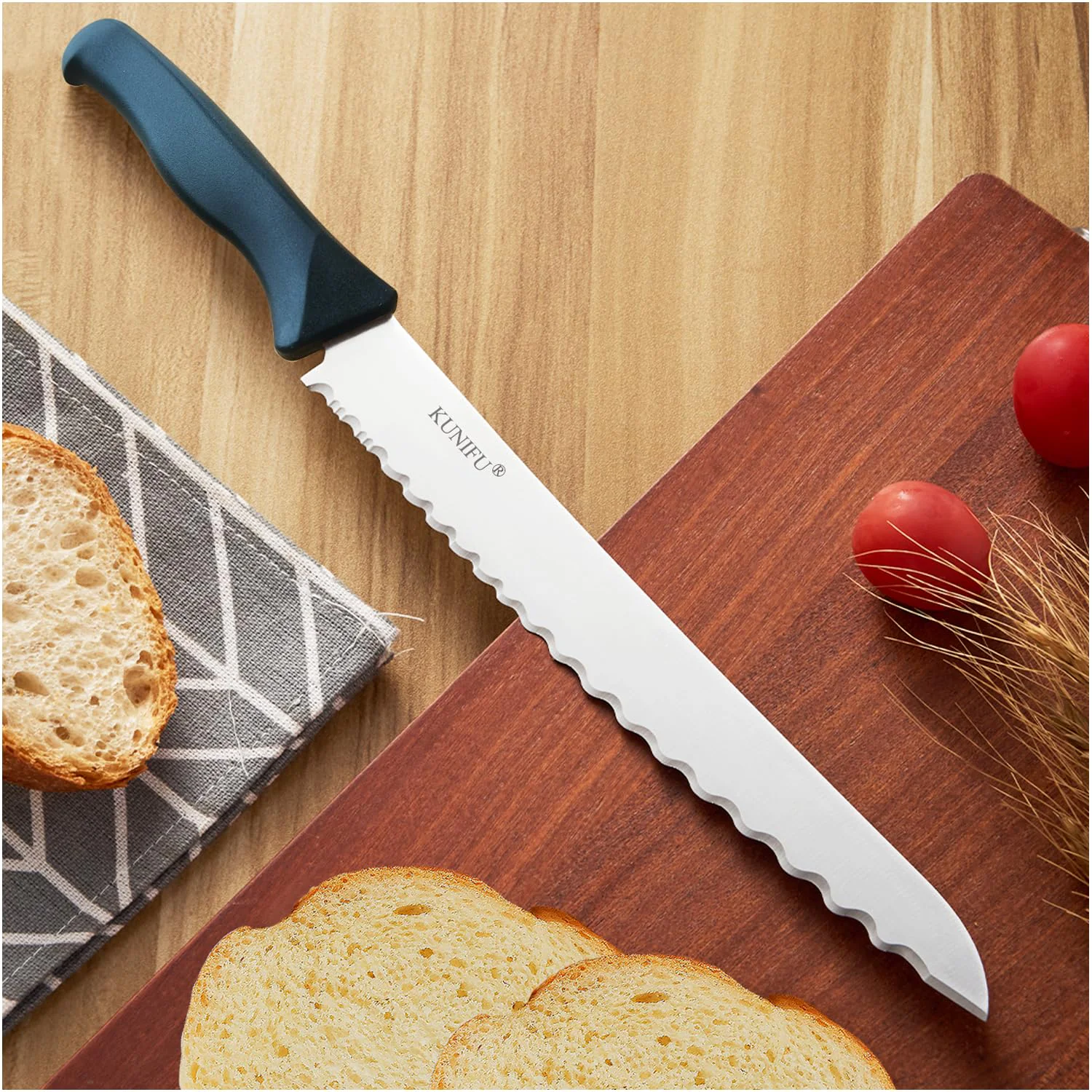
The Saw Master
The saw-like teeth make this knife essential for slicing through foods with tough exteriors and soft interiors without crushing them.
Best for:
- Slicing bread and pastries
- Cutting tomatoes
- Slicing cakes and delicate baked goods
- Cutting through citrus fruits
- Sawing through tough-skinned vegetables like squash
Beginner-friendly: ⭐⭐⭐⭐⭐
Common mistake: Trying to sharpen it at home (serrated knives require professional sharpening)
Buying tip: Mid-range options work well here – you don’t need to spend a fortune
Specialty Knives: Level Up Your Skills
Once you’ve mastered the essentials, these specialty knives can enhance specific tasks:
4. Santoku Knife (5-7 inches)
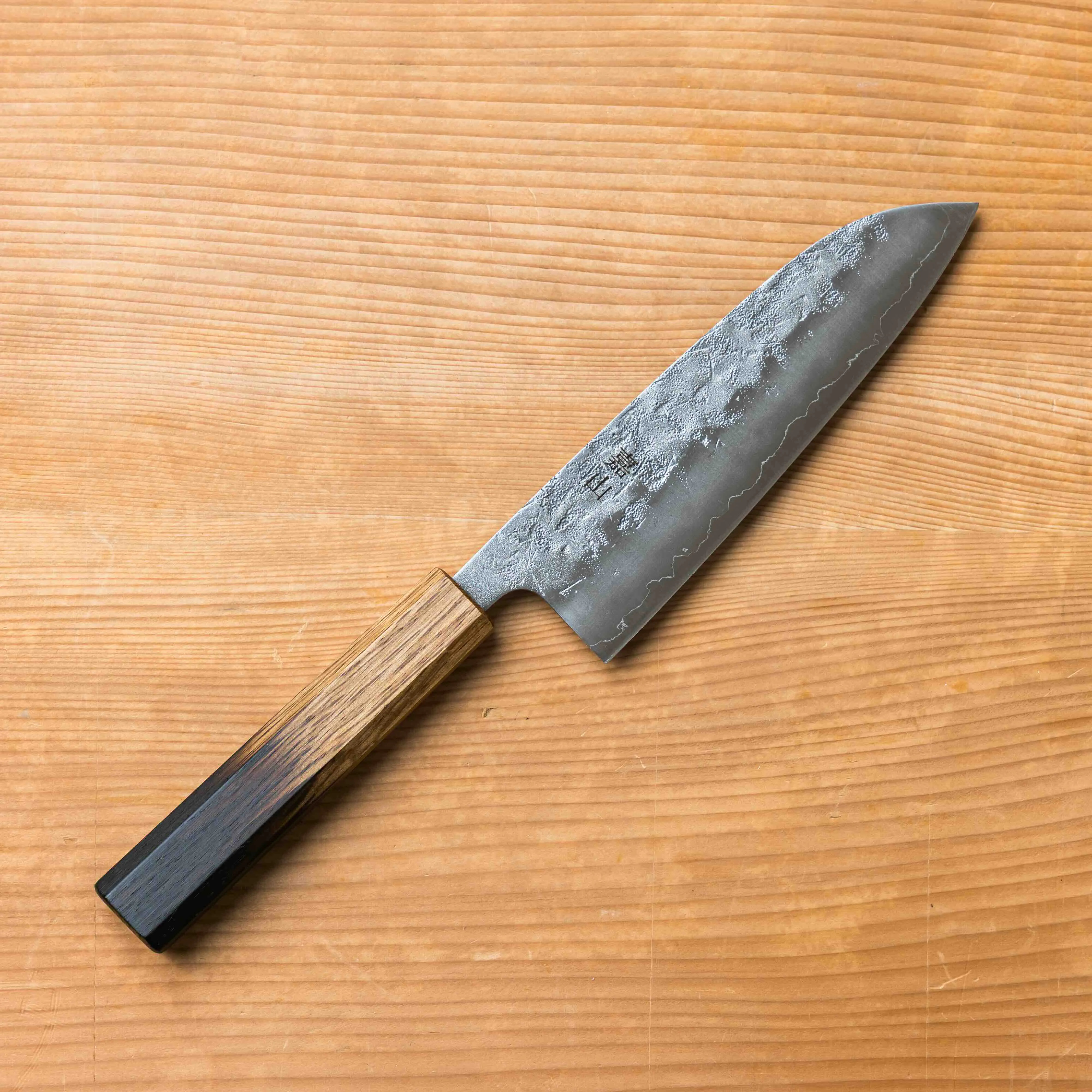
The Japanese Alternative
This Japanese-style knife translates to “three virtues” – slicing, dicing, and mincing. It’s similar to a chef’s knife but with a straighter edge and less curved tip.
Best for:
- Slicing fish
- Cutting thin vegetable slices
- Chopping herbs
- Asian cuisine preparation
Beginner-friendly: ⭐⭐⭐⭐
vs. Chef’s Knife: Choose santoku if you prefer a push-cutting motion over rocking; it’s also great for smaller hands
Buying tip: Look for “Granton edge” (small divots on the blade) to prevent food from sticking
5. Boning Knife (5-6 inches)
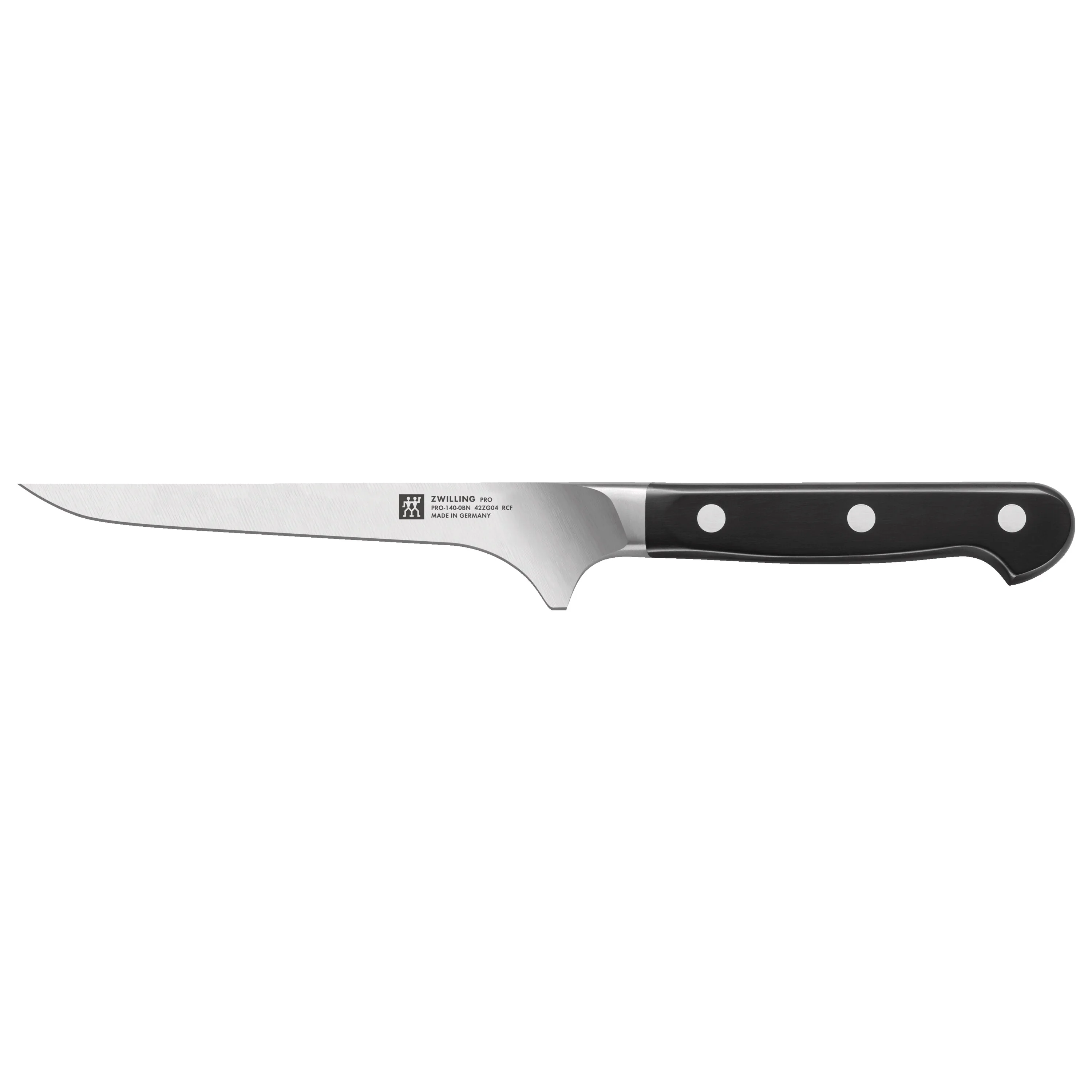
The Butcher’s Friend
This narrow, flexible blade is designed to navigate around bones and separate meat from bone with precision.
Best for:
- Removing bones from poultry, meat, and fish
- Breaking down whole chickens
- Trimming fat and silver skin
- Filleting fish (though a dedicated fillet knife is better)
Beginner-friendly: ⭐⭐⭐
Common mistake: Using excessive force – let the blade’s flexibility do the work
Buying tip: Only necessary if you regularly break down whole meats at home
6. Utility Knife (4-7 inches)
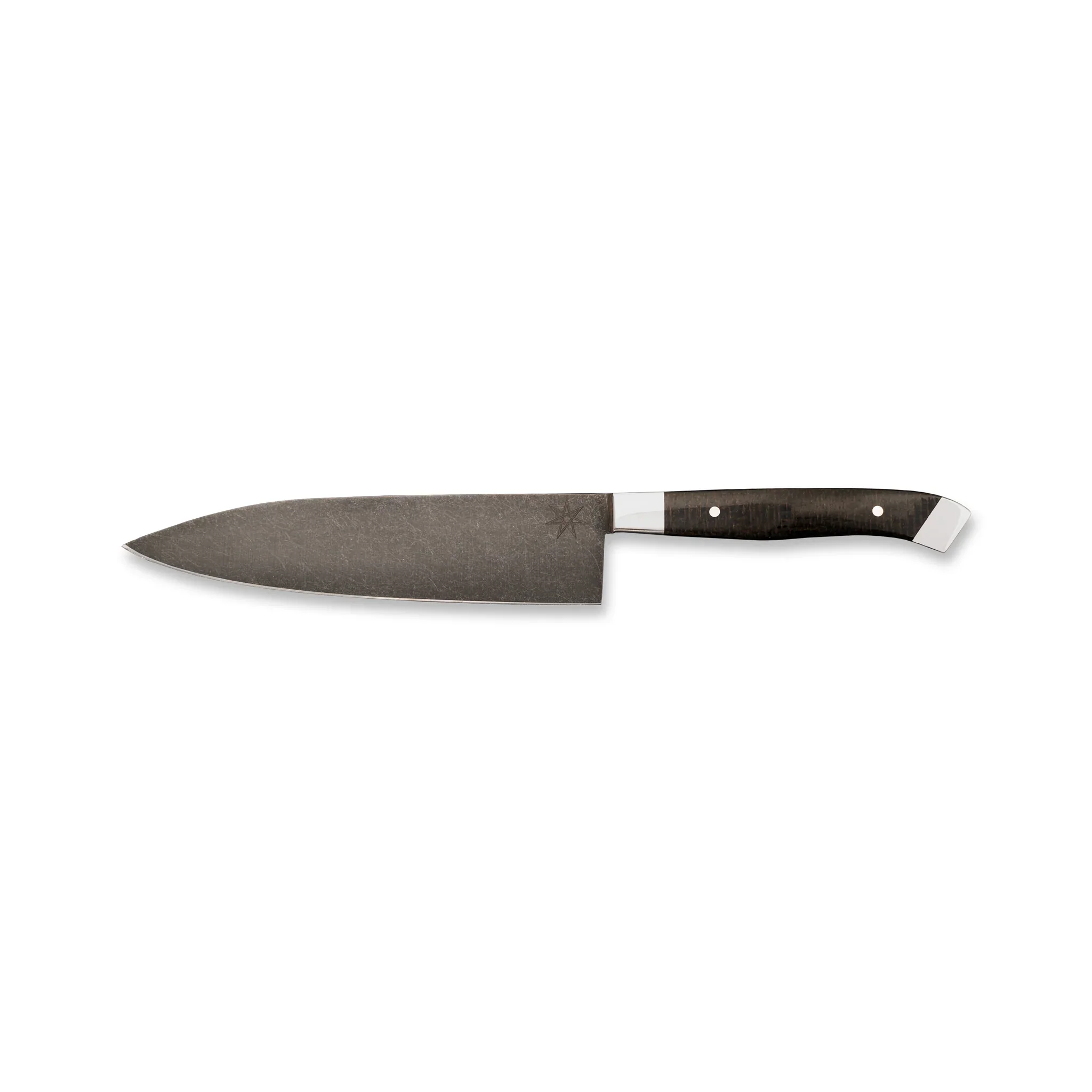
The Middle Ground
This knife bridges the gap between a chef’s knife and a paring knife, handling tasks that are too small for one but too large for the other.
Best for:
- Cutting sandwiches
- Slicing medium-sized fruits and vegetables
- Cutting cheese
- General light-duty tasks
Beginner-friendly: ⭐⭐⭐⭐
Buying tip: Often skippable if you have a good chef’s knife and paring knife
7. Cleaver (6-8 inches)
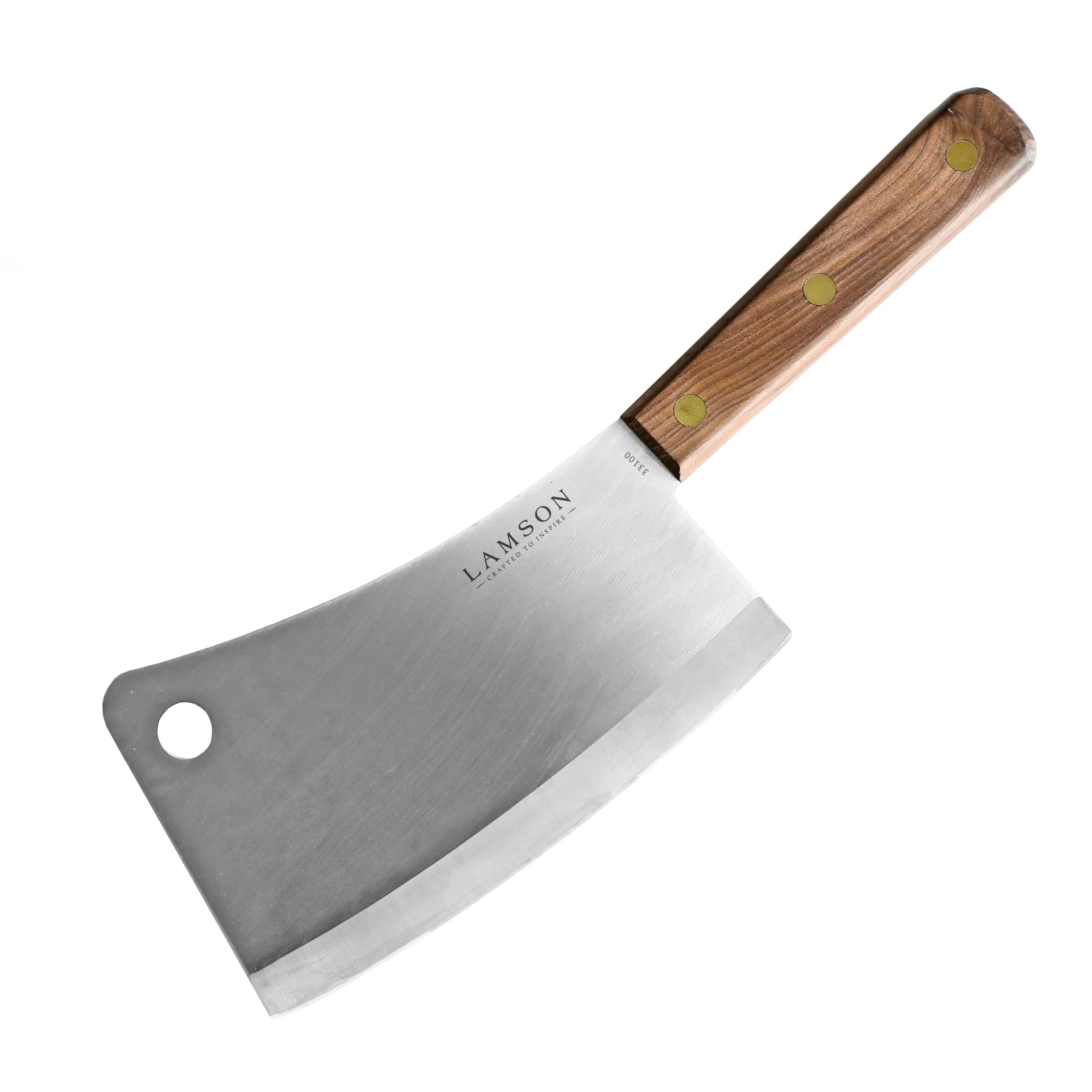
The Heavy Hitter
With its thick, heavy blade and rectangular shape, a cleaver is built for power tasks. Don’t confuse it with a meat cleaver – a Chinese cleaver is much more versatile.
Best for:
- Chopping through bones and joints
- Breaking down large cuts of meat
- Crushing garlic (with the flat side)
- Chinese cooking techniques
Beginner-friendly: ⭐⭐
Types: Chinese cleaver (lighter, for vegetables) vs. Meat cleaver (heavier, for bones)
Buying tip: Not essential unless you frequently work with whole meats or do a lot of Asian cooking
8. Carving/Slicing Knife (8-15 inches)
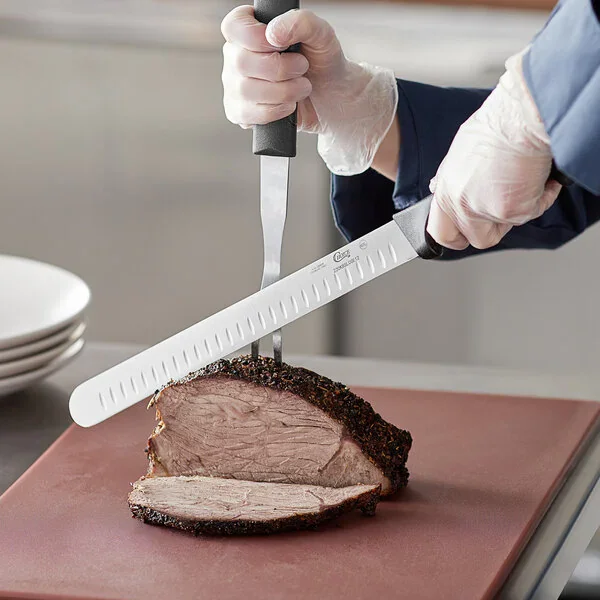
The Holiday Hero
This long, narrow blade is designed to create uniform, thin slices of cooked meat with a single stroke.
Best for:
- Carving roasts and whole turkeys
- Slicing ham
- Cutting large pieces of cooked meat
- Holiday meal preparation
Beginner-friendly: ⭐⭐⭐⭐
Common mistake: Using it on raw meat (it’s designed for cooked meats)
Buying tip: Can be replaced with a chef’s knife if you don’t carve large roasts regularly
9. Fillet Knife (4-9 inches)
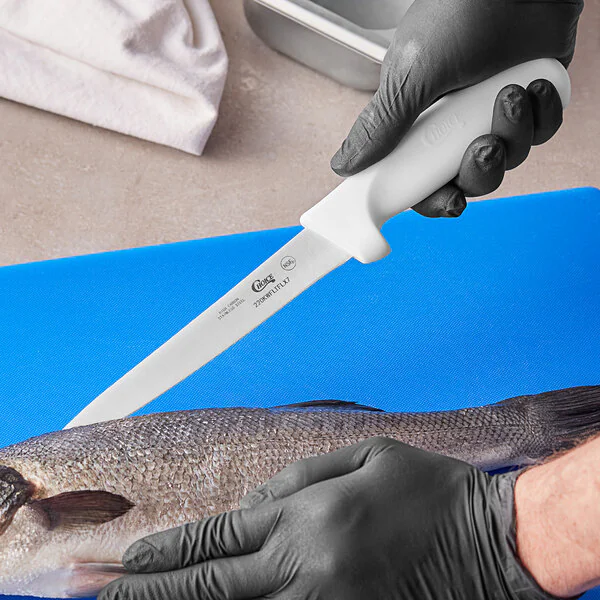
The Fisherman’s Essential
This thin, flexible blade bends to follow the contours of fish bones, allowing you to remove maximum meat with minimum waste.
Best for:
- Filleting fish
- Removing skin from fish
- Deboning delicate fish
- Preparing sushi and sashimi
Beginner-friendly: ⭐⭐
vs. Boning Knife: More flexible and typically thinner
Buying tip: Only necessary if you regularly prepare whole fish
10. Steak Knives (4-6 inches)
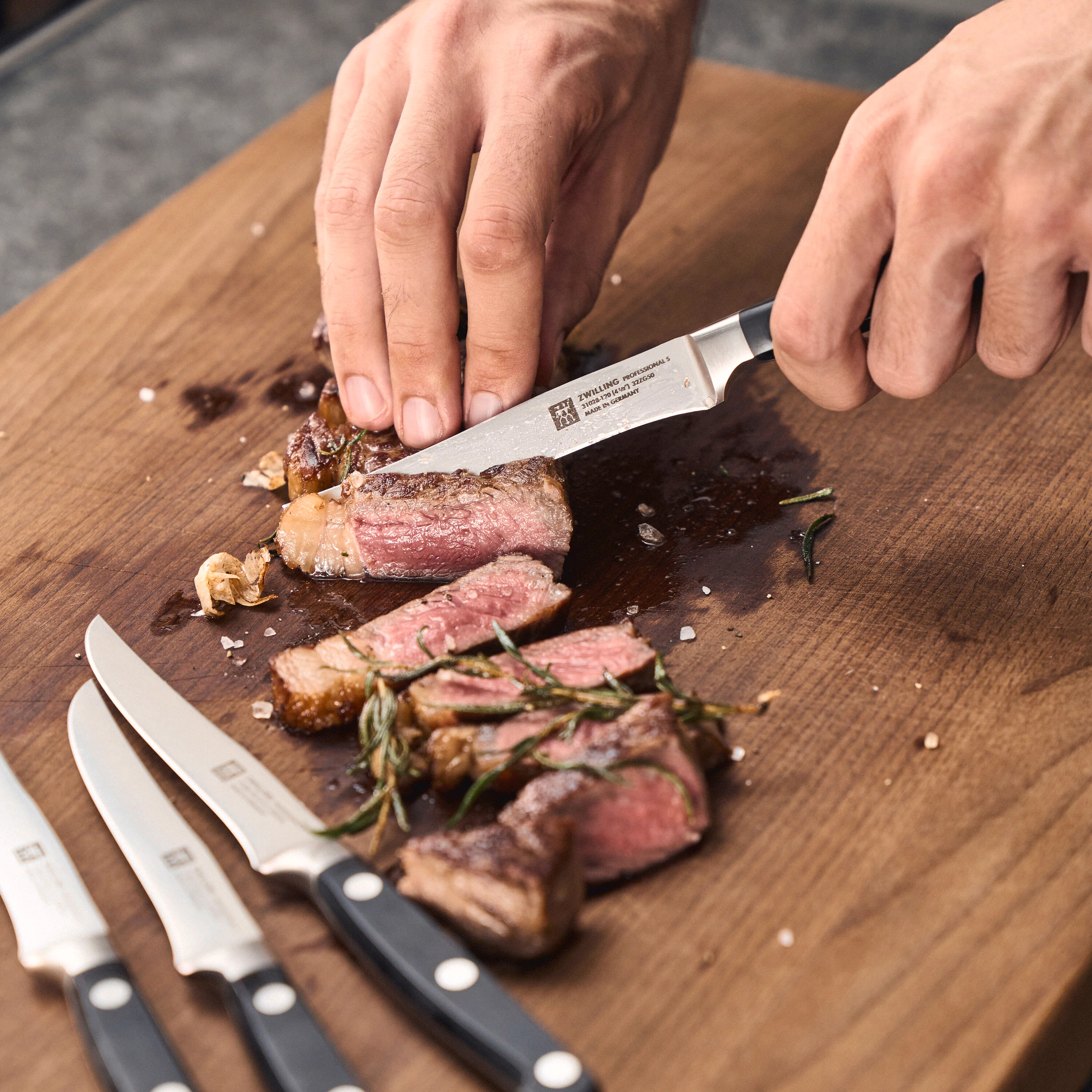
The Table Essential
These are for the dining table, not food prep. They can be serrated or straight-edged and are designed to cut through cooked meats.
Best for:
- Cutting steak and other cooked meats at the table
- Table use only
Beginner-friendly: ⭐⭐⭐⭐⭐
Buying tip: Buy a matching set of 4-8 knives. Dishwasher-safe options are available but hand-washing is always better
11. Nakiri Knife (5-7 inches)
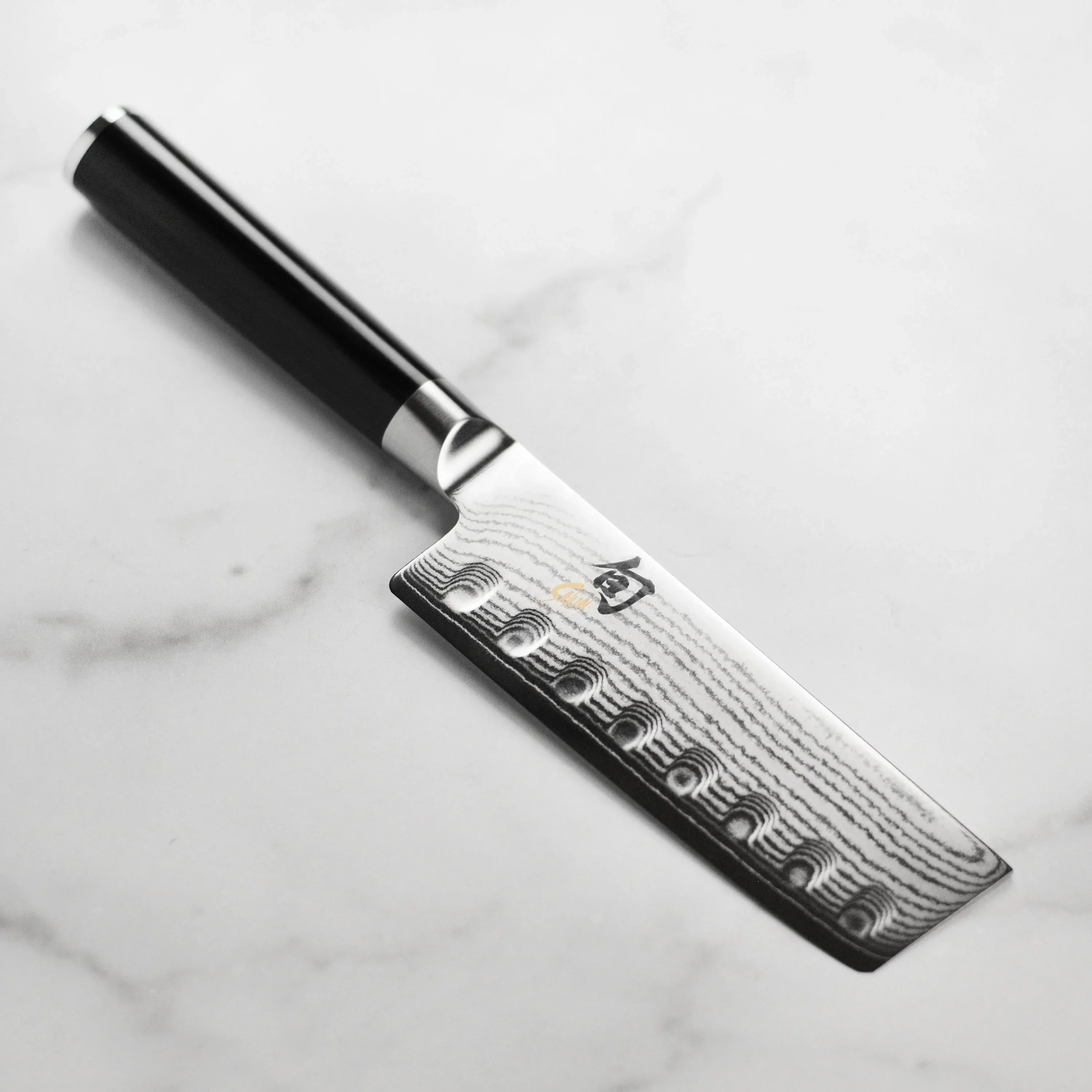
The Vegetable Specialist
This Japanese-style knife features a rectangular blade with a straight edge, making it perfect for push-cutting vegetables without the rocking motion. The name literally means “vegetable cutter.”
Best for:
- Chopping vegetables quickly and efficiently
- Cutting cabbage, lettuce, and leafy greens
- Dicing onions and peppers
- Making uniform vegetable cuts
- Stir-fry prep
Beginner-friendly: ⭐⭐⭐
vs. Chef’s Knife: The straight edge makes contact with the cutting board all at once, giving cleaner cuts for vegetables
Buying tip: Ideal if you cook a lot of vegetarian meals or Asian cuisine. Not essential for most home cooks.
12. Petty Knife (4-5 inches)
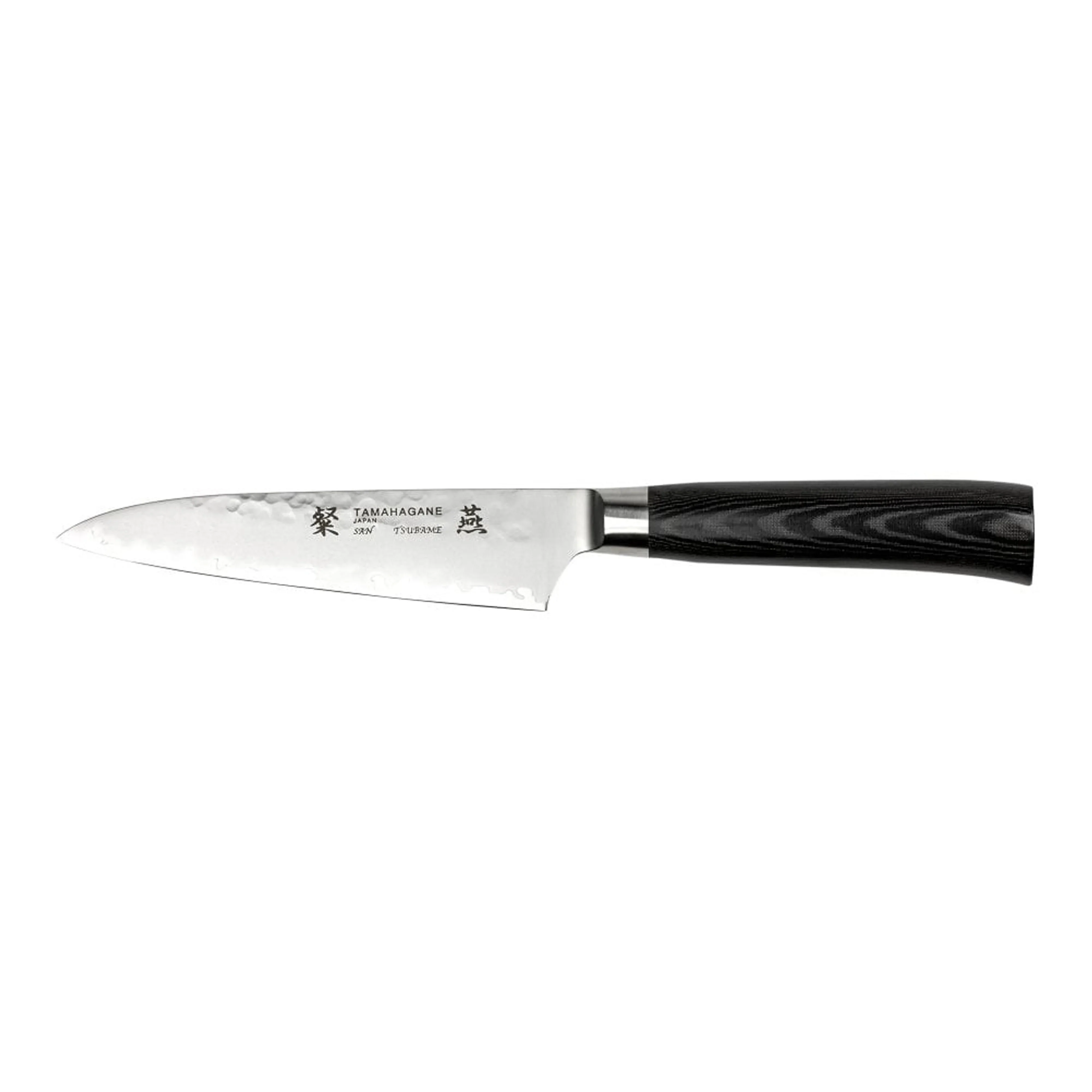
The Japanese Utility Blade
Think of this as the Japanese version of a utility knife – it’s essentially a mini chef’s knife that offers more versatility than a paring knife but more precision than a full-sized chef’s knife.
Best for:
- Detailed cutting work
- Slicing shallots and small vegetables
- Trimming and peeling (more versatile than paring knife)
- Tasks requiring control and precision
- Light protein prep
Beginner-friendly: ⭐⭐⭐⭐
vs. Paring Knife: Slightly longer blade offers more versatility, while paring knife excels at very detailed work
Buying tip: A nice middle option if you like Japanese knife styles, but a good paring knife can cover most of these tasks
Building Your Knife Set: A Practical Approach
The Starter Kit ($100-200)
Perfect for beginners or small kitchens:
- 8″ chef’s knife
- 3″ paring knife
- 9″ bread knife
This covers 95% of home cooking needs.
The Home Cook Set ($300-500)
For regular cooks who want more versatility:
- 8″ chef’s knife (invest in quality)
- 3-4″ paring knife (2 of them)
- 9″ bread knife
- 7″ santoku or utility knife
- Set of 4-6 steak knives
The Enthusiast Collection ($800+)
For serious home chefs:
- 10″ chef’s knife (premium)
- 7″ santoku
- 3-4″ paring knife (2-3 of them)
- 9″ bread knife
- 6″ boning knife
- 6″ utility knife
- 10″ carving knife
- 6″ cleaver or Chinese cleaver
- Set of 8 steak knives
Knife Care Essentials
No matter which knives you own, proper care extends their life:
✅Do’s:
- Hand wash and dry immediately
- Store in a knife block, on a magnetic strip, or with blade guards
- Use wooden or plastic cutting boards (avoid glass and marble)
- Hone regularly with a honing steel (weekly for frequently used knives)
- Professional sharpening 1-2 times per year
❌Don’ts:
- Put knives in the dishwasher
- Leave knives soaking in water
- Store loose in drawers
- Cut on hard surfaces
- Use for non-food tasks (opening packages, etc.)
Frequently Asked Questions
Q: Do I need to buy a knife set or individual knives? A: Individual knives are usually better value. Pre-made sets often include knives you’ll never use. Build your collection based on what you actually cook.
Q: How much should I spend on a chef’s knife? A: $50-150 gets you a quality knife that will last years. Above $150 is often diminishing returns unless you’re a professional.
Q: What’s the difference between German and Japanese knives? A: German knives (Wüsthof, Henckels) are heavier, more durable, and have a curved edge. Japanese knives (Shun, Global) are lighter, sharper, and require more careful handling.
Q: Can I sharpen my knives at home? A: Yes, but there’s a learning curve. Start with a honing steel for maintenance. For actual sharpening, consider a quality whetstone or a professional service until you develop the skill.
Q: What’s the difference between honing and sharpening? A: Honing realigns the blade edge (do this weekly). Sharpening removes metal to create a new edge (do this 1-2 times per year).
The Bottom Line
Start with the essential three (chef’s knife, paring knife, bread knife) and build from there based on what you actually cook. A few quality knives that you maintain properly will serve you better than a drawer full of dull blades.
The best knife is the one you’ll use correctly and care for properly. Before buying, handle knives in person if possible – the right weight and grip can make all the difference in your cooking experience.
Need Help Sourcing Quality Knives?
Whether you’re a home cook looking for guidance or a business owner sourcing knives for your restaurant, retail store, or hotel kitchen, we’re here to help. With years of experience in kitchen knife procurement, we can help you find the right products at the right price point.
For wholesale inquiries:
Questions about which knives to choose for your home kitchen? Feel free to reach out – I’m always happy to share recommendations based on your cooking style.

Ivy is a Sourcing Specialist at Sellers Union. She shares hands-on experience in supplier selection, quality control, and market trends to help global wholesalers make informed decisions. Her goal is to simplify the sourcing process and help brands build efficient supply chains in the industry.




 E******
 T*****
 C*****
 N****
N**** E*******
 R*******
 Y******
 A*******
 Q******
 P*****
 H******
 I*****