










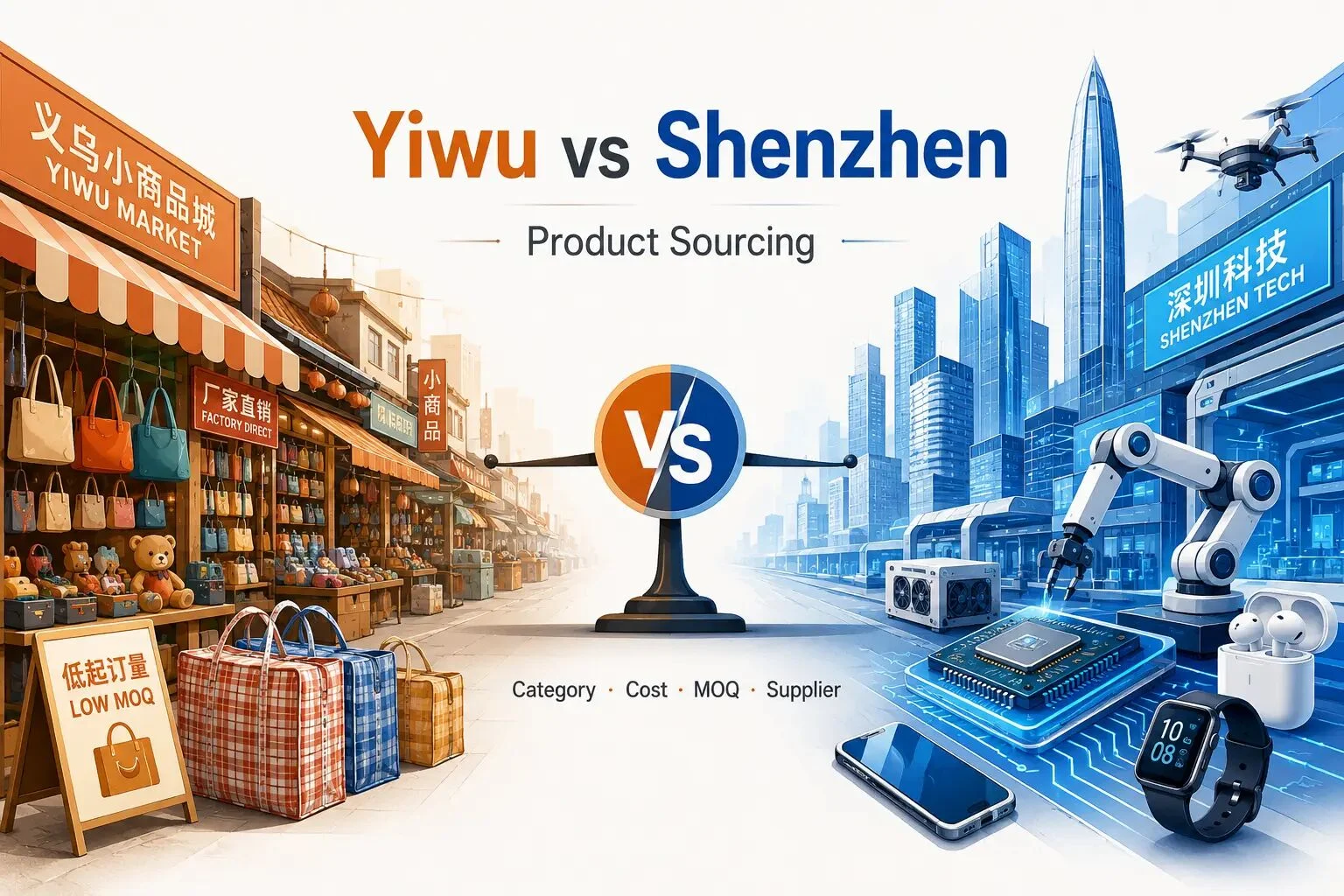
When it comes to product sourcing in China, neither Yiwu nor Shenzhen is universally better. The right choice depends on your product category, budget, order quantity, and business goals.
In general, Yiwu is best for consumer goods and low-MOQ wholesale purchases, while Shenzhen is the preferred destination for electronics, OEM manufacturing, and product development.
Many importers make the mistake of choosing a sourcing city based on popularity rather than product fit. As a result, they end up facing higher costs, unsuitable suppliers, longer lead times, or unnecessary sourcing risks.
Imagine sourcing custom smart devices from Yiwu, only to discover that most suppliers focus on finished wholesale products. Or visiting Shenzhen to buy seasonal decorations and realizing that many factories require larger order volumes than your business needs. These mistakes can waste both time and money.
In this guide, I’ll compare Yiwu and Shenzhen across product categories, costs, MOQs, supplier types, and manufacturing capabilities. By the end, you’ll know which city is the better choice for your next product sourcing project, and whether using both might be the smartest strategy.
Key Takeaways
- Yiwu is best for consumer goods, low MOQ sourcing, and wholesale purchases.
- Shenzhen is the top choice for electronics, OEM projects, and product development.
- Yiwu suppliers are generally more flexible for small and medium-sized buyers.
- Shenzhen offers stronger manufacturing capabilities.
- Many importers source from both cities to optimize costs, product selection, and supply chain efficiency.
What Is the Difference Between Yiwu and Shenzhen?
Why These Two Cities Dominate Product Sourcing in China
Yiwu is home to the famous Yiwu International Trade Market, often regarded as the world’s largest wholesale market for small commodities. Buyers visit Yiwu for products such as home goods, gifts, toys, fashion accessories, stationery, and seasonal items. It is especially popular among wholesalers, retailers, and e-commerce sellers looking for a wide product selection and flexible order quantities.
Shenzhen, located in Guangdong Province, is China’s leading electronics manufacturing hub. The city is surrounded by factories, suppliers, and engineering resources that support the development of consumer electronics, smart devices, components, and OEM products.
Yiwu vs Shenzhen at a Glance
| Factor | Yiwu | Shenzhen |
| Main Focus | Consumer goods and wholesale products | Electronics and technology products |
| Product Variety | Extremely broad | More specialized |
| Typical MOQ | Lower | Higher |
| Supplier Type | Traders, wholesalers, and factories | Mainly manufacturers and OEM suppliers |
| Product Customization | Basic to moderate | Advanced |
| Best For | Wholesalers, retailers, Amazon sellers | Brands, importers, and OEM buyers |
Product Categories Comparison
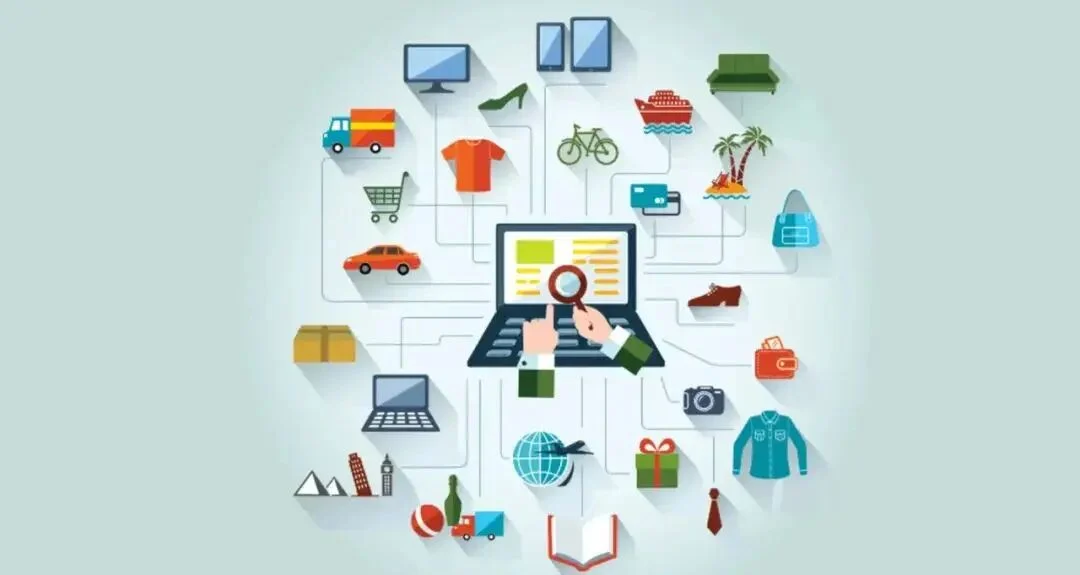
For most buyers, the first question is simple: What products should I source from Yiwu, and what products should I source from Shenzhen? The answer depends on the type of products you sell.
Products Best Sourced from Yiwu
- Home and kitchen products
- Gifts and promotional items
- Toys and stationery
- Fashion accessories
- Beauty accessories
- Pet products
- Seasonal and holiday products
- Party supplies
- Household storage products
- Low-cost consumer goods
Products Best Sourced from Shenzhen
- Consumer electronics
- Mobile phone accessories
- Smart home devices
- Wearable technology
- Security products
- LED lighting
- Electronic components
- Computer accessories
- Audio equipment
- OEM and ODM electronic products
Which City Offers More Product Variety?
When it comes to product variety, Yiwu has a clear advantage. Buyers can find products from thousands of suppliers in a single market. This makes Yiwu ideal for businesses that sell a wide range of items and need frequent product updates.
Shenzhen is more specialized. The city does not offer the same variety as Yiwu, but it provides deeper expertise within the electronics sector. Buyers can access manufacturers, engineers, and component suppliers that are difficult to find elsewhere.
Cost Comparison

For general consumer goods, Yiwu usually offers lower purchasing costs. For electronics and customized products, Shenzhen often provides better value.
Product Pricing Differences
Yiwu is known for affordable wholesale products. Suppliers in the Yiwu sourcing market often focus on high-volume consumer goods that are already in production. As a result, buyers can access competitive prices across many categories.
Shenzhen products may have higher unit prices, especially for electronics. For buyers sourcing technology products, choosing a cheaper supplier is not always the most cost-effective option. Product reliability and quality can have a major impact on long-term profitability.
Hidden Costs Buyers Often Overlook
Product prices tell only part of the story. Several additional costs can affect your total sourcing budget.
These may include:
- Product samples
- Custom packaging
- Product testing
- Quality inspections
- Certifications
- International shipping
For example, an electronic product sourced from Shenzhen may require certification and testing before entering certain markets. A simple consumer product from Yiwu may not have the same requirements.
Which City Offers Better Value for Money?
The best value depends on your business model.
| Buyer Type | Better Choice |
| Small wholesalers | Yiwu |
| Discount retailers | Yiwu |
| Ecommerce sellers | Yiwu |
| Electronics brands | Shenzhen |
| OEM buyers | Shenzhen |
| Technology startups | Shenzhen |
MOQ Comparison
In most cases, Yiwu offers lower MOQs than Shenzhen. This is one of the main reasons why many small buyers choose the Yiwu sourcing market when importing products from China.
Typical MOQ Levels in Yiwu
Yiwu suppliers are known for their flexibility. Many sellers focus on wholesale distribution and understand that buyers may want to test products before placing larger orders.
Typical MOQ ranges in Yiwu include:
- 100–500 pieces per item
- Mixed product orders
- Small trial orders
- Multiple SKUs in one shipment
Typical MOQ Levels in Shenzhen
Shenzhen suppliers are usually manufacturers. Their production lines are designed for larger orders, especially for electronics and customized products.
Typical MOQ ranges in Shenzhen include:
- 500–5,000 pieces per model
- Higher requirements for custom products
- Larger production runs for OEM projects
- Volume-based manufacturing orders
Which City Is Better for Small Buyers?
For most small and medium-sized buyers, Yiwu is the easier starting point. Lower MOQs allow businesses to test new products, evaluate market demand, and manage inventory more efficiently.
If your goal is to start with limited capital and lower risk, Yiwu is usually the better option. If your goal is to develop a branded product and scale production, Shenzhen may offer greater long-term advantages.
Supplier and Factory Comparison

Common Supplier Types in Yiwu
- Trading companies
- Wholesale distributors
- Market stall operators
- Manufacturers
This structure makes wholesale product sourcing more flexible. Buyers can often combine products from different categories into one order and work with lower order quantities.
Common Supplier Types in Shenzhen
- Manufacturers
- OEM factories
- ODM suppliers
- Electronics assembly companies
- Component suppliers
Because suppliers are often closer to the production process, buyers usually have more control over engineering support, and product specifications.
Manufacturing Capability and Customization Comparison
Shenzhen’s Advantage in Product Development
Common capabilities in Shenzhen include:
- Product design and engineering support
- Prototype development
- PCB and hardware manufacturing
- Software and firmware integration
- Custom packaging and branding
- Large-scale mass production
This makes Shenzhen a strong choice for buyers who need product development or technical customization. Many global brands use Shenzhen as their core base for factory sourcing solutions, especially in electronics and smart devices.
Yiwu’s Advantage in Fast Product Procurement
Most suppliers in Yiwu focus on:
- Ready-stock consumer goods
- Fast product replacement
- Multi-category sourcing
- Small adjustments like color or packaging
- Quick order processing
This structure supports faster product sourcing, especially for buyers who need to test markets or launch products quickly. However, deep customization and technical development are limited compared to Shenzhen.
Manufacturing Capability Comparison
| Factor | Yiwu | Shenzhen |
| Product Development | Limited | Strong |
| OEM / ODM Support | Basic | Advanced |
| Customization Level | Low to Medium | High |
Which City Is Better for Custom Products?
If your goal is to build a unique product or brand, Shenzhen is usually the better choice. It supports deeper customization and stronger technical development, especially for electronics and industrial products.
If your goal is fast product procurement with existing items and simple modifications, Yiwu is more efficient.
For many importers, the best strategy is not choosing one city, but combining both. Shenzhen is used for product creation, while Yiwu is used for sourcing supporting products and expanding product lines. This is a common global sourcing strategy used by experienced buyers working with a professional sourcing agent.
When Should You Source from Yiwu?
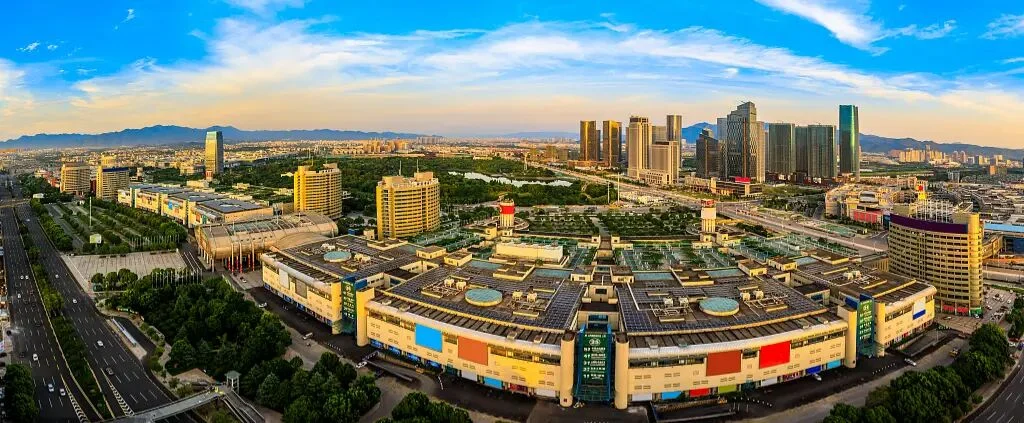
Yiwu is best suited for buyers who need flexible suppliers, a wide product range, and fast access to consumer goods at low order volumes.
If You Need Consumer Goods
Yiwu is the right choice if your business focuses on ready-made consumer products. The Yiwu sourcing market offers millions of SKUs across many categories, all available in one place.
If You Need Low MOQ Sourcing
One of the biggest advantages of Yiwu is low MOQ sourcing. Many suppliers support small trial orders, which helps buyers test new products before scaling.
If You Want Fast Product Procurement
Yiwu is built for speed. Most products are already finished and ready to ship. This means shorter lead times compared to factory production hubs.
If You Need Flexible Supplier Structure
The supplier network in Yiwu is mainly made up of trading companies, wholesalers, and market vendors. This structure allows more flexibility in sourcing different products from different suppliers.
Instead of working with one factory, buyers can combine multiple product types in one shipment.
When Should You Source from Shenzhen?
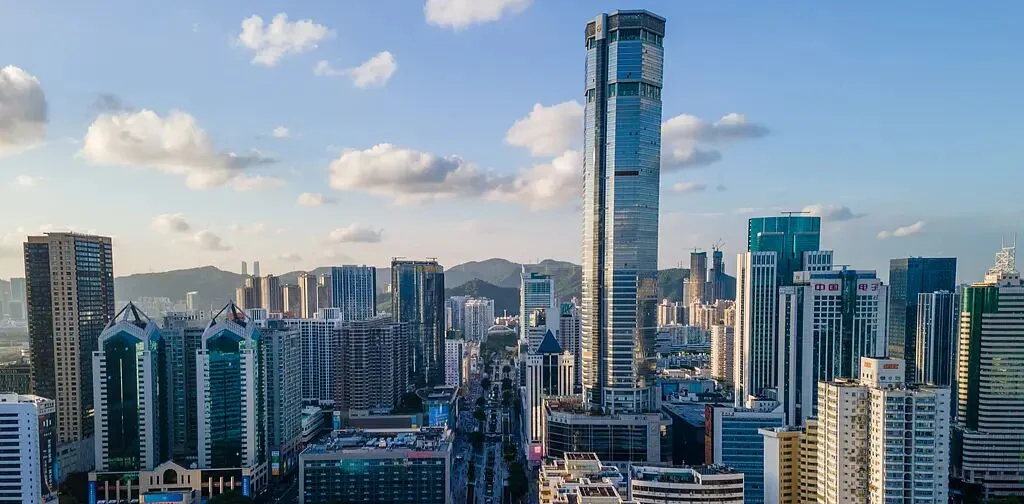
If your product requires design, engineering, or technical development, Shenzhen is usually the stronger choice in product sourcing.
If You Need Electronics or Tech Products
Shenzhen is the global center for electronics manufacturing. It has a complete supply chain that covers components, assembly, testing, and packaging.
Typical products include:
- Consumer electronics
- Smart devices
- Mobile accessories
- Wearable products
- LED and lighting products
- Security and IoT devices
For these categories, Shenzhen offers stronger control over quality and production compared to other sourcing hubs.
If You Need OEM/ODM Manufacturing
Shenzhen is built for OEM and ODM production. Many factories can support full product development, from idea to final product.
Common capabilities include:
- Product design and engineering
- Prototype development
- Firmware and hardware integration
- Custom molds and tooling
- Product testing and certification
Can You Source from Both Yiwu and Shenzhen?
Yes, many experienced importers source from both Yiwu and Shenzhen. In fact, combining the two cities is often part of a stronger product sourcing strategy in China.
How Experienced Buyers Use Both Cities
A common strategy looks like this:
- Use Shenzhen for product development and OEM manufacturing
- Use Yiwu for ready-made consumer goods and accessories
- Combine shipments to reduce logistics costs
- Use one sourcing partner to manage multiple suppliers
Yiwu for Product Expansion, Shenzhen for Product Creation
Yiwu is often used to expand product lines. Buyers can quickly add new items, test markets, and source multiple categories in small quantities.
Shenzhen is used to create new products. It is the preferred hub for custom electronics, smart devices, and branded products that require engineering support.
Role of a China Sourcing Agent in Managing Both Cities
Working with both cities directly can be complex. Suppliers are spread across different regions, and communication can become difficult for overseas buyers.
This is where a professional sourcing partner becomes important. A sourcing agent can:
- Handle supplier sourcing in both Yiwu and Shenzhen
- Manage quality inspection and supplier verification
- Coordinate factory communication and production follow-up
- Provide factory sourcing solutions across multiple product categories
When Combining Both Cities Makes the Most Sense
Using both Yiwu and Shenzhen is especially effective when:
- You sell a wide range of products
- You need both OEM products and ready-made goods
- You want to expand your product catalog quickly
- You are building a long-term global sourcing strategy
FAQ: Yiwu vs Shenzhen for Product Sourcing
What is better for product sourcing, Yiwu or Shenzhen?
Yiwu is better for wholesale consumer goods, low MOQ orders, and fast sourcing.
Shenzhen is better for electronics, OEM products, and custom manufacturing.
The best choice depends on your product type and business goals.
Is Yiwu good for small businesses?
Yes. Yiwu is ideal for small businesses because it offers low MOQ sourcing and flexible product selection.
Many suppliers accept small trial orders, which helps reduce risk for startups and ecommerce sellers.
Why is Shenzhen better for electronics sourcing?
Shenzhen has a complete electronics supply chain, including design, components, and manufacturing.
It supports OEM/ODM production and product customization.
Can I source products from both Yiwu and Shenzhen?
Yes. Many importers use both cities in their sourcing strategy.
Shenzhen is used for product development, while Yiwu is used for wholesale and product variety.
This combination improves supply chain flexibility.
Do I need a China sourcing agent in Yiwu or Shenzhen?
Not always, but it is recommended for beginners or large orders.
A China sourcing agent can help with supplier sourcing, verification, and quality control.
It also reduces communication and sourcing risks.
What is the main difference between Yiwu and Shenzhen suppliers?
Yiwu suppliers are mostly traders and wholesalers focusing on ready-made goods.
Shenzhen suppliers are mainly factories focusing on OEM manufacturing.
Conclusion
Choosing between Yiwu and Shenzhen for product sourcing is not about which city is better overall. It is about choosing the right sourcing hub for the right product.
Yiwu is strong in wholesale consumer goods, low MOQ sourcing, and fast product selection. It is ideal for buyers who need variety, speed, and flexible purchasing. Shenzhen is stronger in electronics, OEM manufacturing, and product development. It is the better choice for buyers who need customization, engineering support, and long-term production control.
Many successful importers do not rely on only one city. Instead, they combine Yiwu and Shenzhen to build a more balanced and efficient supply chain.
Before making a decision, the most important step is to clearly define your product type, order size, and business goals. Once these are clear, choosing the right sourcing hub becomes much easier.
If you are planning to start or scale your product sourcing in China, working with the right partner can save time and reduce risk.
At Sellers Union, we help global buyers source products from Yiwu, Shenzhen, and other major manufacturing hubs. Our team supports supplier selection, price negotiation, quality control, and logistics coordination to make your sourcing process more efficient and reliable.
👉 Get in touch with us today and build a smarter, more stable sourcing strategy for your business.

Ivy is a Sourcing Specialist at Sellers Union. She shares hands-on experience in supplier selection, quality control, and market trends to help global wholesalers make informed decisions. Her goal is to simplify the sourcing process and help brands build efficient supply chains in the industry.



 T******
 W*****
 R******
 X******
 J******
 J*****
 X***
X*** K*******
 S*****
 W******