











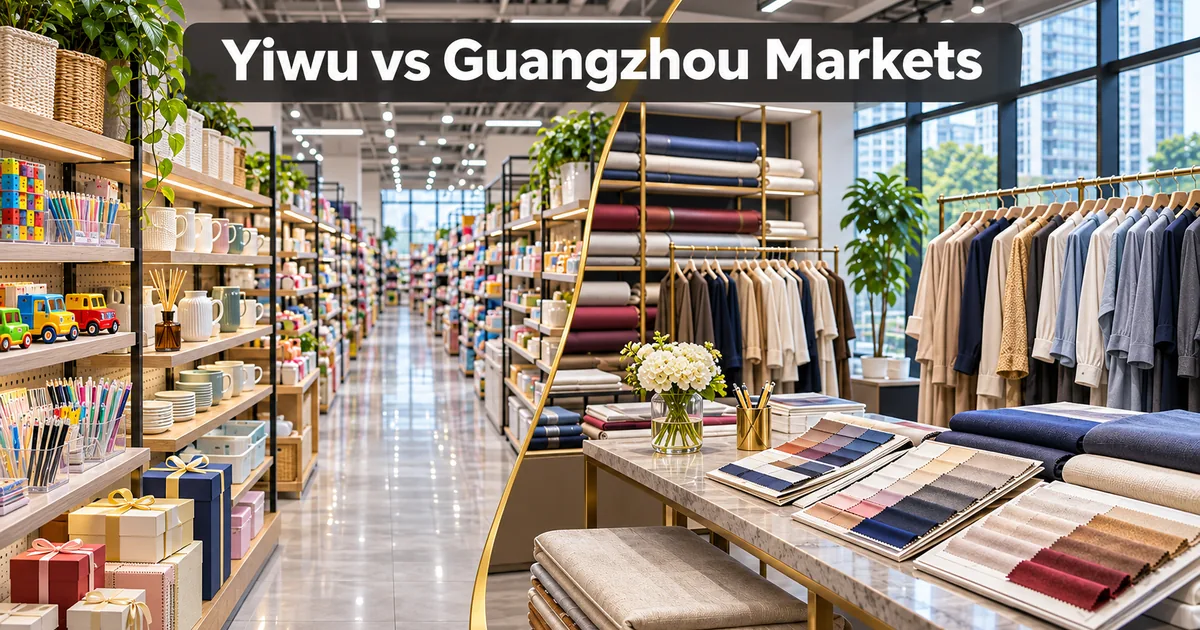
Yiwu Market vs Guangzhou Market comes down to your product list. Yiwu is a strong first stop for buyers comparing many ready-made small goods in one organized market. Guangzhou is often more useful when the brief centers on clothing, fabrics, bags, or meetings with manufacturers at the Canton Fair. Neither city has a universal price or MOQ advantage: those terms depend on the product, supplier, customization, and quantity.
This guide compares the seven decisions that affect an actual purchase order, from supplier type to shipment planning. If you are building a mixed general-merchandise range, our Yiwu sourcing agent service explains how local selection, supplier communication, and consolidation work.
Key takeaways
- Yiwu suits cross-category, ready-made small goods; Guangzhou suits focused fashion and textile sourcing.
- Compare written quotes for the same specification and shipping terms. A market address alone says little about landed cost.
- Guangzhou has 508 specialized wholesale markets, according to a 2026 Guangzhou government report. Plan visits by category rather than treating it as one market.
Yiwu Market vs Guangzhou Market at a Glance
Yiwu International Trade City is a concentrated small-commodities hub, while Guangzhou is a citywide network of specialized markets. The operator describes Yiwu’s Trade City as five core districts; Guangzhou’s government counts hundreds of professional markets. These different layouts change how you shortlist suppliers, budget travel time, and consolidate orders.
| Decision | Yiwu Market | Guangzhou markets |
|---|---|---|
| Best starting point | Mixed general merchandise and ready-made small goods | Category-focused sourcing, especially garments, fabrics, and leather goods |
| Market layout | Product clusters within International Trade City districts | Separate market districts and buildings across the city |
| Supplier encounter | Many trading booths, factory outlets, and manufacturer representatives | Market traders, specialist wholesalers, and manufacturers; depends on location |
| MOQ | Set by the individual booth and item | Set by the individual vendor and item |
| Custom work | Often starts with a standard item, then packaging, color, or logo changes | Strong option for fabric, garment, and bag development when the right production partner is found |
| Buying trip | Efficient for comparing several small-goods categories | Efficient when visits are planned around one category or a Canton Fair phase |
| Freight planning | Consolidation matters for many small supplier orders | Consolidation also matters; route and cost depend on the actual shipment |
1. Which Market Has the Right Products?
Yiwu usually wins for a mixed basket of small consumer goods; Guangzhou often wins for a deep search in fashion and fabrics. Yiwu’s market operator describes clusters for toys, accessories, household goods, and other light products. Guangzhou’s professional markets are organized around specialties such as garments and textiles. Start with the bill of materials or SKU list, not the city’s reputation.
In Yiwu, a buyer can compare holiday decorations, stationery, toys, and household accessories within one market system. That helps when a retail assortment spans unrelated categories. It does not mean every item is made in Yiwu: ask each booth where production takes place and who will issue the invoice.

Guangzhou is a better field trip for a buyer developing an apparel line or comparing fabric, trims, and finished garments. The Guangzhou municipal commerce bureau has highlighted Baima Garment Market and OneLink Plaza as distinct professional markets. The value is category depth, provided you go to the right district.
Decision: Choose Yiwu for assortment breadth. Choose Guangzhou when your purchase order needs deeper comparison within a specialist category. Buyers working on apparel can also review our China wholesale clothing markets guide.
2. How Do Their Market Layouts Change a Buying Trip?
Yiwu makes cross-category market walks easier; Guangzhou requires a route by product cluster. A 2026 market operator disclosure describes Yiwu International Trade City as five core districts within the wider Yiwu small-commodities market. Guangzhou’s government reports 508 specialized markets. The practical question is how many relevant vendors you can inspect in a day, not which city has more stalls.
For Yiwu, sort your SKU list by district before arriving. Record booth number, contact name, sample code, quoted unit price, MOQ, packaging, and lead time at each stop. Do not rely on photos alone: two similar-looking products can differ in material or construction.
For Guangzhou, map visits around one product family. A garment buyer may need separate stops for finished clothing, fabric, and accessories. Add realistic travel time between clusters and confirm opening hours directly with each market or supplier. If you are attending a trade show, leave enough time to follow up with promising exhibitors after the fair.
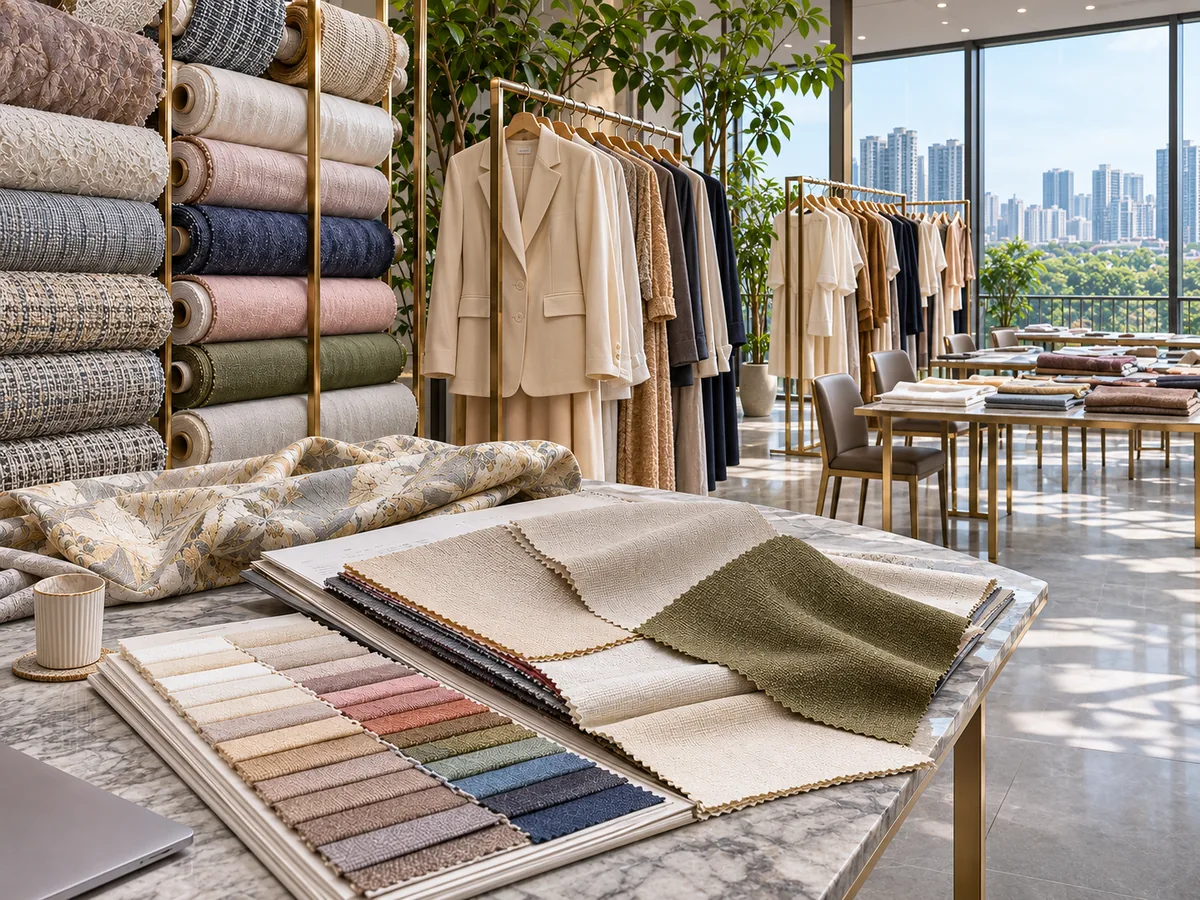
Decision: For a short trip with many small-goods categories, begin in Yiwu. For a focused apparel or fabric brief, build a Guangzhou route around the exact materials and production steps you need.
3. Will You Meet Factories or Trading Companies?
You can encounter both in either city. Yiwu’s market operator includes factory outlets alongside standard booths; Guangzhou’s professional markets also mix vendor types. A showroom or booth is a sales channel, not proof that the seller owns a factory. Verify the legal entity and production location before making a factory-direct claim in your own sourcing records.
Ask the same questions on both trips: Who manufactures this SKU? Can the seller show a business license and factory address? Who controls tooling, testing, and final inspection? Who accepts liability if the approved sample and bulk order differ? For higher-risk products, arrange a factory visit or independent audit.

The useful distinction is how you discover candidates. A Yiwu booth can quickly reveal several competing versions of an existing item. A specialist Guangzhou cluster can reveal more of the materials and production choices behind one category. Neither discovery path replaces supplier verification.
Decision: Treat the booth as a lead, then qualify the company behind it. Our quality control and compliance service covers the checks to plan before shipment.
4. Which City Has Lower MOQs and Better Prices?
Neither city has one standard MOQ or a guaranteed lower price. Stock status, packaging, color, print method, tooling, and order volume all change the quote. The right comparison is the same specification from several qualified suppliers, with identical Incoterms and a clear inspection plan.
Ready-made items may allow smaller trial orders than a new design, but do not assume that applies to every Yiwu stall or Guangzhou market. A vendor may quote by carton, color, size run, or total order value. Ask whether the minimum applies per SKU, per color, or across the whole purchase order.
Use a simple comparison sheet with unit price, MOQ, sample charge, tooling, packaging, defect allowance, production lead time, and freight handover point. Then calculate landed cost for the order you actually plan to place. A cheaper unit price can lose its advantage when you add customization, rejected goods, or fragmented shipments.
Decision: Request like-for-like written quotations. If a supplier says the price is “factory direct,” ask for the manufacturing entity and audit it before treating that phrase as evidence.
5. Where Is Customization Easier?
Guangzhou may give apparel buyers a more direct path to fabric and garment development; Yiwu is often efficient for modifying an existing small-goods SKU. The deciding factor is the supplier’s technical ability, not the city name. Define the change before asking for a custom quote: logo, color, material, dimensions, mold, packaging, or compliance documents each create different work.
For a gift set or home accessory, a ready-made sample can serve as the baseline for a color or packaging change. For a garment, fit, fabric weight, dye consistency, size grading, and trims require a more detailed sample and approval process. In either market, insist on a signed specification, a retained approved sample, and a production inspection plan.

A useful two-step route is to validate demand with a standard product, then move the winning SKU to a custom production brief. This avoids paying for tooling or complex sampling before the retail proposition is proven. It is a purchasing strategy, not a claim that every supplier can handle both stages.
Decision: Choose the location that lets you inspect the critical material and production decisions for your SKU. Compare sample revision terms before paying a deposit.
6. How Do Trade Fairs Affect the Choice?
Guangzhou has an advantage when you want a wholesale-market trip and the Canton Fair in the same itinerary. The fair’s official exhibitor categories span electronics and machinery, home goods, and fashion across separate phases. That gives buyers a structured way to compare exhibitors, then visit relevant local markets. A fair exhibitor and a market vendor still need the same qualification checks.
The fair is a scheduled event, whereas Yiwu’s permanent market is a year-round sourcing destination subject to holiday closures and vendor schedules. Do not build a trip around an old phase calendar. Confirm the current Canton Fair category and date information before booking. Likewise, verify Yiwu booth availability with suppliers before travel.
If your goal is a broad small-goods assortment, the Trade City may provide more relevant comparisons than a fair phase focused on unrelated categories. If your goal is to meet manufacturers and then inspect a specialist market, Guangzhou can make the trip more concentrated.
Decision: Match your visit to the active fair phase and your category list. Do not choose Guangzhou solely because a fair is running.
7. Which Location Makes Shipping and Consolidation Easier?
Shipping convenience depends on where your suppliers produce, where the goods are consolidated, and the destination port. Both cities can support export orders. Yiwu often creates a practical need to combine many small supplier deliveries; Guangzhou buyers may face the same issue across separate specialist markets. Neither city automatically produces a lower freight bill.
Ask every supplier for the pickup location, carton dimensions, gross weight, ready date, and proposed Incoterm. Have the forwarder price the complete route, including local pickup, storage, inspection, export handling, ocean or air freight, and destination charges. When several suppliers share a container, agree who checks quantities and packaging before loading.

For regulated categories, document and label checks belong in the shipment plan from the start. A product that is inexpensive at the booth can become costly if it needs retesting, relabeling, or replacement before export.
Decision: Compare total landed cost and operational handoffs for the exact supplier list. Consolidation is valuable when it reduces duplicated pickup and handling without obscuring responsibility for quality.
Which Market Should You Choose?
Choose Yiwu if your order mixes several ready-made consumer-goods categories and you need to compare many versions quickly. Choose Guangzhou if you are developing a fashion or textile category, need specialist material options, or can pair vendor meetings with the relevant Canton Fair phase. Use both if the order genuinely spans both needs; qualify suppliers and compare the incremental trip and freight cost before committing.
Before booking either trip, send a one-page product brief to prospective suppliers. Include target quantity, materials, photos or drawings, packaging, compliance market, target ready date, and the price term you want quoted. The replies will tell you more than generic city rankings.
Frequently Asked Questions
Is Yiwu cheaper than Guangzhou for wholesale buying?
There is no reliable citywide price comparison. Quote the same product specification and quantity with several suppliers in each relevant market. Compare sample fees, packaging, inspection, inland transport, and destination charges alongside unit price. A low booth price is useful only if the product and shipping terms match your purchase requirements.
Can I buy small quantities in both markets?
Often, but the MOQ is decided by the individual vendor and SKU. Ready-stock items may be easier to test in small batches than custom products. Ask whether the minimum is per design, color, size, or carton and whether you can combine variants. Confirm all terms in a written quotation before paying.
Is Guangzhou Market the same as the Canton Fair?
No. Guangzhou has permanent specialized wholesale markets, while the Canton Fair is a scheduled trade exhibition with product categories divided into phases. A buyer can visit both on one trip, but exhibitor availability, market opening hours, and supplier follow-up need separate planning.
Should I visit both Yiwu and Guangzhou?
Visit both when the expected supplier coverage justifies the extra travel and coordination. For a mixed home-goods range plus a private-label apparel line, a two-city plan may make sense. For one tightly defined category, start with the city and supplier cluster most relevant to the brief, then add a second stop only if it fills a specific gap.
Final Recommendation
The better market is the one that exposes the right suppliers for your purchase order and lets you verify the product before it ships. Use Yiwu for broad ready-made small-goods discovery and Guangzhou for specialist category work, especially fashion and textiles. Compare like-for-like quotations, supplier identities, sample quality, and landed cost before choosing.
With 29+ years in China, Sellers Union Agent offers low-commission, end-to-end sourcing. If your list includes multiple categories, send us your product list for a sourcing quote. Include quantities, specifications, and destination so our team can advise on supplier selection, inspection, and consolidation.

Ivy is a Sourcing Specialist at Sellers Union. She shares hands-on experience in supplier selection, quality control, and market trends to help global wholesalers make informed decisions. Her goal is to simplify the sourcing process and help brands build efficient supply chains in the industry.



 R****
 F***
 N*****
 H*****
 O*****
 W****
 X******
 K******
 P***
 K******
 Y******
 C******