











I work with plastic container manufacturers and suppliers regularly, and I’m also someone who meal preps every week, so dealing with stubborn Tupperware stains has become part of my routine. Those orange tomato sauce stains and yellow curry marks? I’ve battled them all. After years of testing different methods on countless plastic containers, I’ve figured out what actually works. If you’re tired of throwing away perfectly good containers just because they look stained, keep reading.
Why Plastic Containers Stain So Easily
Before we dive into solutions, it’s helpful to understand why this happens. Plastic containers, especially older ones or those made from porous materials, absorb pigments from foods like tomato sauce, curry, turmeric, and beets. The oils in these foods make it worse by helping the color molecules penetrate deeper into the plastic. That’s why a simple soap and water wash doesn’t cut it.
Method 1: Baking Soda Paste (My Go-To Solution)
This is my most-used method because it’s simple, cheap, and works on most stains.
What you’ll need:
- Baking soda
- Water
- Sponge or soft cloth
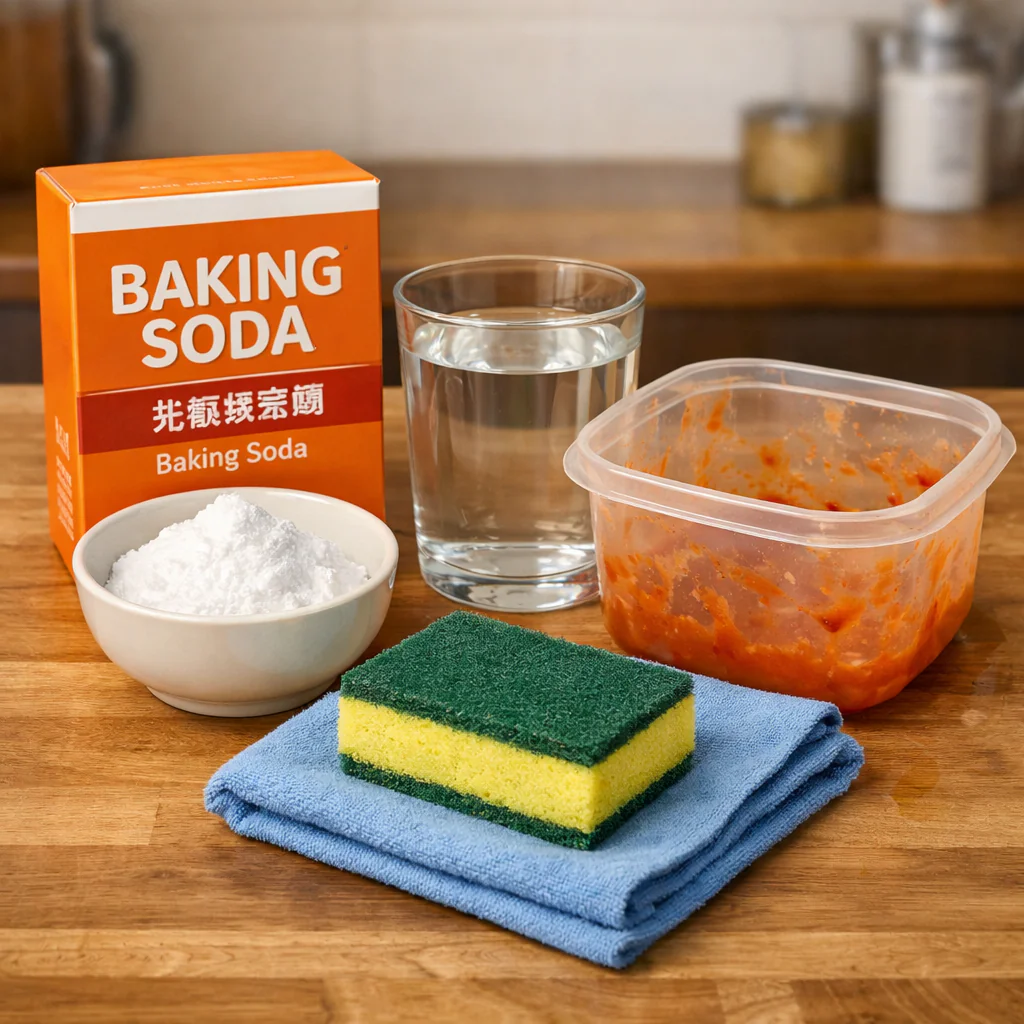
Steps:
- Make a thick paste with 2 parts baking soda to 1 part water
- Apply the paste generously to the stained areas
- Let it sit for 15-30 minutes (longer for stubborn stains)
- Scrub gently with a sponge
- Rinse thoroughly with warm water
For really set-in stains, I sometimes leave the paste on overnight. The mild abrasive action of baking soda combined with its ability to neutralize odors makes this method a winner.
Method 2: Sunlight Method (Surprisingly Effective)
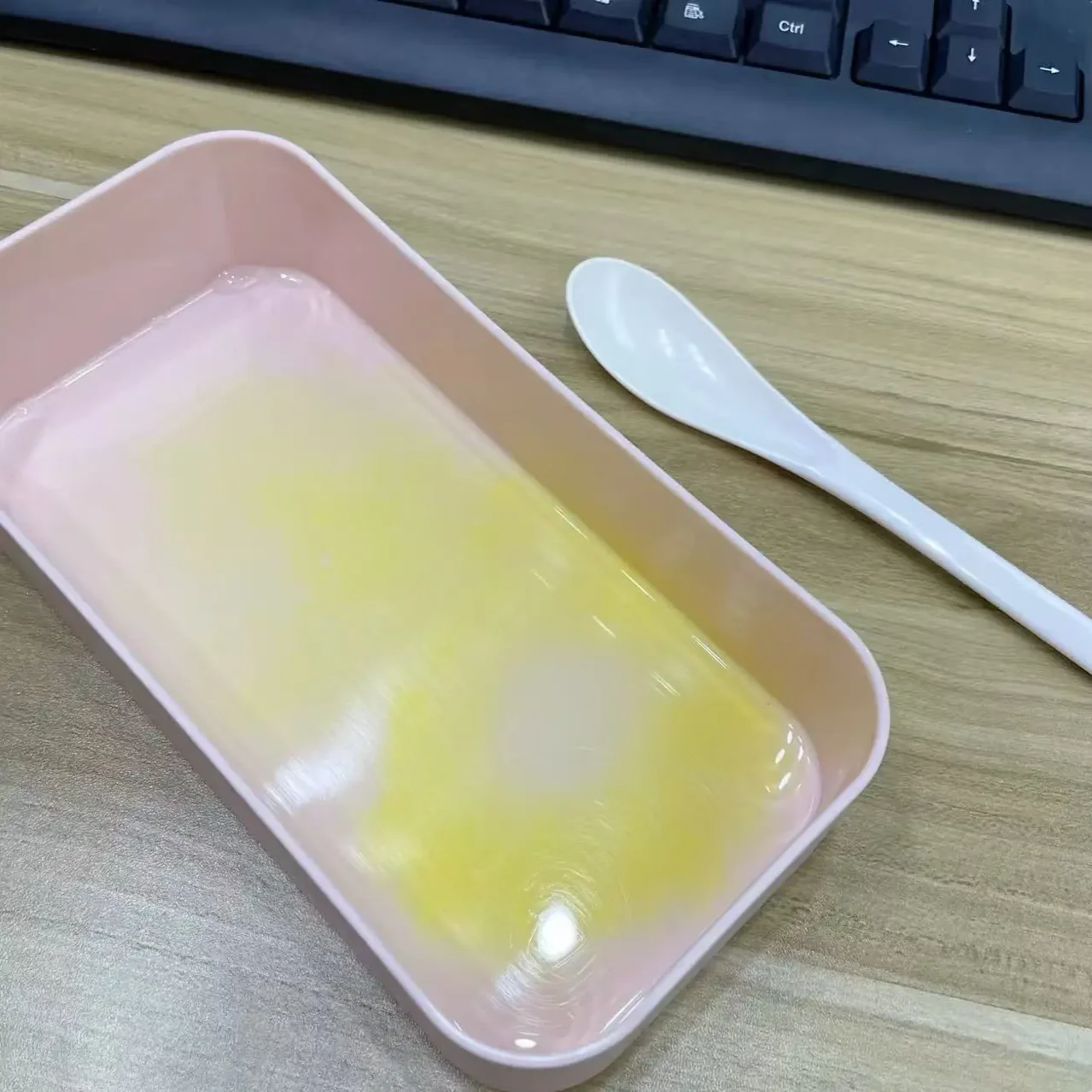
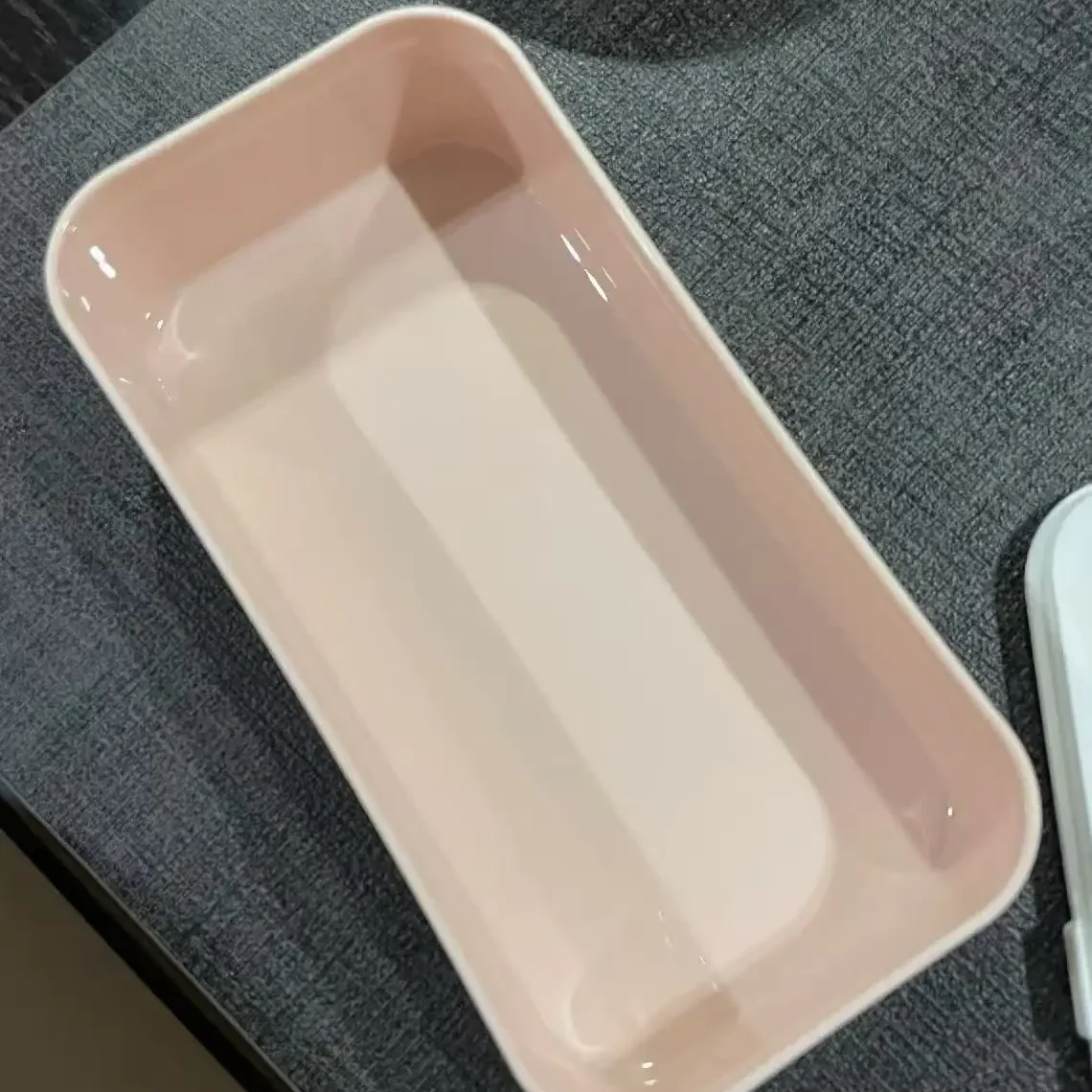
I discovered this method by accident when I left a stained container outside to dry. The UV rays from sunlight naturally bleach stains.
Steps:
- Wash the container with dish soap first
- While still wet, place it in direct sunlight
- Leave for 2-6 hours (check periodically)
- For stubborn stains, apply lemon juice before sun exposure
- Wash again and dry
Pro tip: This works best on bright, sunny days. I usually do this in summer and handle multiple containers at once. The UV lamps used for manicures also work on the same principle and are more efficient than the sun.
Method 3: White Vinegar Soak
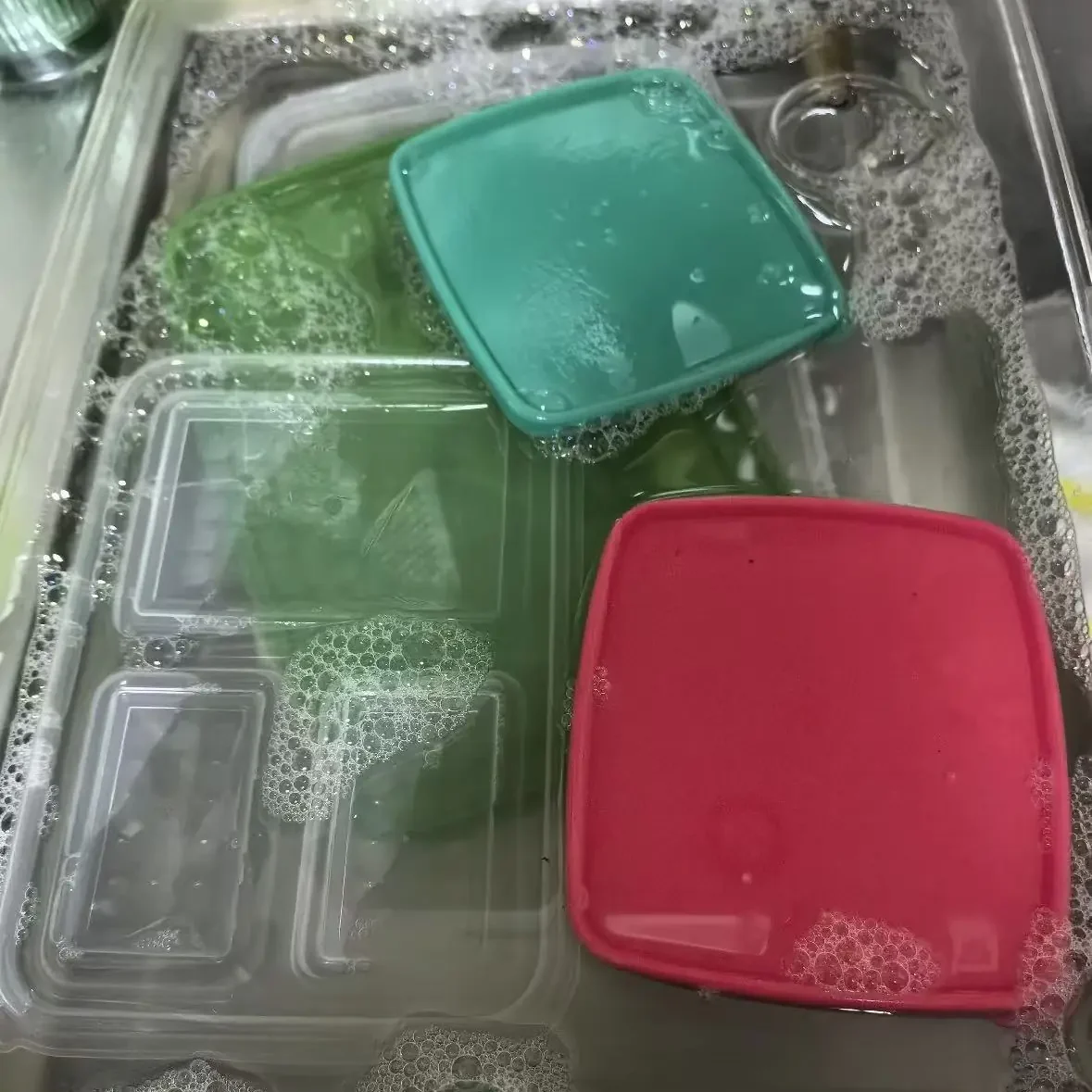
Vinegar is acidic enough to break down stain-causing compounds without damaging plastic.
Steps:
- Fill the stained container with equal parts white vinegar and warm water. You can add an appropriate amount of detergent.
- Let it soak for 30 minutes to 2 hours
- For external stains, soak a cloth in vinegar and wrap it around the container
- Scrub with a sponge
- Rinse well to remove the vinegar smell
I often combine this with the baking soda method for extra tough stains—vinegar first, then baking soda paste.
Method 4: Dish Soap and Ice Method
This one sounds odd, but it works great for oily tomato stains.
Steps:
- Squirt dish soap into the container
- Add a handful of ice cubes
- Add a small amount of water (just enough to create suds)
- Seal the lid and shake vigorously for 1-2 minutes
- Let sit for 10 minutes
- Rinse thoroughly
The ice acts as a scrubbing agent while the cold temperature helps solidify oils, making them easier to remove.
Method 5: Hydrogen Peroxide (For Tough Cases)
When nothing else works, I pull out hydrogen peroxide.
Steps:
- Fill the container with 3% hydrogen peroxide
- Add a tablespoon of baking soda (it will fizz—this is normal)
- Let it sit for 30 minutes to 1 hour
- Scrub if needed
- Rinse thoroughly
Caution: Test on a small area first, as hydrogen peroxide can sometimes lighten colored plastic.
Preventing Stains (What I’ve Learned)
Prevention is easier than removal. Here are my strategies:
- Spray with cooking oil: A light coating before adding tomato-based foods creates a barrier
- Use glass containers for tomato and curry: I reserve certain containers specifically for these foods
- Wash immediately: Don’t let stained containers sit overnight
- Avoid microwaving: Heat opens up the pores in plastic, making staining worse
- Use parchment paper: Line containers with it when storing staining foods
Special Tips for Specific Stains
Tomato sauce stains: The classic orange nightmare. I find the sunlight method works best, especially when combined with a baking soda scrub first.
Curry and turmeric stains: These yellow stains are particularly stubborn. My winning combination: vinegar soak followed by baking soda paste, then sun exposure if needed.
Beet stains: Similar to tomato stains. The baking soda paste method usually handles these within one treatment.
Coffee and tea stains: Though less common in food containers, these respond well to baking soda or a quick denture tablet soak.
What About Tupperware Stains Specifically?
Tupperware and similar branded containers are usually made from higher-quality plastic, but they still stain. The good news is they’re more durable, so you can be a bit more aggressive with scrubbing. I’ve found that genuine Tupperware often responds better to the vinegar method than cheaper plastic containers do.
When to Give Up on a Container
I’m all for saving containers, but sometimes it’s time to let go:
- If the plastic has become warped or cracked
- If there’s a persistent smell even after cleaning
- If the plastic has become cloudy or brittle
- If it’s an old container that might contain BPA
Stains alone don’t mean you need to toss it—if the container is still structurally sound and odor-free, a stain is just cosmetic.
Frequently Asked Questions
How do you remove tomato stains from Tupperware?
My most effective method for tomato stains is combining baking soda paste with sunlight. First, make a paste of baking soda and water, apply it to the stained areas, and let it sit for 20-30 minutes. Scrub gently, rinse, then place the container in direct sunlight for several hours. The baking soda helps lift the stain while UV rays naturally bleach away the orange discoloration. For really stubborn stains, I repeat this process or add a vinegar soak beforehand.
How do you get curry stains out of plastic containers?
Curry stains, especially from turmeric, are notoriously difficult. I’ve found that a white vinegar soak (30 minutes to 1 hour) followed by a baking soda scrub works best. After that, if any yellow tinge remains, place the container in direct sunlight for 3-4 hours. The acidity of vinegar breaks down the stain compounds, baking soda provides gentle abrasion, and sunlight does the final bleaching. Sometimes I need to repeat this process twice for deep-set curry stains.
Why do plastic containers stain so easily?
Plastic containers stain because the material is slightly porous at a microscopic level, allowing pigmented molecules from foods to penetrate the surface. This is especially true with older containers or lower-quality plastics. Foods high in carotenoids (like tomatoes) and curcumin (like turmeric) contain strong pigments that bond easily with plastic. The oils in these foods act as carriers, helping the color molecules sink deeper. Heat makes it worse by expanding the plastic’s pores, which is why microwaved tomato sauce stains are harder to remove.
Can you use bleach to remove stains from plastic containers?
While diluted bleach can remove stains from plastic containers, I generally don’t recommend it unless you’re extremely careful. If you do use it, mix 1 tablespoon of bleach with 1 cup of water, soak for no more than 10 minutes, and rinse thoroughly multiple times. However, bleach can weaken plastic over time, leave a chemical smell, and potentially create harmful residue if not rinsed properly. I prefer safer alternatives like baking soda, vinegar, or hydrogen peroxide, which are just as effective without the risks.
My Maintenance Routine
Here’s how I keep my plastic containers looking good:
- Immediately after use: Rinse with hot water, especially if it contained staining foods
- Weekly: Give any slightly stained containers a baking soda treatment
- Monthly: Rotate containers and do a sunlight treatment on any with persistent stains
- As needed: Deep clean with vinegar or hydrogen peroxide for stubborn cases
Final Thoughts
Removing stains from plastic containers doesn’t require harsh chemicals or expensive products. With simple household items like baking soda, vinegar, and sunlight, you can keep your Tupperware looking nearly new. The key is acting quickly when stains appear and knowing which method works best for which type of stain. After cleaning hundreds of containers over the years, I can tell you that even the most stubborn tomato and curry stains are usually removable with patience and the right technique.
Sellers Union Agent has been providing professional sourcing and procurement services for over 15 years, connecting businesses worldwide with quality manufacturers in China. While we specialize in B2B sourcing solutions, we believe in sharing practical knowledge that helps everyone.

Ivy is a Sourcing Specialist at Sellers Union. She shares hands-on experience in supplier selection, quality control, and market trends to help global wholesalers make informed decisions. Her goal is to simplify the sourcing process and help brands build efficient supply chains in the industry.
 S******
 H******
 Z*****
 F******
 C*****
 Z******
 Y******
 C***
C*** B******
 B*****
 V******
 C*****