










>A itinerary and seven days of companionship not only completed the procurement task, but also established a cross-cultural trust.
Outside the window, the runway of Yiwu Airport extends in the morning light, and my Russian client Ivan and his assistant Anna are about to embark on their journey home. As they bid farewell, Ivan said in slightly awkward Chinese, “This is not just a purchase, but more like a family journey. You not only helped us save money and time, but also made us feel a true partnership
This statement reminds me of the anxiety and uncertainty they had when they first got off the plane seven days ago. Now, looking at their satisfied smiles and abundant procurement results, I deeply understand that the significance of these seven days goes far beyond commercial transactions.

Day 1: The Ice Breaking Journey from Stranger to Familiar
Ivan and Anna arrived in the evening, after more than ten hours of flight, with exhaustion on their faces. I prepared a Russian welcome sign in advance and arranged for a comfortable mid size sedan to pick me up. In the car, I handed over a carefully prepared folder containing bilingual travel arrangements for both Chinese and Russian, emergency contact information, and a surprise – Ivan’s favorite Russian candy “Kraft”.
How do you know I like this? “Ivan asked in surprise.
Good cooperation starts with understanding, “I replied with a smile. This small detail immediately brought us closer together.
The dinner is arranged at a fusion restaurant in Yiwu, which not only features exquisite Chinese cuisine, but also takes into account the dietary habits of Russians – using less seafood and providing more grilled meat and root vegetables. During the meal, we discussed in detail the procurement focus for the next six days: Ivan’s company needs to purchase household items and holiday decorations, with a limited budget but high quality requirements.

Days 2 to 5: Efficient and Accurate Market Exploration
Day 2: Professional Tour and Strategic Planning
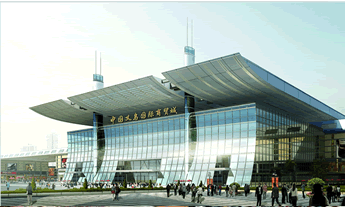
In the morning, we did not directly enter the market, but first held a procurement strategy meeting in a conference room. I presented a detailed layout of Yiwu International Trade City and marked the optimal route based on Ivan’s needs.
If it weren’t for your plan, we would need to spend at least two more days searching for suitable areas, “Anna sighed after the meeting.
In the afternoon, we began the actual inspection. In the home furnishings area of the first district, Ivan was attracted by the dazzling array of goods and almost wanted to place an order on the spot. I would like to remind you that the prices of the same product on different floors may differ by 15%. Let’s make a comprehensive comparison first
Day 3: Price Negotiation and Quality Control
Today, we focused on inspecting five pre selected suppliers. At a kitchenware showroom, Ivan was interested in a set of stainless steel cookware, but the price was higher than expected. I not only assisted in price negotiations, but also took them to visit the factory’s production line to confirm raw materials and production processes.
In the end, we successfully reduced the price by 22% and obtained more favorable payment terms. Ivan said pleasantly, “When we negotiate on our own, we usually only get a discount of 5-10%
Day 4:Solve the pain point – logistics and payment optimization
During the procurement process, Ivan was most concerned about logistics costs and payment security. We have introduced a long-term logistics company that has reduced transportation costs by 30% through bulk shipping and route optimization. At the same time, we assisted in setting up a third-party escrow payment account to address Ivan’s concerns about the risk of prepaid payments.

Day 5: Sample confirmation and customization requirements
This day is dedicated to handling sample confirmation and customization requirements. At a decoration factory, Ivan wants to modify the design of a Christmas decoration. I not only acted as a language bridge, but also put forward practical suggestions based on my understanding of the Russian market: adding gold elements to the traditional red tone, which is more in line with the aesthetic preferences of Russian consumers.
The factory manager immediately stated that they could provide modified samples within three days and promised not to affect the delivery time. Ivan was shocked by this efficiency: “In Moscow, such modifications require at least two weeks of discussion.

Day 6: Cultural Experience and Deepening of Relationships
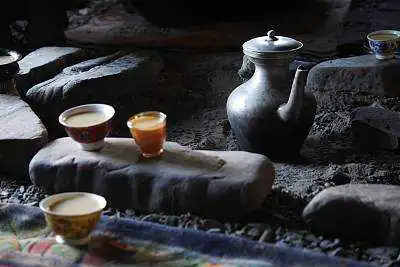
After completing the main procurement task, I arranged a relaxing cultural experience for the day. In the morning, we visited the Yiwu City Planning Museum to let our clients understand the development history of this “world supermarket”. In the afternoon, we experienced Chinese tea culture. In a quiet tea room, we sipped tea and discussed potential future collaborations.
For dinner, it was authentic Zhejiang cuisine. I specially ordered Dongyang Meat Cake, Yiwu Brown Sugar Fried Dough Twists and other local specialties. Ivan joked, “These delicacies can promote cooperation more than a negotiation table
Day 7: Summary and Future Planning
On the last morning, we organized all the procurement documents, including contracts, sample photos, logistics arrangements, etc., and produced a bilingual manual in Chinese and Russian. I also prepared a market analysis report, providing sales recommendations for Ivan’s purchased products in the Russian market.
Before parting, Ivan calculated the expenses: compared to their initial budget, this procurement saved about 18% of the cost; Compared to their own planned itinerary, they saved at least 5 days of time; More importantly, the logistics, payment, and quality control issues that originally caused them headaches have been resolved.

After seeing off Ivan and Anna, I looked back on my seven day experience. Successful cross-border procurement cooperation goes far beyond language translation and itinerary planning. It requires:
1. Deep pre preparation: Understanding customer culture, preferences, and potential pain points
2. Professional market knowledge: Familiar with product distribution, price range, and supplier characteristics
3. Problem solving ability: Provide practical solutions in logistics, payment, quality control and other aspects
4. The role of cultural bridges: understanding the differences in thinking between both parties and promoting effective communication
5. Humanized care: injecting sincerity and warmth into business cooperation
Ivan’s words at the airport kept echoing in my ears: “A good partner is not someone who helps you buy things, but someone who creates value with you”.
This seven day trip to Yiwu has indeed created multiple values for us: saving customers costs and time, and solving practical problems; Bringing reliable international orders to suppliers; For us, the biggest gain is establishing trust across borders, which will become a solid foundation for long-term cooperation in the future.
As night falls, the lights of Yiwu market area gradually light up, and this city that never sleeps will continue to witness countless stories of such cooperation. And my team and I are ready to welcome the next batch of international clients, continuing to build these bridges of trust that connect Chinese manufacturing with the global market.

Ivy is a Sourcing Specialist at Sellers Union. She shares hands-on experience in supplier selection, quality control, and market trends to help global wholesalers make informed decisions. Her goal is to simplify the sourcing process and help brands build efficient supply chains in the industry.
 K***
K*** V*****
 A***
A*** Y*****
 G****
G**** A****
A**** C*******
 K****
K**** Z*******
 W******
 P****
P**** P***
P***