











China’s tableware supply chain runs through general wholesale markets, hotel-supplies centers, and ceramic production clusters. Those stops do not do the same job. A buyer sourcing budget plates for a retail chain needs a different trip from a restaurant group ordering commercial dinnerware or a brand developing custom porcelain.
This guide ranks 15 practical places to consider. It puts Yiwu International Trade City first because it gives overseas buyers a fast way to compare mixed tableware and kitchenware ranges. Guangzhou is especially useful for hospitality purchasing. Chaozhou, Foshan, and Jingdezhen are better when ceramic specialization matters more than broad market browsing.
Some entries are individual wholesale markets, while others are regional manufacturing or sourcing clusters. The distinction matters: visit a market to compare ready-stock suppliers, then visit a factory cluster when you need custom materials, decoration, or repeat production.

Key Takeaways
- Yiwu International Trade City is a practical first stop for mixed tableware and homeware sourcing.
- Guangzhou, Shanghai, Wuhan, Nanjing, and Beijing among China’s notable hotel-supplies market locations.
- Match the market to your product: Yiwu for variety, Guangzhou for hospitality, and ceramic clusters for factory-led custom work.
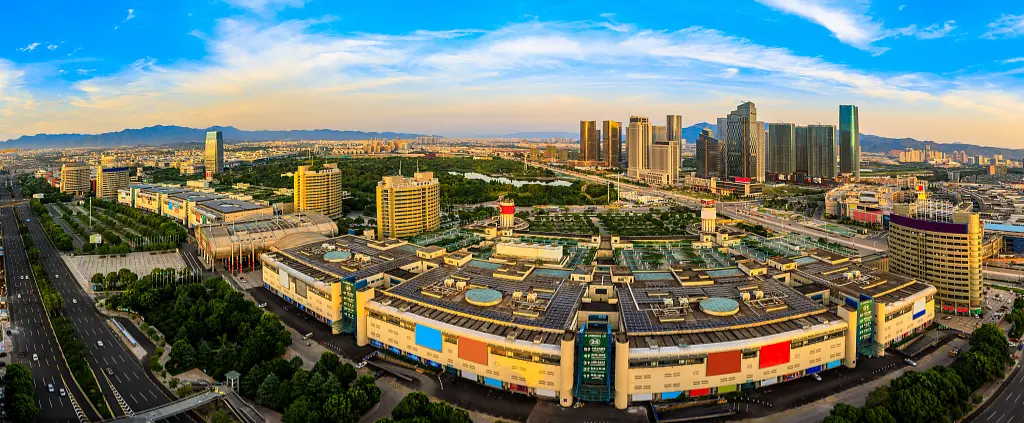
1. Yiwu International Trade City
Yiwu International Trade City gives buyers a broad comparison base for mixed tableware and kitchenware. The Official Platform for Yiwu Small Commodities is a useful starting reference. The market is most practical when buyers are still testing product direction, price points, and packaging styles.
What to source
- Ceramic bowls, plates, mugs, and serving ware
- Stainless steel cutlery and kitchen utensils
- Plastic, melamine, bamboo, and disposable tableware
- Drinkware, food containers, and related home products
Best for
- Importers testing several product lines
- E-commerce sellers building broad kitchen and home ranges
- Buyers who need to compare packaging, colours, and price tiers quickly
Buyer note: A booth may be a manufacturer, a trading company, or a distributor. Ask directly, then record the factory address, MOQ, sample terms, food-contact documents, and export markets. For help planning a market visit and supplier shortlist, see our Yiwu agent service.
Sourcing insight: Yiwu is not always the cheapest route to a custom ceramic design. It is often the fastest route to learn which design, material, and price point deserve factory development.
2. Guangzhou Nantai Department Store Wholesale Center
Guangzhou Nantai is best for buyers whose tableware order also includes household goods. It is a wholesale destination for department-store goods, hotel supplies, ceramics, food-related products, and daily necessities. That mix suits practical, value-oriented product ranges rather than a narrow premium dinnerware collection.
What to source
- Everyday plates, bowls, cups, and kitchen tools
- Budget ceramics and household sundries
- Disposable food-service items and restaurant basics
Best for
- Discount retailers and general-merchandise wholesalers
- Buyers already sourcing in Guangzhou
- Importers assembling a mixed home-and-kitchen shipment
Buyer note: Inspect cartons as carefully as samples. In lower-price household ranges, product thickness, print quality, and master-carton strength can vary between suppliers.
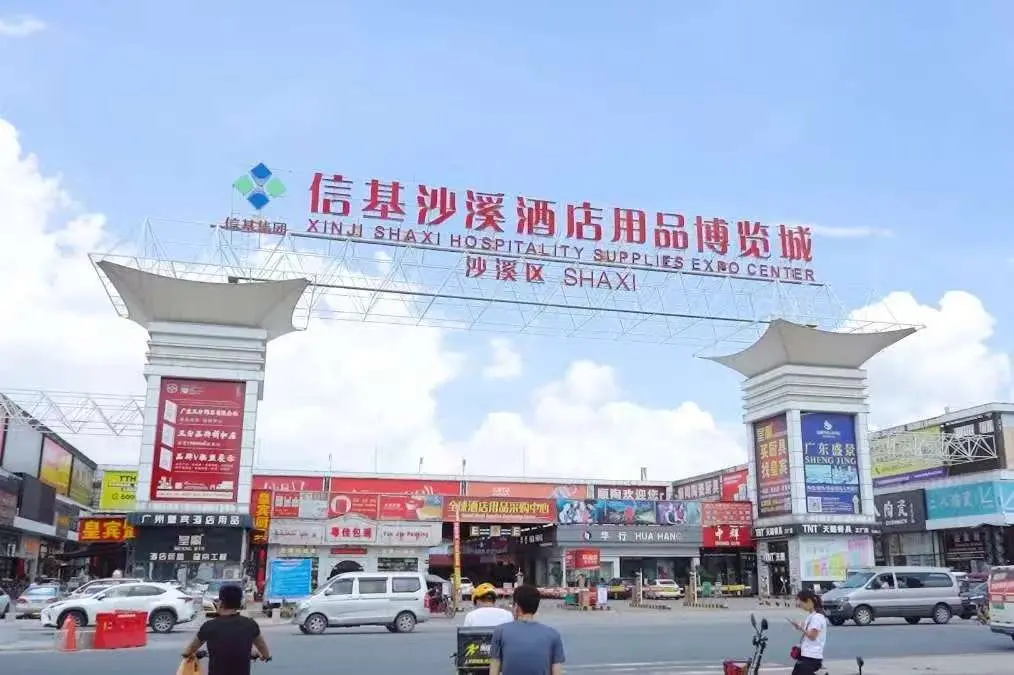
3. Guangzhou Shaxi International Hotel Supplies City
Guangzhou Shaxi is a professional food-service market for buyers who need tableware alongside operational supplies. It covers ceramics, glassware, restaurant supplies, kitchen equipment, cleaning products, and guest-room goods. That category mix lets hotels and caterers compare front-of-house and back-of-house purchases in one visit.
What to source
- Commercial ceramic dinnerware and serving pieces
- Glassware, barware, buffet ware, and catering tools
- Restaurant supplies, kitchen equipment, and cleaning products
Best for
- Hotels, restaurants, caterers, and hospitality distributors
- Buyers opening or refurbishing a food-service venue
Buyer note: Ask whether a supplier can provide replacement pieces after the first delivery. A commercial dinnerware line is easier to operate when a broken bowl can be reordered without changing the whole collection.
4. Guangzhou Nantian International Hotel Supplies Wholesale Market
Guangzhou Nantian is a hospitality market for buyers who need both tabletop and kitchen items. Its main product categories include Chinese and Western tableware, ceramic products, glassware, kitchen equipment, and guest-room supplies.
What to source
- Chinese and Western restaurant tableware
- Ceramic and glass dining products
- Catering supplies, kitchen equipment, and cleaning goods
Best for
- Hospitality procurement teams
- Importers seeking professional-use products
- Buyers comparing Guangzhou hotel-supplies suppliers
Buyer note: Build a specification sheet before you arrive. Include dimensions, material, capacity, colour, logo position, quantity, and target delivery date. It prevents suppliers from quoting different products under the same description.
5. Xinji Haotai Hotel Supplies City, Guangzhou
Xinji Haotai is a one-stop hotel-supplies market for project buyers with a long purchasing list.
What to source
- Ceramic tableware, glassware, and stainless steel catering products
- Hotel linen, furniture, appliances, and cleaning supplies
- Restaurant and lobby supplies
Best for
- Hotel projects and restaurant chains
- Distributors building a commercial catalog
Buyer note: Treat equipment and tableware as separate sourcing workstreams. The suppliers, warranty terms, delivery dates, and inspection methods are usually different.
6. Chaozhou Ceramic Wholesale Market Cluster
Chaozhou is a ceramic manufacturing cluster for buyers who need tableware made to a specific brief. It is not one single market. A factory-focused visit gives buyers room to discuss body material, glaze, decal, mould, and packaging, which is different from browsing ready-stock items in Yiwu.
What to source
- Porcelain plates, bowls, cups, and tea sets
- Hotel dinnerware and banquet ware
- Gift ceramics and custom-logo tableware
Best for
- Private-label brands and ceramic tableware importers
- Buyers needing custom shapes or decoration
- Repeat buyers seeking factory relationships
Buyer note: Ask for food-contact test reports relevant to your destination market. Also approve a production sample, not only a showroom sample. Glaze shade and print placement can change during mass production.
7. Foshan Ceramic and Homeware Wholesale Market Cluster
Foshan is a southern-China sourcing stop for buyers who need tableware with decorative ceramics and broader home products. This entry is a regional sourcing cluster, not a single market. The overlap between ceramics and homeware can reduce the number of cities a retailer visits when building a coordinated dining-and-living range.
What to source
- Ceramic dinnerware and serving pieces
- Decorative ceramics and tabletop accessories
- Kitchen and dining products for homeware collections
Best for
- Homeware retailers
- Buyers combining functional and decorative product lines
- Importers visiting Guangzhou-area suppliers
Buyer note: Confirm which displayed SKUs are regular production items. Some showroom pieces can be custom-only, seasonal, or unavailable at the quantity you need.
8. Shanghai Qilong Hotel Supplies Market
Shanghai Qilong is an East China hotel-supplies market for buyers whose order spans tableware and food-service equipment.
What to source
- Chinese and Western tableware
- Glassware, barware, and coffee equipment
- Restaurant supplies, refrigeration, and kitchen equipment
Best for
- East China hospitality buyers
- Businesses needing food-service products beyond dinnerware
Buyer note: Compare landed cost instead of unit cost. Heavy ceramics and fragile glassware can turn a cheap ex-works price into an expensive delivered order if packaging and freight are weak.
9. Nanjing Boqiao Hotel Supplies Wholesale Market
Nanjing Boqiao is a focused East China market for professional tableware and hospitality goods. Its smaller scale suits buyers with a precise list and a short sourcing window.
What to source
- Ceramic and metal tableware
- Glassware and bar equipment
- Kitchen equipment and guest-room supplies
Best for
- Buyers with a short East China sourcing trip
- Restaurant and hotel purchasers with defined specifications
Buyer note: Ask whether suppliers can consolidate different categories. A single consolidation point reduces handling for fragile goods and makes a pre-shipment inspection easier to organize.
10. Wanrun Hotel Supplies Market
Wanrun is an East China one-stop market for commercial dining and hotel procurement. It is a better fit for commercial projects than for trend-led giftware sourcing.
What to source
- Ceramic, glass, and metal tableware
- Bar equipment and restaurant furniture
- Kitchen equipment and hotel-use goods
Best for
- Hospitality distributors
- Restaurant or hotel opening projects
- Buyers who need consistent commercial specifications
Buyer note: Quote from the same bill of materials. If you ask one supplier for “white plates” and another for “hotel plates”, the two offers may not be comparable in weight, glaze, rim design, or breakage resistance.
11. Hankoubei Hotel Supplies City, Wuhan
Hankoubei is a central-China market for buyers who need tableware with commercial kitchen and hotel products.
What to source
- Restaurant dinnerware and glassware
- Stainless steel kitchen products
- Disposable food-service products
- Kitchen equipment and hotel furniture
Best for
- Regional wholesalers in central China
- Restaurant supply distributors
- Buyers needing a mixed commercial order
Buyer note: Do not assume every supplier exports directly. Confirm Incoterms, export documents, carton marks, and whether the supplier accepts third-party inspection before adding it to an overseas order.
12. Beijing Jingkai Wanjia International Hotel Supplies Market
Beijing Jingkai Wanjia is a North China market for commercial tableware and kitchen-supplies procurement.
What to source
- Ceramic, glass, and stainless steel tableware
- Kitchen machinery and refrigeration products
- Catering and hotel supplies
Best for
- North China hospitality buyers
- Commercial project purchasers
- Buyers combining equipment and tabletop goods
Buyer note: For powered equipment, document installation, spare parts, warranty length, and after-sales contacts in the purchase agreement. Product photos are not a substitute for a written technical specification.
13. Ningbo Homeware and Export Wholesale Cluster
Ningbo is an export and homeware sourcing ecosystem rather than one single tableware-only market. This entry refers to a regional supplier and logistics base, not a single hall. It can support buyers consolidating kitchen accessories, household goods, and tableware from Zhejiang alongside a Yiwu trip.
What to source
- Everyday tableware and kitchen accessories
- Household storage and daily-use goods
- Export-ready homeware ranges
Best for
- Importers shipping through Ningbo
- Buyers consolidating broad home-product orders
- Zhejiang sourcing itineraries
Buyer note: Check the exact district and supplier type before visiting. “Ningbo market” can refer to different wholesale, factory, and trading-company locations with very different product depth.
14. Jingdezhen Ceramic Market and Factory Cluster
Jingdezhen is a factory-and-workshop destination for porcelain buyers who want differentiated products rather than the widest ready-stock selection. This regional cluster is relevant to premium dinnerware, tea ware, gift ceramics, and design-led collections. Plan a visit around product development and finish quality, not a quick general-market scan.
What to source
- Premium porcelain tableware and tea ware
- Boutique restaurant dinnerware
- Gift ceramics and custom collections
Best for
- Premium tableware brands
- Giftware buyers and design-led restaurants
- Buyers who value distinctive decoration and finish
Buyer note: Premium work often has different MOQs and longer development times. Test repeatability by approving colour standards, measured dimensions, and a packing method that protects the product in transit.
15. Taizhou Luqiao Daily Necessities Wholesale Market Cluster
Taizhou Luqiao is included for value-oriented buyers looking beyond ceramics.
What to source
- Plastic tableware and food-storage products
- Everyday kitchen utensils
- Affordable household goods
- Seasonal and promotional dining items
Best for
- Discount retailers
- General-merchandise wholesalers
- High-volume, value-focused orders
Buyer note: For plastic products, verify the resin, odour, wall thickness, colour migration risk, and food-contact compliance. A low unit price is not helpful if the material fails your market’s safety requirements.
How Should You Choose a Tableware Wholesale Market in China?
The right market depends on the product, order size, and buying model. A useful China sourcing process combines product discovery, supplier comparison, inspection, consolidation, and logistics planning. In practice, the best market is the one that makes those steps easier for your specific order.
| If you need | Start with | Why |
| Broad mixed tableware and homeware range | Yiwu International Trade City | Fast supplier and product comparison |
| Hotel and restaurant supplies | Guangzhou Shaxi, Nantian, Xinji Haotai, Wanrun | Commercial dining and hospitality categories |
| Custom ceramic products | Chaozhou, Foshan, Jingdezhen | Better access to ceramic factories and product development |
| East China hospitality products | Shanghai Qilong, Nanjing Boqiao | Regional access to professional-use suppliers |
| Budget household products | Guangzhou Nantai, Taizhou Luqiao | Stronger fit for daily-use, value-oriented lines |
Buyer workflow: Start with a one-page specification sheet. It should state the SKU image, material, dimensions, target quantity, destination country, packaging, and compliance needs.
For a multi-supplier order, our China sourcing services can help standardize supplier communication and consolidation before goods are ready to ship.
Should You Visit a Wholesale Market or a Tableware Factory First?
Start with a wholesale market when you are still deciding what to buy. Markets let you compare shapes, materials, packaging, and price bands across many suppliers in a day. Start with a factory when the product brief is already fixed and you need control over the ceramic body, mould, decoration, production schedule, and repeat quality.
Choose a market first when you need to
- Discover fast-moving styles and compare retail-ready ranges
- Build a mixed order across ceramics, cutlery, storage, and drinkware
- Test several price positions before committing to a design
- Find suppliers that can serve a smaller first order
Choose a factory first when you need to
- Develop private-label porcelain or a proprietary tableware shape
- Match a precise Pantone colour, glaze, decal, or packaging requirement
- Control batch consistency across repeat commercial orders
- Discuss material testing, production capacity, and tooling directly
An effective buying process often combines both. Use Yiwu or Guangzhou to learn the available range and establish a benchmark. Then move to Chaozhou, Foshan, or Jingdezhen when the product needs development. This sequence can reduce the risk of spending weeks on a custom design that does not fit the market’s price expectations.
Before visiting any factory, send a clear request for quotation. Include product images, dimensions, material, target order quantity, destination country, packaging, and required test standard. Ask whether tooling is needed and whether the quote includes a breakage allowance. Those details make factory quotes usable instead of merely indicative.
What Should You Check Before Placing a Tableware Order?
Tableware needs more control than many general merchandise products because it is fragile, customer-facing, and often subject to food-contact rules. Ask suppliers for evidence that matches the material, intended use, and destination market of the product you are importing. The European Commission food-contact materials guidance is a useful reference point when you are checking compliance language for imported tableware.
Use this checklist before paying the balance:
- Confirm material, dimensions, capacity, weight, and permitted tolerances.
- Approve the exact colour, glaze, decal, logo position, and surface finish.
- Confirm MOQ, sample cost, production lead time, and replacement-piece policy.
- Review food-contact reports and any market-specific test requirements.
- Define inner-box, master-carton, pallet, and drop-test expectations.
- Agree breakage allowance, inspection standard, payment schedule, and Incoterms.
Inspection focus: For a mixed tableware shipment, inspect the products that create the highest loss first: printed ceramics, glassware, and SKUs with tight-fitting lids or handles. A random carton check can reveal packing failures before they become a destination-country claim.
Use quality control support before shipment when the order includes fragile, custom, or compliance-sensitive products. Once cartons are on the water, rework becomes much more expensive.
Frequently Asked Questions
Is Yiwu International Trade City good for tableware sourcing?
Yes. Buyers can compare ceramic, plastic, stainless steel, bamboo, and kitchen accessory suppliers in one place. Custom porcelain buyers may still need a dedicated ceramic factory visit.
Which Chinese market is best for hotel tableware?
Guangzhou Shaxi, Guangzhou Nantian, Xinji Haotai, and Wanrun are stronger starting points for hotel tableware because they combine tabletop products with kitchen equipment, guest-room products, and catering supplies.
Where can I find ceramic tableware manufacturers in China?
Start by evaluating Chaozhou, Foshan, and Jingdezhen. Chaozhou may suit scale and customization, Foshan may fit ceramic and homeware sourcing together, and Jingdezhen may suit distinctive porcelain collections. Your final choice should depend on product design, target price, MOQ, and repeat-order expectations.
Can overseas buyers purchase directly from Chinese wholesale markets?
Yes, provided the supplier can support your export requirements. Before placing an order, confirm the export entity, payment method, packaging, inspection access, and shipping terms. China sourcing support is useful when an order combines multiple suppliers and needs consolidation, quality checks, or export coordination.
What is the best market for small tableware orders?
Yiwu is often a practical first market for small or mixed orders because suppliers serve a broad small-commodity trade. Factory clusters may be better for custom work, but they can require higher MOQs to justify mould setup, decoration, and production changeovers. Ask each supplier for both a stock-product MOQ and a custom-product MOQ.
Build Your Market Visit Around the Product Strategy
Start in Yiwu if you need choice, product discovery, and a broad household-goods order. Go to Guangzhou when restaurant, hotel, and catering supply is the priority. Visit Chaozhou, Foshan, or Jingdezhen when the ceramic itself is the product strategy.
The most productive visit starts before the flight. Prepare a specification sheet, set a target price and MOQ, and book only the suppliers that match your category.
Sellers Union is a China sourcing agent with 29+ years of experience, helping global buyers source from verified suppliers with services covering product sourcing, quality inspection, order consolidation, and international shipping. When your shortlist is ready, contact our China sourcing team to coordinate sourcing, inspection, consolidation, and shipping for your tableware order.

Ivy is a Sourcing Specialist at Sellers Union. She shares hands-on experience in supplier selection, quality control, and market trends to help global wholesalers make informed decisions. Her goal is to simplify the sourcing process and help brands build efficient supply chains in the industry.

 Q****
Q**** F*******
 W******
 T*******
 S****
S**** T*****
 Z***
Z*** Y*****
 B*******
 U***
U*** F****
F****