











As kitchen professionals at Sellers Union Агент with over 20 years of experience in kitchenware procurement, we’ve witnessed the evolution of cutting board materials firsthand. Our extensive background in sourcing and evaluating kitchen products from China gives us unique insights into what makes a quality cutting board. Today, we’re addressing one of the most common questions home cooks ask: are bamboo cutting boards actually good?
Understanding Bamboo Cutting Boards
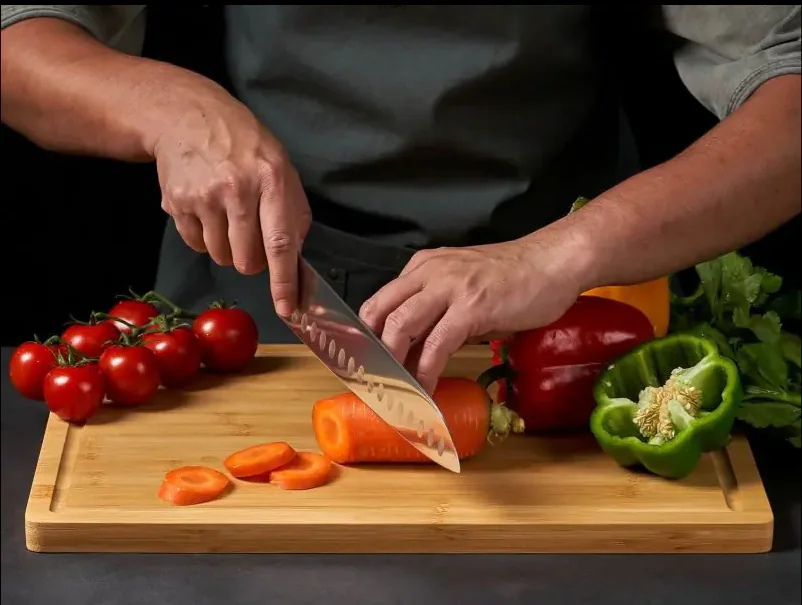
Bamboo cutting boards have surged in popularity over recent years, and for good reason. Despite common misconceptions, bamboo isn’t technically wood—it’s a fast-growing grass that reaches maturity in just three to five years, compared to thirty-plus years for hardwood trees. This rapid growth cycle makes bamboo one of the most sustainable materials available for kitchen products.
The Environmental Advantage
The environmental benefits of bamboo are substantial and worth considering:
- Rapid regeneration: Bamboo can grow up to three feet in a single day during peak growth periods
- Minimal resource requirements: Unlike hardwoods, bamboo needs little to no fertilizers or pesticides
- Soil conservation: Bamboo roots help prevent erosion and improve soil quality
- Carbon sequestration: Bamboo forests absorb more carbon dioxide than equivalent hardwood forests
- Reduced deforestation: Choosing bamboo helps preserve slow-growing hardwood forests
When you select a bamboo cutting board, you’re making a choice that supports forest conservation and reduces environmental impact—a decision that matters for future generations.
How Bamboo Cutting Boards Are Made
Understanding the manufacturing process helps explain both the strengths and limitations of bamboo boards. Our two decades of kitchenware procurement experience has given us deep insight into quality production standards.
Production Process Overview
- Material Selection: Quality manufacturers use bamboo that’s five to six years old, as younger bamboo lacks sufficient density while older bamboo becomes too brittle
- Processing and Preparation:
- Bamboo poles are cut into strips approximately two to three centimeters wide
- The outer green layer and inner yellow layer are removed to reveal the strongest fibers
- Strips are thoroughly cleaned and inspected
- Steaming and Treatment: Bamboo undergoes pressure steaming (carbonization) for bug removal. This process also determines color—longer steaming creates darker boards but reduces hardness
- Drying: Strips are kiln-dried to reduce moisture content to optimal levels (typically 5-10%)
- Gluing and Pressing: This is where quality varies significantly:
- Reputable manufacturers use food-grade, waterproof adhesives like Titebond III
- Strips are arranged horizontally, vertically, or in cross-lamination patterns
- Cold pressing (approximately 10 tons, 2 hours) followed by hot pressing (120-150°C, 15-20 tons, 1-2 hours)
- Finishing: Progressive sanding from coarse to fine grits, followed by food-safe oil treatment
Critical Quality Factors
The adhesive used is crucial—look for boards that specify food-safe, formaldehyde-free glue. Cheaper bamboo boards may use adhesives that don’t meet FDA standards, potentially introducing harmful chemicals into your food preparation.
Pros and Cons of Bamboo Cutting Boards
Advantages
Sustainability: As mentioned, bamboo’s rapid growth makes it the most eco-friendly choice among cutting board materials.
Долговечность: With a Janka hardness rating of 1,380-1,600 pounds-force, bamboo rivals or exceeds many hardwoods in strength. It’s harder than cherry or walnut and comparable to maple.
Moisture Resistance: Bamboo naturally resists moisture better than many woods, making it less prone to warping when properly maintained.
Affordability: Bamboo boards typically cost $15-40, while comparable hardwood boards range from $50-200 or more.
Легкий: Despite its strength, bamboo remains remarkably lightweight and easy to handle.
Antimicrobial Properties: While the manufacturing process reduces some natural antibacterial compounds, bamboo still resists bacterial growth better than plastic alternatives.
Aesthetic Appeal: The distinctive grain pattern and warm tones make bamboo boards attractive enough to serve as presentation platters.
Disadvantages
Knife Dulling: The high density that makes bamboo durable also makes it harder on knife edges. The inconsistent hardness—super hard at the nodes, softer in between—can cause uneven blade wear with heavy use.
Glue Concerns: Lower-quality bamboo boards may use adhesives containing formaldehyde or other chemicals. Always verify the glue is food-safe and meets FDA standards.
Porosity: While less porous than some woods, bamboo still requires regular oiling to prevent drying and cracking.
Not Dishwasher-Safe: The heat and prolonged moisture exposure in dishwashers can cause bamboo boards to warp or split.
Limited Self-Healing: Unlike softer hardwoods where fibers naturally close up around knife cuts, bamboo shows wear more permanently.
Comparing Cutting Board Materials
Bamboo vs. Wood Cutting Boards
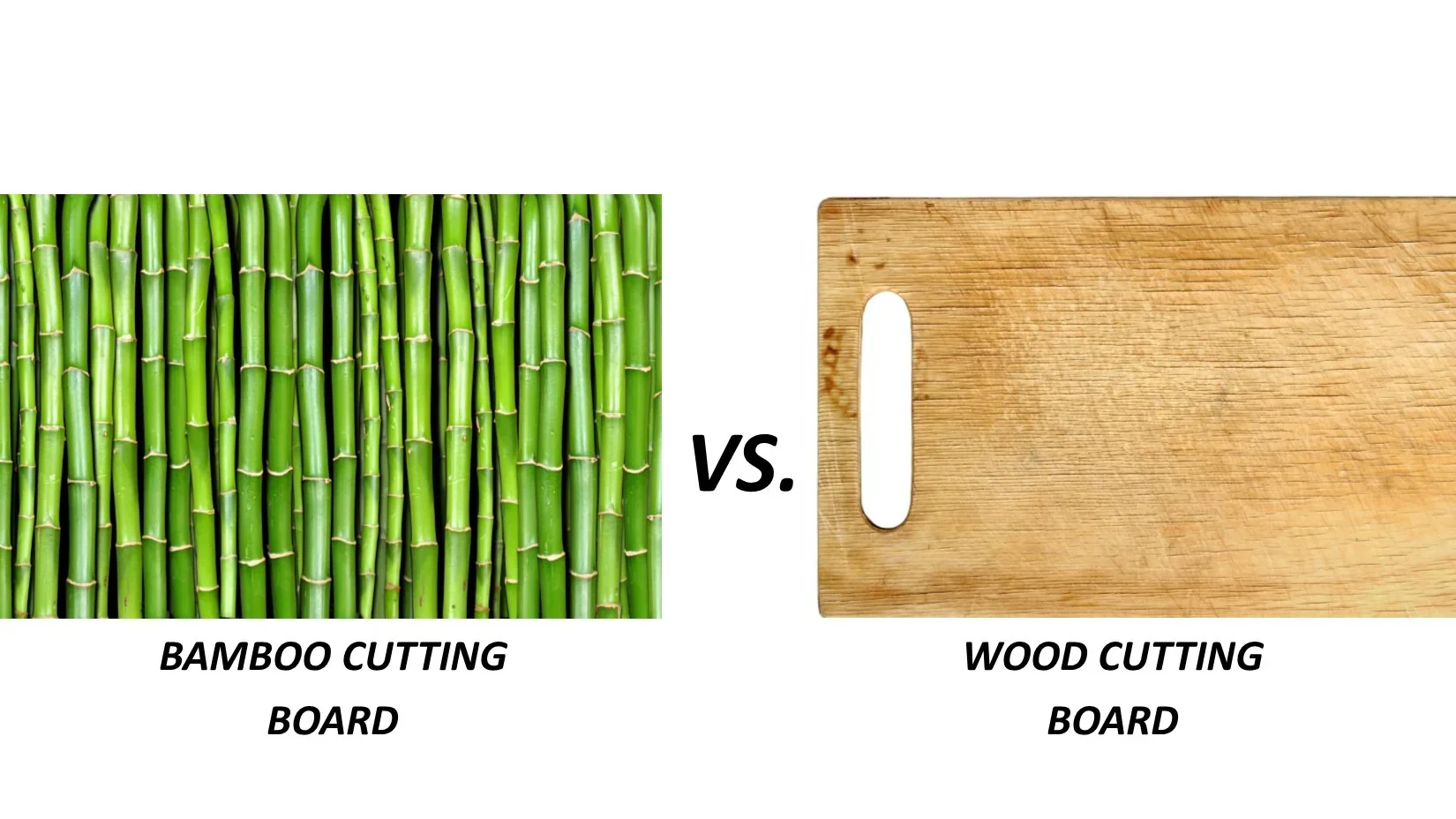
Traditional Hardwoods (Maple, Walnut, Cherry):
Advantages:
- More forgiving on knife edges, especially end-grain boards
- Superior self-healing properties where wood fibers close around cuts
- Available in beautiful grain patterns and colors
- Natural antimicrobial properties that survive processing
Disadvantages:
- Significantly more expensive ($80-200+)
- Requires 30-60 years for trees to mature
- Higher environmental impact
- Often heavier and harder to handle
- Needs frequent oiling and maintenance
End-Grain vs. Edge-Grain Construction:
End-grain boards feature wood fibers standing vertically, like bundles of straws. This orientation is gentler on knives and offers self-healing properties. However, these boards require intensive craftsmanship and are considerably more expensive.
Edge-grain boards show the wood’s side grain and are more common. They’re durable and moderately priced but don’t offer the same knife-friendliness as end-grain.
Bamboo vs. Plastic Cutting Boards
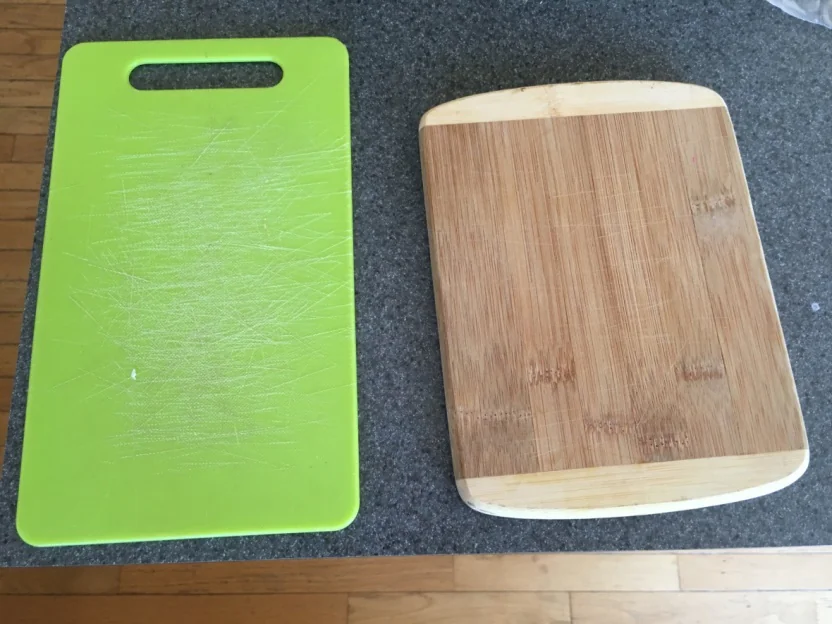
Пластик (Polypropylene, Polyethylene):
Advantages:
- Dishwasher-safe for easy sanitization
- Inexpensive ($5-25)
- Color-coding available to prevent cross-contamination
- Lightweight and convenient
Disadvantages:
- Microplastic concerns: Recent studies show plastic boards can release 100-300 microplastic particles per cut, totaling approximately 50 grams annually—equivalent to ten plastic credit cards
- Deep grooves harbor bacteria that are difficult to sanitize
- No self-healing properties
- Dulls knives faster than wood or bamboo
- Can warp or melt with heat exposure
- Not environmentally sustainable
While plastic boards were historically considered the most sanitary option, research now shows that wooden and bamboo surfaces actually cause bacteria to die off within minutes, while plastic’s knife grooves create breeding grounds for pathogens.
Other Materials Worth Mentioning
Glass, Ceramic, or Stone: Avoid these for regular cutting. They’re extremely hard on knife edges, causing rapid dulling and potential blade damage. Use them only for serving.
Rubber Boards (like Sani-Tuff): Popular in commercial kitchens, these boards are durable, dishwasher-safe, and knife-friendly. However, their industrial appearance makes them less appealing for home use.
Composite Materials (like Epicurean): Made from compressed wood fibers, these boards are dishwasher-safe and attractive but can be harsh on knives despite manufacturer claims.
Cutting Board Buying Guide: What to Look For
Drawing on our extensive procurement experience, here are the critical factors to consider:
1. Material Quality
For Bamboo Boards:
- Verify the bamboo is at least five years old at harvest
- Look for certifications indicating sustainable sourcing (FSC-certified)
- Confirm food-safe, formaldehyde-free adhesives
- Check for even color and consistent grain—major color variations suggest lower-quality strips
For Wood Boards:
- Choose dense hardwoods: maple, walnut, cherry, or teak
- End-grain construction offers the best knife care but costs more
- Verify the wood comes from edible fruit or nut-bearing trees (a good safety rule)
- Look for boards using Titebond III or equivalent food-safe waterproof glue
For Plastic Boards:
- Choose high-density polyethylene over polypropylene when possible
- Consider color-coding different boards for different food types
- Budget to replace regularly—once deeply scarred, they harbor bacteria
2. Construction Details
Checkerboard/End-Grain Boards: These beautiful boards require multiple glue-ups. Quality indicators include:
- Tight seams with no visible gaps
- Uniform square sizes
- Solid construction without flex
- High-quality waterproof adhesive (ask specifically about the glue used)
The Glue Question: This is crucial. Lower-quality checkerboard boards may use excessive glue or inferior adhesives. Always ask:
- What adhesive is used?
- Is it FDA-approved for food contact?
- Is it formaldehyde-free?
- Is it waterproof?
Reputable manufacturers will readily provide this information. Vague answers are a red flag.
3. Size and Thickness
- Standard boards: 30×20cm to 40×30cm work well for most home cooks
- Thickness: Aim for 1.5-2 inches (4-5cm) for stability and longevity
- Weight balance: Consider if you’ll move the board frequently
4. Finishing and Features
- Oil treatment: Boards should come pre-treated with food-grade mineral oil
- Anti-slip features: Rubber feet or grips prevent sliding
- Juice grooves: Helpful for meat but can be harder to clean
- Handles: Convenient but reduce usable cutting surface
Care and Maintenance
Proper care extends any cutting board’s life significantly:
Daily Care
- Immediate washing: Clean with hot, soapy water after each use
- Thorough drying: Stand upright to air-dry completely—never leave boards sitting in water
- Separate boards: Use different boards for raw meat and ready-to-eat foods
Regular Maintenance
For Bamboo and Wood:
- Oil monthly with food-grade mineral oil or board conditioner
- Apply oil generously, let it soak for several hours or overnight
- Wipe away excess before use
For Plastic:
- Check for deep knife grooves regularly
- Sanitize periodically with diluted bleach solution (1 tablespoon bleach per gallon of water)
- Replace when heavily scarred
When to Replace
- Deep grooves: When knife marks trap food particles and bacteria
- Warping: If the board no longer sits flat
- Persistent odors: That don’t disappear after cleaning and sanitizing
- Cracks or splits: Which can harbor moisture and bacteria
Bamboo and wood boards showing light wear can often be resurfaced with fine-grit sandpaper and re-oiled.
Safety and Health Considerations
Bacterial Safety
Research shows that wooden and bamboo cutting boards can be as safe or safer than plastic when properly maintained. Wood’s natural compounds cause bacteria to die off within minutes, while plastic’s grooves create hiding spots for pathogens.
Key safety practices:
- Always maintain separate boards for raw meat and produce
- Clean thoroughly after each use
- Sanitize regularly, especially after preparing raw meat
- Replace heavily scarred boards regardless of material
Chemical Concerns
Bamboo and Wood: The primary concern is adhesive quality. Cheap boards may use glues containing formaldehyde or other harmful chemicals. Always verify food-safe certification.
Пластик: Beyond microplastics, plastic boards can warp or melt if exposed to high heat, potentially releasing chemicals.
Microplastics
Recent studies have highlighted that plastic cutting boards release microplastic particles during use. While research hasn’t definitively proven health risks, minimizing exposure by choosing bamboo or wood is a prudent precaution.
Making Your Decision
The “best” cutting board depends on your priorities:
Choose Bamboo If You:
- Prioritize environmental sustainability
- Want a balance of affordability and quality
- Need a lightweight, easy-to-handle option
- Do mostly light to moderate chopping
- Value moisture resistance
Choose Hardwood If You:
- Do heavy-duty chopping regularly
- Prioritize the gentlest option for expensive knives
- Want the most beautiful aesthetic option
- Don’t mind higher maintenance requirements
- Can invest $100+ in a quality board
Choose Plastic If You:
- Prioritize dishwasher convenience
- Need color-coding to prevent cross-contamination
- Work in a commercial setting with strict sanitization protocols
- Plan to replace boards regularly
- Are budget-conscious and okay with frequent replacement
Our Professional Recommendation
After twenty years in kitchenware procurement, we at Sellers Union Agent recommend having multiple boards:
- Primary board: Quality bamboo or hardwood for most daily tasks
- Meat board: Dedicated plastic board for raw meat (easier sanitization)
- Serving board: Attractive bamboo or wood for presentation
This combination offers versatility, safety, and longevity while balancing cost and environmental impact.
Часто задаваемые вопросы
Q: Are bamboo cutting boards safe for food preparation?
A: Yes, when manufactured with food-safe, formaldehyde-free adhesives. Quality bamboo boards from reputable manufacturers meet FDA standards and are completely safe. Always verify the adhesive used is food-grade.
Q: Do bamboo cutting boards dull knives faster than wood?
A: Yes, bamboo’s higher density can dull knives more quickly than softer hardwoods, especially with heavy daily chopping. However, for typical home cooking use, the difference is minimal. Regular knife sharpening solves this concern.
Q: Can I put my bamboo cutting board in the dishwasher?
A: No. The prolonged moisture exposure and high heat will cause bamboo boards to warp, crack, or split. Always hand wash with hot, soapy water and dry immediately.
Q: How often should I oil my bamboo cutting board?
A: Apply food-grade mineral oil once monthly for regularly used boards, or whenever the surface appears dry. Proper oiling prevents cracking and extends board life significantly.
Q: Are bamboo cutting boards really more environmentally friendly?
A: Yes. Bamboo matures in three to five years versus 30-60 years for hardwoods, requires minimal pesticides or fertilizers, helps prevent soil erosion, and absorbs more carbon dioxide than equivalent hardwood forests.
Q: What’s the best way to sanitize a bamboo cutting board?
A: After washing with hot, soapy water, occasionally sanitize by flooding the surface with diluted bleach solution (1 tablespoon bleach per gallon of water), let sit for several minutes, then rinse thoroughly and dry.
Q: Will bamboo cutting boards stain or absorb odors?
A: Bamboo is more resistant to staining and odors than many woods, but it’s not immune. Strong-smelling foods like garlic and onions may leave temporary odors. Rubbing with lemon juice or a baking soda paste can help remove stubborn stains and odors.
Q: What’s the difference between horizontal and vertical grain bamboo boards?
A: Horizontal grain shows the wider, striped bamboo pattern and is typically slightly less expensive. Vertical grain features narrow, dense lines and is marginally harder. Both are quality options—choose based on aesthetic preference.
Q: Are checkerboard (end-grain style) bamboo boards worth the extra cost?
A: Checkerboard bamboo boards are beautiful but not necessarily better performers. The multiple glue-ups require careful manufacturing. If you choose one, verify the adhesive quality and construction. Traditional wood end-grain boards typically perform better for knife care.
Заключительные размышления
From our perspective as kitchenware procurement professionals with over two decades of experience, bamboo cutting boards represent an excellent choice for most home cooks. They offer a compelling combination of sustainability, durability, affordability, and performance that few other materials can match.
The key is choosing quality over price. A well-made bamboo board with food-safe adhesives will serve you reliably for years with proper care. Avoid the cheapest options, verify adhesive safety, and commit to regular oiling and maintenance.
Whether you ultimately choose bamboo, hardwood, or a combination of materials, you now have the knowledge to make an informed decision that serves both your kitchen needs and your values. Happy cooking!
At Sellers Union Agent, we’ve spent over 20 years specializing in kitchenware procurement from China, giving us unparalleled insight into manufacturing quality, material selection, and product performance. Our expertise helps consumers and businesses make informed decisions about kitchen products.

Ivy is a Sourcing Specialist at Sellers Union. She shares hands-on experience in supplier selection, quality control, and market trends to help global wholesalers make informed decisions. Her goal is to simplify the sourcing process and help brands build efficient supply chains in the industry.
 V******
 J***
J*** U*******
 R****
R**** M***
M*** W******
 A******
 Q*****
 C***
C*** Y******
 Z****
Z**** U****
U****