











High Volume Manufacturing
The core feature of High Volume Production is the continuous production of products through large-scale, standardized assembly lines. This model aims to significantly reduce unit costs through economies of scale.
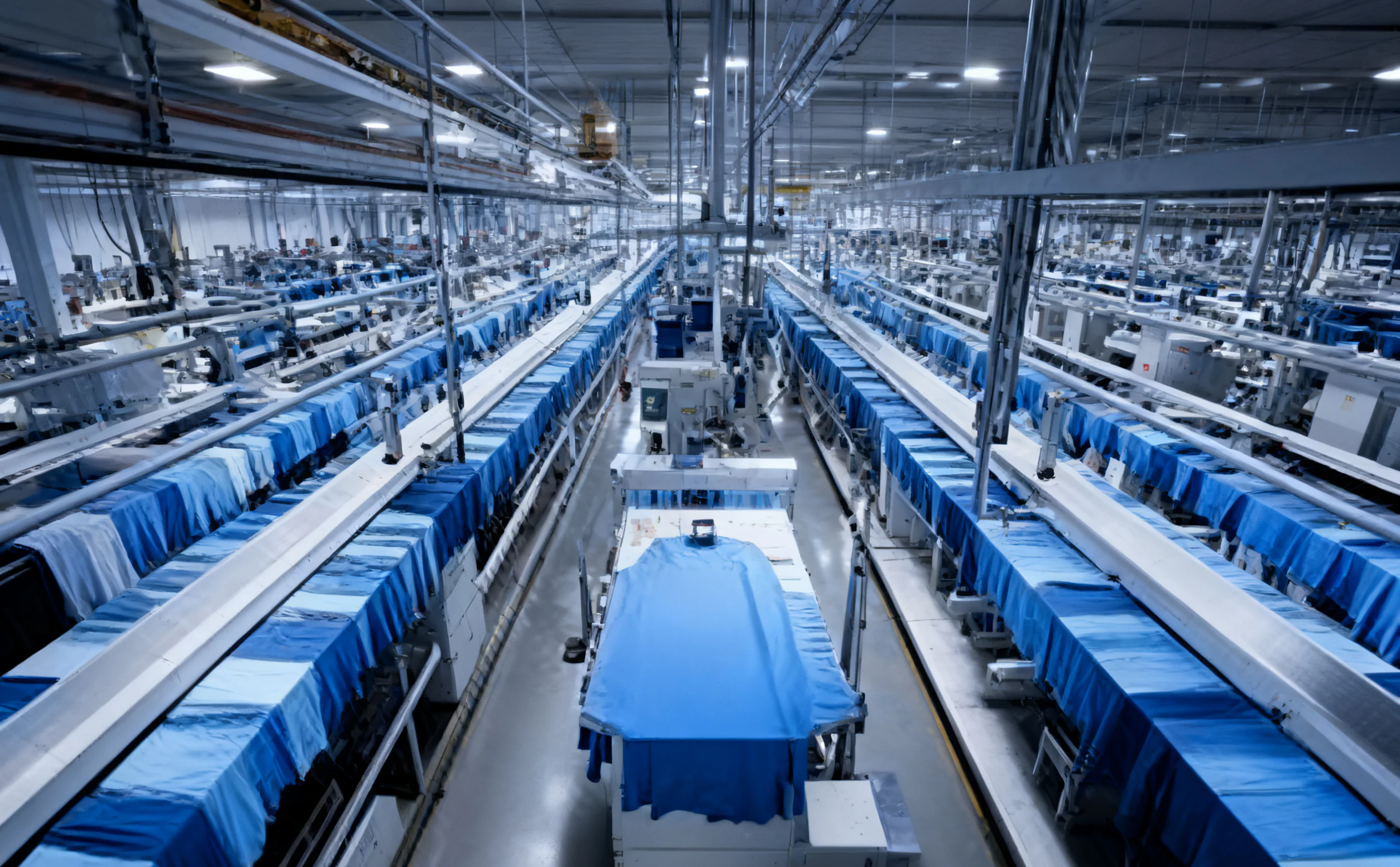
To achieve this goal, high-volume manufacturing typically requires significant upfront capital investment to design and manufacture specialized molds, fixtures, and highly automated assembly lines. Once established, these production lines are extremely costly to modify and relatively inflexible. A customer from Yiwu once sought to purchase one million plastic toys. By utilizing high-precision injection molds developed specifically for this project, we were able to reduce the cost per unit by 60%. However, the mold costs themselves consumed a significant portion of the initial project budget. This is a typical example of high-volume manufacturing: high initial investment in exchange for extremely low incremental costs.

High Volume Items
High Volume Items typically refer to consumer goods with stable demand, a broad market, simple designs, and long lifecycles. These products are ideal candidates for the High Volume Manufacturing model.
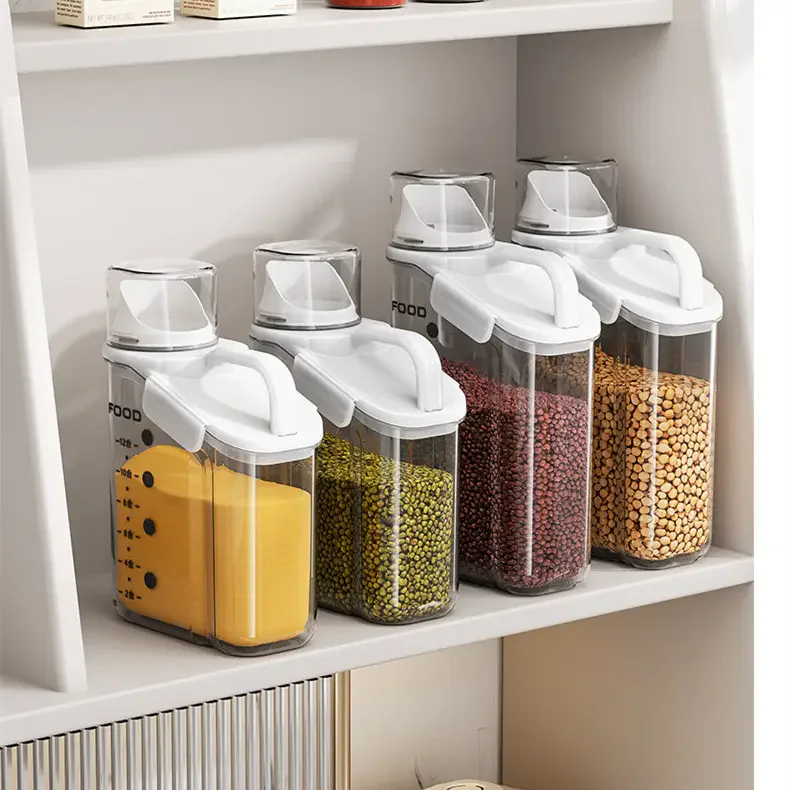
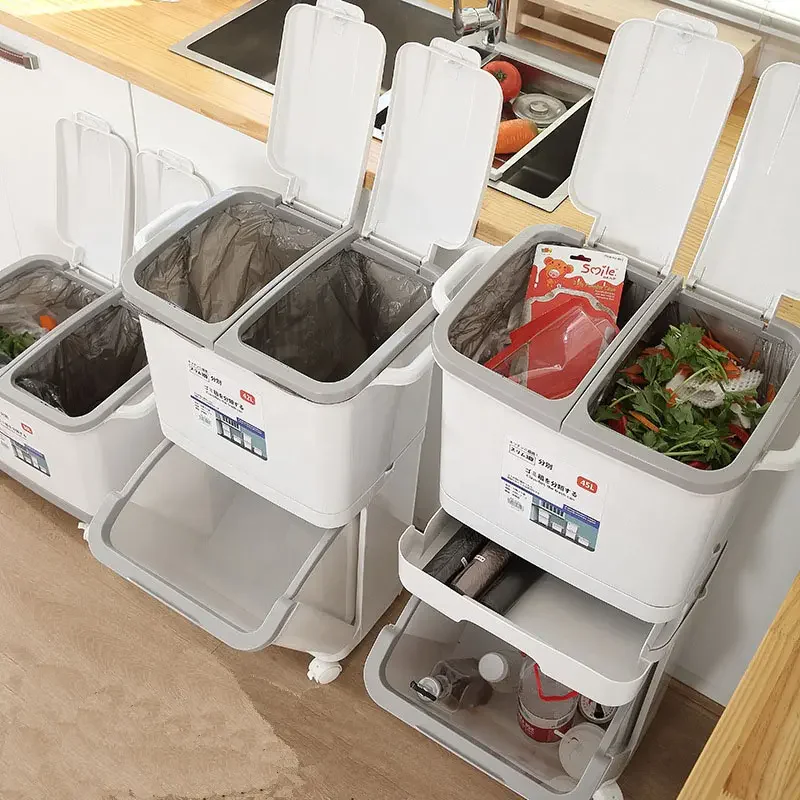
Typical high-volume items in our everyday small commodity procurement include disposable cutlery, universal USB cables, standard batteries, and basic hangers. These products rarely change in design, enjoy high and predictable market demand, and are well-suited for maximizing cost-efficiency through large-scale production. Focusing on sourcing high-volume items means you’ll enjoy the ultimate in pricing and stable supply chain delivery capabilities.
High Volume Manufacturing
A deeper dive into high-volume manufacturing reveals both its advantages and challenges. The advantages lie in extreme economies of scale, highly consistent product quality, and efficient supply chain management. When your order volume is large enough, suppliers may even be willing to set up dedicated production lines just for you.
However, the challenges of high-volume manufacturing should not be overlooked. It requires significant upfront investment, and the production process lacks flexibility, making it difficult to adapt to design changes. Furthermore, it incurs high inventory holding costs and carries significant market risk—if the product doesn’t sell well, it can lead to catastrophic inventory overstock. As your reliable procurement partner, we once assisted a client in transitioning from low-volume to high-volume production of a holiday decoration. While achieving a 40% reduction in unit costs, we also worked together to develop detailed sales forecasts and inventory rotation plans to mitigate potential inventory risks.
Low Volume Manufacturing
The opposite of High Volume Manufacturing is Low Volume Manufacturing. This model is suitable for small-batch, high-variety production needs, and its core advantages lie in flexibility and low risk.
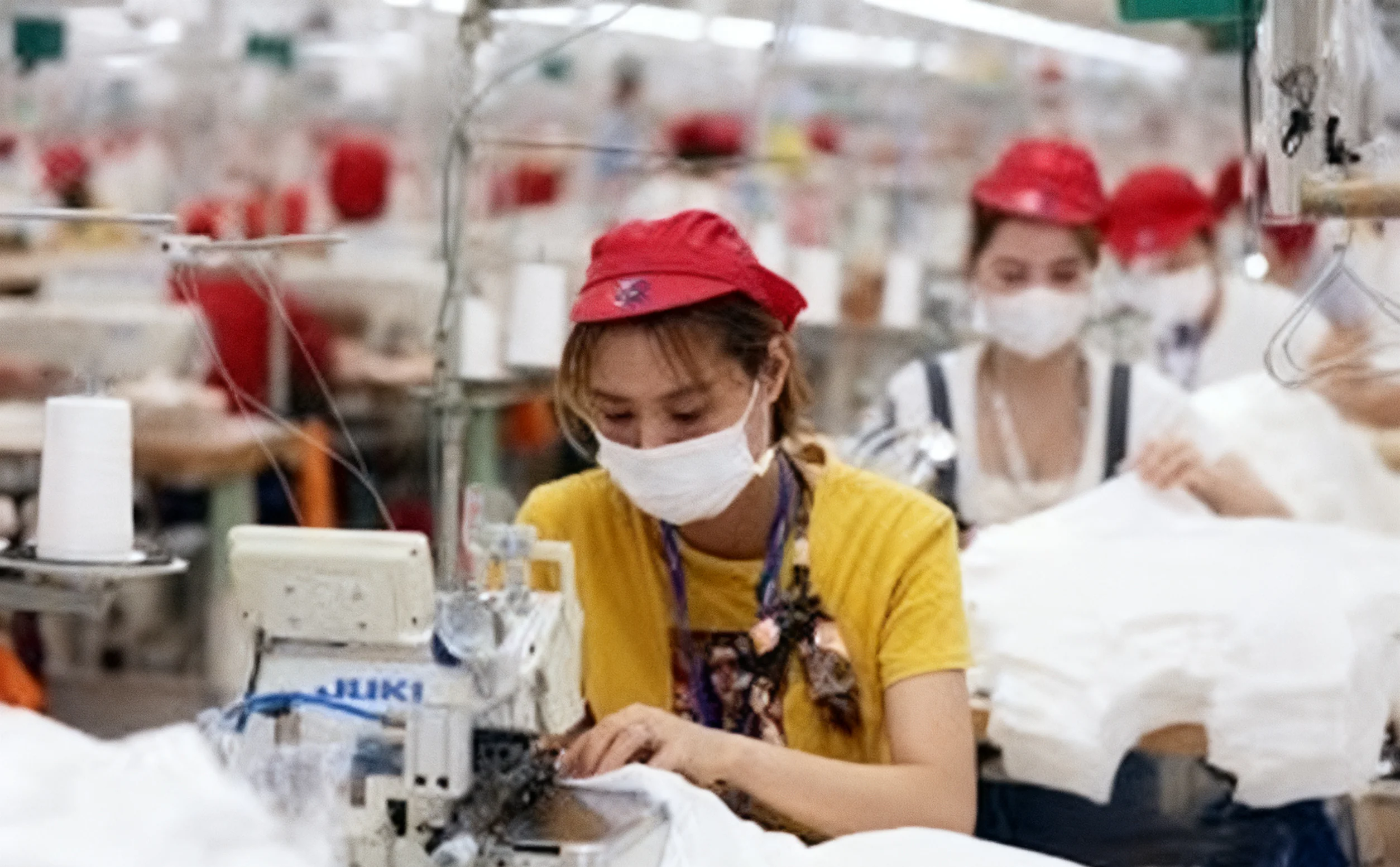
Low-Volume Manufacturing typically utilizes versatile production equipment such as 3D printing, CNC machining, or small injection molding machines. While unit costs are higher, it offers minimal upfront investment, rapid time to market, and the ability to easily adapt to design iterations and market testing. It’s ideal for producing prototypes, customized gifts, startups’ first products, or seasonal test runs.
When to Choose High vs Low Volume
Choosing High Volume Manufacturing or Low Volume Manufacturing depends on your products, market and business strategy.
You should prioritize High Volume Manufacturing if:
Product demand is stable and huge: You sell high-volume items such as daily necessities, and the market demand can be accurately predicted.
Pursue the lowest unit cost: Price is your main competitive advantage, and you need to squeeze profit margins through economies of scale.
The design is mature and unchanged in the long term: the product has been proven in the market and no design updates or iterations are required in the short term.
Have sufficient funds and warehousing capacity: able to bear higher mold costs and inventory costs.
In the following scenarios, Low Volume Manufacturing is a wiser choice:
Test market reaction: When launching a new product, first test it with a small batch to collect user feedback.
Highly customized products: Customers demand personalized or customized products.
Limited financial budget: Startup companies or early stage projects cannot afford high mold costs.
Fast product updates and iterations: Product design needs to be adjusted quickly according to market trends.
Manufacturing Volume Decision
Making a Manufacturing Volume Decision is a systematic process. We recommend that buyers follow these steps:
Market analysis: Based on historical data and market research, predict product demand as accurately as possible.
Cost accounting: Calculate the unit cost of low-volume manufacturing and the unit cost of high-volume manufacturing in detail (including the shared mold fee) to find the break-even point.
Risk Assessment: Assess the risk of product obsolescence or unsaleability. For innovative products, the risk is higher and it is recommended to start with low production volumes.
Supply Chain Assessment: Confirm whether your supplier has the appropriate High Volume Manufacturing capabilities or can provide flexible low-volume services.
As a professional sourcing agent, one of our core services is helping clients conduct manufacturing volume decision analysis. For example, a Shenzhen client had an innovative electronic component idea. After a comprehensive evaluation, we recommended that they initially adopt low-volume manufacturing for a 5,000-unit market test. The product proved incredibly popular, and we subsequently assisted them in connecting with a factory with high-volume manufacturing capabilities, enabling a smooth transition to large-scale production.
Small Batch vs Mass Production
“Small Batch vs Mass Production” is another way of expressing High Volume Manufacturing vs Low Volume Manufacturing.
Mass Production is synonymous with High Volume Manufacturing, emphasizing standardization and automation, while Small Batch Production is more ingenious, allowing for more process details and customization options, but at the expense of cost-effectiveness.The following table summarizes the core differences between the two:
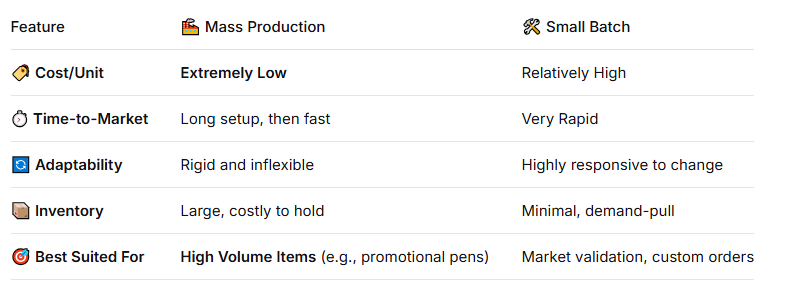
For small-item sourcing, your product line likely requires a combination of both. Consider mass production of classic and best-selling items as high-volume items to protect core profits, while simultaneously utilizing small-batch production for new and limited-edition items to maintain market vitality and test their potential as breakout items. This hybrid strategy effectively balances cost, risk, and flexibility.
If you are interested please contact us.

Ivy is a Sourcing Specialist at Sellers Union. She shares hands-on experience in supplier selection, quality control, and market trends to help global wholesalers make informed decisions. Her goal is to simplify the sourcing process and help brands build efficient supply chains in the industry.







 I***
I*** C*******
 Y*****
 M*******
 R****
R**** T*******
 Y*****
 J***
J*** T*******
 E******
 E***
E***