









A delayed payment or a supplier dispute can turn a profitable order into a costly mistake. When importing high-value products from overseas suppliers, choosing the right payment method is just as important as choosing the right supplier.
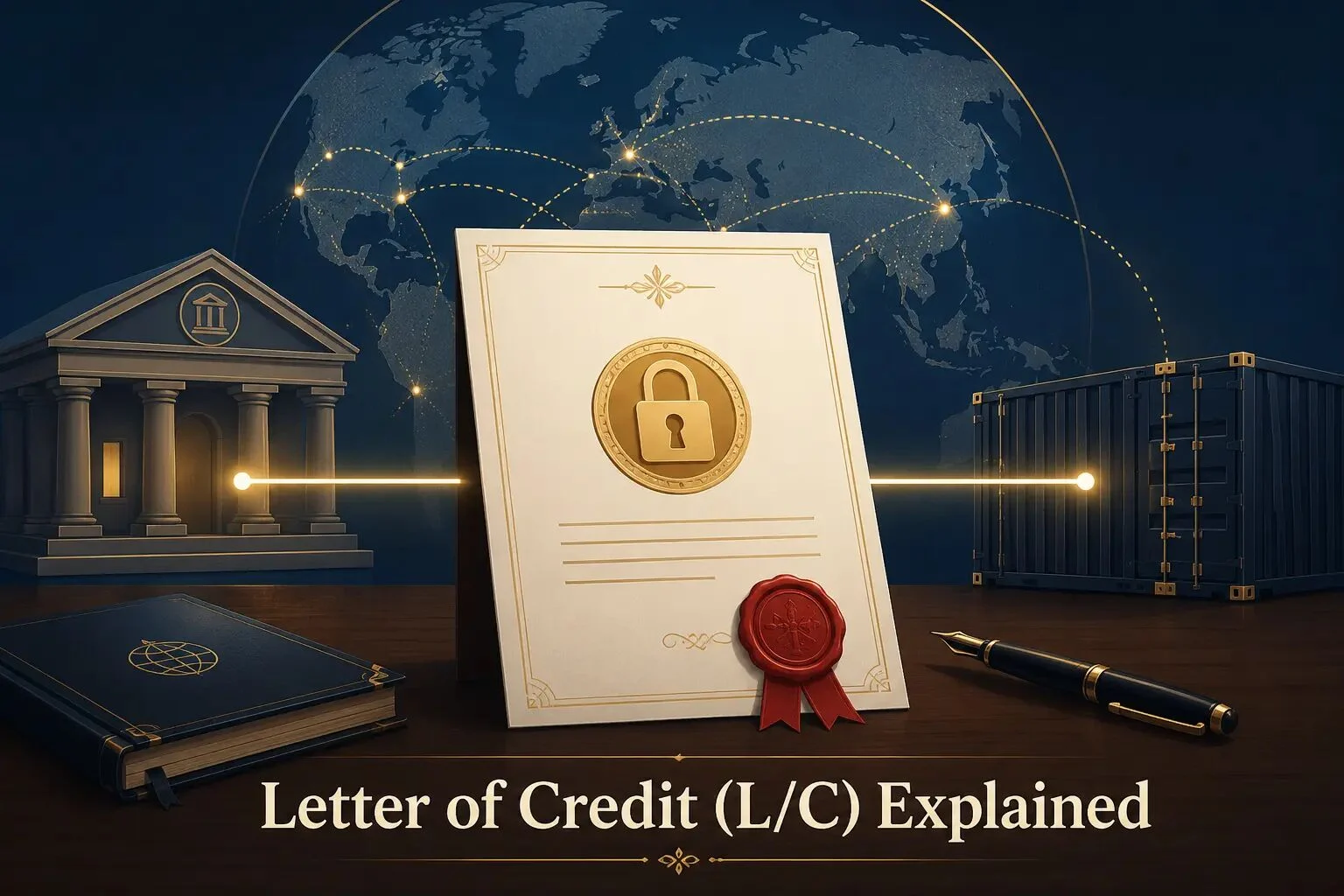
A Letter of Credit (L/C) is one of the most secure payment methods in international trade. It is a bank-issued guarantee that ensures the supplier gets paid once specific documents are submitted and approved.
However, a Letter of Credit is not always the best choice. It comes with additional costs, strict documentation requirements, and longer processing times. Understanding how it works can help you decide whether it is the right solution for your business.
In this guide, you’ll learn what a Letter of Credit is, how the LC payment process works, its advantages and limitations, and when importers should consider using it for international purchases.
Puntos clave
- A Letter of Credit is a bank guarantee used to secure international trade payments.
- LC payment is most suitable for large orders and new supplier relationships.
- Banks verify documents, not product quality.
- Letters of Credit offer strong payment security but involve higher fees and paperwork.
- Many importers use LC for high-risk transactions and T/T payment for routine orders.
What Is a Letter of Credit?
A Letter of Credit (L/C) is a payment guarantee issued by a bank on behalf of a buyer. It guarantees that the supplier will receive payment if they submit the required documents and meet the terms stated in the credit. In international trade, a Letter of Credit helps reduce payment risk for both importers and exporters.
A Letter of Credit is also known as a documentary credit because the bank makes its decision based on documents rather than the goods themselves. Typical documents include the bill of lading, commercial invoice, packing list, and other shipping records.
This payment method is commonly used when the buyer and supplier have not worked together before, when the order value is high, or when additional payment security is required.
Why Is a Letter of Credit Used in International Trade?
- Providing payment security for suppliers
- Giving buyers confidence that payment is tied to specific documents
- Facilitating trade with new business partners
- Supporting large international transactions
- Reducing the risk of non-payment in cross-border trade
Who Is Involved in an LC Transaction?
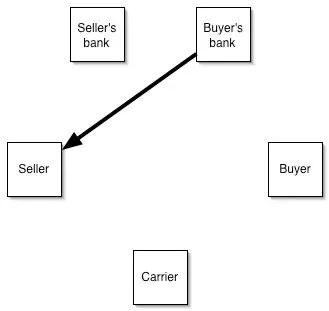
A standard Letter of Credit transaction usually involves four main parties:
- Applicant – the importer or buyer requesting the Letter of Credit
- Beneficiary – the exporter or supplier receiving payment
- Issuing Bank – the buyer’s bank that issues the Letter of Credit
- Advising Bank – the bank that notifies the supplier and handles documents
In some cases, a confirming bank may also participate to provide an additional payment guarantee.
How Does an LC Payment Work?
Paso 1: El comprador y el proveedor acuerdan los términos de la carta de crédito
El importador y el proveedor acuerdan primero utilizar una carta de crédito como forma de pago. Incluyen los requisitos de la carta de crédito en el contrato de compraventa, tales como el monto del pago, la fecha límite de envío y los documentos necesarios para el pago.
Paso 2: El importador solicita una carta de crédito
The buyer asks their bank to issue the Letter of Credit. The issuing bank reviews the buyer’s financial position and prepares the LC according to the agreed terms.
Paso 3: Se envía la carta de crédito al proveedor
The issuing bank sends the Letter of Credit to the supplier’s bank, known as the advising bank. The advising bank verifies that the LC is authentic and notifies the supplier.
Paso 4: El proveedor envía la mercancía
Tras revisar y aceptar los términos de la carta de crédito, el proveedor fabrica y envía la mercancía. Luego, reúne los documentos de transporte y comerciales requeridos.
Paso 5: Se envían los documentos para su revisión
El proveedor presenta los documentos al banco avisador. Los documentos comunes incluyen:
Factura comercial
Conocimiento de embarque
Lista de embalaje
Certificado de origen (si se requiere)
Certificado de inspección (si se requiere)
Los bancos verifican si los documentos coinciden con las condiciones establecidas en la Carta de Crédito.
Paso 6: Se libera el pago
Si los documentos cumplen con los términos del crédito documentario, el banco emisor efectúa el pago al proveedor. A continuación, el comprador recibe los documentos necesarios para reclamar la mercancía al transportista.
Types of Letter of Credit Importers Should Know
Sight Letter of Credit
A Sight Letter of Credit is the most common type of LC payment. The supplier receives payment shortly after the required documents are submitted and approved by the banks.
Best for:
- Standard international transactions
- First-time supplier relationships
- Large import orders
Usance Letter of Credit
A Usance Letter of Credit, also called a deferred payment LC, allows payment to be made at a future date. Common payment terms include 30, 60, or 90 days after shipment.
Best for:
- Buyers seeking extended payment terms
- Businesses with longer sales cycles
- Regular import programs
Confirmed Letter of Credit
A Confirmed Letter of Credit includes an additional guarantee from a second bank, usually located in the supplier’s country.
If the issuing bank cannot make payment for any reason, the confirming bank becomes responsible for payment.
Best for:
- High-value transactions
- Trade involving higher-risk markets
- Situations where additional trust is needed
Standby Letter of Credit (SBLC)
A Standby Letter of Credit works differently from a standard LC. It serves as a backup payment guarantee rather than the primary payment method.
The supplier only uses the SBLC if the buyer fails to meet the agreed payment obligations.
Best for:
- Long-term business contracts
- Construction and infrastructure projects
- Ongoing supplier agreements
Which Type Is Best for China Imports?
For most importers buying from China, a Sight Letter of Credit is the most practical option. It balances payment security with a relatively simple process.
However, many Chinese suppliers prefer T/T payment because it is faster and involves less paperwork. As a result, Letters of Credit are usually reserved for large orders, new supplier relationships, or transactions where additional security is required.
Letter of Credit vs T/T Payment: Which Is Better?
Both Letter of Credit and T/T payment are widely used in international trade. A Letter of Credit offers higher payment security through bank involvement, while T/T is faster, simpler, and more commonly accepted by suppliers.
Quick Comparison
| Factor | Carta de crédito (L/C) | T/T Payment |
| Security | Alta | Medio |
| Bank Involvement | Required | Limited |
| Processing Speed | Slower | Faster |
| Documentation | Complex | Simple |
| Costo | Higher bank fees | Lower transaction costs |
| Ideal para | Large or high-risk orders | Most routine purchases |
| Supplier Acceptance | Moderado | Muy alta |
When Is a Letter of Credit the Better Choice?
A Letter of Credit is often a good option when the financial risk is significant.
You may consider using an LC if:
- The order value is high
- You are working with a new supplier
- The products are highly customized
- The supplier requests additional payment protection
- The transaction involves a higher-risk market
When Is T/T Payment the Better Choice?
For most China imports, T/T payment remains the preferred payment method.
T/T is often suitable when:
- You have an established supplier relationship
- The order value is relatively small
- Speed is important
- Both parties trust each other
- The supplier does not accept LC payment
Which Payment Method Do Most China Importers Use?
In practice, most importers use T/T payment for regular orders and reserve Letters of Credit for larger transactions. A common approach is to pay a deposit before production and the balance before shipment.
👉 For a complete comparison of common China supplier payment options, including T/T, PayPal, Letter of Credit, and more, read our guide on how to pay Chinese suppliers safely.
Advantages of Using a Letter of Credit
Greater Payment Security
One of the biggest advantages of a Letter of Credit is the security it offers. The supplier knows that a bank will release payment once the required documents are submitted and approved.
For importers, payment is tied to agreed shipping documents rather than a simple promise from the supplier.
Stronger Confidence Between Trading Partners
International trade often involves companies that have never worked together before. This lack of trust can make large transactions difficult.
An LC payment helps bridge that gap by placing a bank between the buyer and the supplier.
Supports Trade Finance Arrangements
A Letter of Credit can also be part of a broader trade finance strategy. Depending on the terms, buyers may gain additional time before payment is due, while suppliers receive assurance that payment is backed by a bank.
Helps Reduce Non-Payment Risk
For suppliers, one of the biggest concerns in international trade is not getting paid after shipping goods. A Letter of Credit significantly reduces this risk because payment depends on document compliance rather than the buyer’s willingness to pay.
Risks and Limitations of Letter of Credit
Banks Check Documents, Not Product Quality
One of the biggest misconceptions about a Letter of Credit is that it guarantees the quality of the goods. In reality, banks only examine the documents submitted by the supplier. They do not inspect the products, verify specifications, or check whether the goods meet the buyer’s expectations.
Documentation Errors Can Cause Delays
A Letter of Credit requires strict document compliance. Even a small mistake can lead to payment delays or document rejection.
Common errors include:
- Incorrect company names
- Missing signatures
- Wrong shipment dates
- Inconsistent product descriptions
- Mismatched information across documents
Higher Costs Than Other Payment Methods
Compared with T/T payment, a Letter of Credit usually involves more fees.
These may include:
- LC issuance fees
- Advising fees
- Confirmation fees
- Document handling fees
Depending on the transaction, these costs can become significant, especially for smaller orders. Banks may also require deposits or credit facilities before issuing the LC.
More Paperwork and Longer Processing Times
An LC payment involves multiple parties, including banks and shipping document providers. The process requires careful preparation and review of documents before payment can be released.
Because of these additional steps, Letter of Credit transactions are generally slower than direct bank transfers.
Not All Chinese Suppliers Accept Letter of Credit
Many Chinese suppliers, especially small and medium-sized factories, prefer T/T payment because it is simpler and faster.
For this reason, importers should confirm payment terms with suppliers before negotiating a large order.
FAQ: Letter of Credit
¿Es una Carta de Crédito más segura que el pago por T/T?
Por lo general, sí. Una carta de crédito ofrece mayor seguridad en el pago porque los bancos participan en la transacción. Sin embargo, no garantiza la calidad del producto ni previene todos los riesgos comerciales.
¿Quién paga las comisiones de la carta de crédito?
Tanto el comprador como el proveedor pueden compartir las comisiones, según el acuerdo. En la mayoría de los casos, el importador paga la comisión de emisión, mientras que los demás cargos se negocian entre ambas partes.
¿Pueden las pequeñas empresas utilizar una carta de crédito?
Sí, pero es posible que no siempre sea práctico. Debido a que las transacciones con carta de crédito implican comisiones bancarias y trámites, muchas pequeñas empresas prefieren métodos de pago más sencillos para pedidos de menor valor.
Do Chinese suppliers accept LC payment?
Some do, especially for large orders. However, many small and medium-sized Chinese suppliers prefer T/T payment because it is faster and requires less documentation.
What happens if the documents contain errors?
The bank may reject the documents or delay payment until the errors are corrected.
Is a Letter of Credit the same as a bank guarantee?
No. A Letter of Credit is a payment method used during a trade transaction, while a bank guarantee serves as compensation if one party fails to meet its contractual obligations.
Conclusión
A Letter of Credit is one of the most secure payment methods available in international trade. By replacing the buyer’s promise to pay with a bank’s commitment, it helps reduce payment risk and build trust between importers and suppliers.
However, a Letter of Credit is not always the right choice. Higher bank fees, strict documentation requirements, and longer processing times can make it less practical for routine purchases.
The key is to view a Letter of Credit as one part of your risk management strategy. Supplier verification, factory audits, product inspections, and clear contracts are equally important when protecting your business. A secure payment method alone cannot guarantee a successful import transaction.
Need help choosing between a Letter of Credit, T/T payment, or other China supplier payment methods?
Sellers Union can help you verify suppliers, manage quality inspections, and reduce sourcing risks before you send payment.
Contacto our sourcing experts today to make your next import order safer and more efficient.

Ivy es especialista en abastecimiento en Sellers Union. Comparte su experiencia práctica en la selección de proveedores, el control de calidad y las tendencias del mercado para ayudar a los mayoristas globales a tomar decisiones informadas. Su objetivo es simplificar el proceso de abastecimiento y ayudar a las marcas a construir cadenas de suministro eficientes en la industria.
 C***
C*** V****
V**** B****
B**** J*******
 Z***
Z*** W*****
 J******
 W*******
 C***
C*** J******
 E***
E*** O***
O***